Men Get 70% of Court-Appointed Arbitrator Positions, NALSAR Study Finds

A NALSAR study found men received 70.03% of recorded arbitrator appointments by the Supreme Court, Delhi High Court and Bombay High Court, with appointments concentrated among a small group.
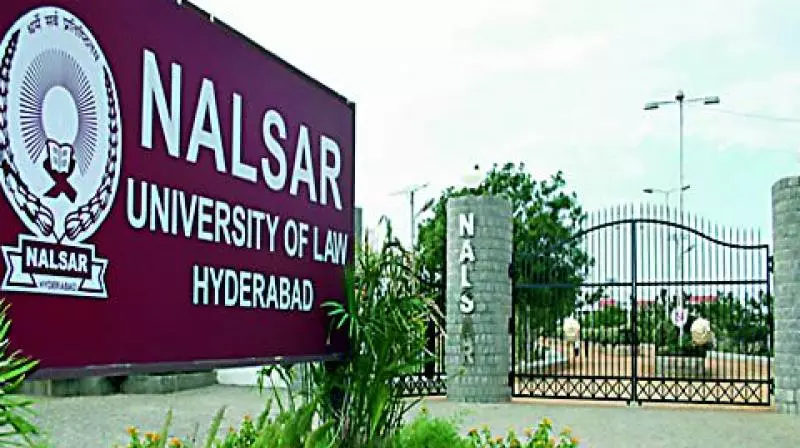
Men received 70.03 per cent of recorded arbitrator appointments made by the Supreme Court, the Delhi High Court and the Bombay High Court, while a small group of professionals accounted for nearly a quarter of appointments, according to a study by the Nalsar University of Law.
The report, ‘Arbitrator Appointments in Numbers’, prepared by the university’s Milon K. Banerji Centre for Arbitration Law, analysed 3,688 cases registered before the three courts in 2025. The data was collected up to June 30, 2026.
Of the 2,283 appointments for which gender information was available, 1,598, or 70.03 per cent, went to men and 685, or 29.97 per cent, to women. Men accounted for 79.17 per cent of recorded appointments at the Supreme Court, 71.30 per cent at the Bombay High Court and 68.88 per cent at the Delhi High Court.
The report also found that appointments were concentrated among a relatively small group of arbitrators. Of the 1,060 distinct arbitrators identified, 54, or about 5.1 per cent, received seven or more appointments each. Together, they accounted for 548 of the 2,283 appointments, nearly 24 per cent.
The concentration was more pronounced at the Bombay High Court, where 11.21 per cent of arbitrators received 38.24 per cent of court-appointed positions. One male retired judge received 34 appointments in the dataset. At the Delhi High Court, the most-appointed arbitrator was a female retired judge who received 19 appointments.
The three most-appointed arbitrators at the Bombay High Court collectively received 67 appointments, compared with 46 for the three most-appointed arbitrators at the Delhi High Court.
The researchers cautioned that repeated appointments did not, by themselves, established favouritism, bias or impropriety.
The study also examined the professional backgrounds of arbitrators. Advocates accounted for 73.21 per cent of appointments for which occupational details were available, followed by retired judges at 23.73 per cent and technical experts at 3.10 per cent.
The Supreme Court showed a different pattern, with retired judges accounting for 88 per cent of its recorded appointments, although the researchers cautioned that the dataset for the court was relatively small. Technical experts accounted for only 1.43 per cent of appointments at the Bombay High Court and 4.14 per cent at the Delhi High Court.
The researchers recommended broadening the pool of eligible arbitrators, including qualified technical experts in specialised disputes involving sectors such as construction and infrastructure. They also called for a national database recording arbitrators’ qualifications, professional experience, appointments and workloads.
The report suggested that courts check proposed arbitrators’ availability and existing assignments before making appointments. The aim, it said, should not be to prohibit repeat appointments but to make the process transparent and allow appointment patterns to be monitored.
