Megalithic Burials May Rewrite Telangana's Prehistory

These ancient monuments were discovered by Kondaveeti Gopi Varaprasada Rao, a research scholar at Maulana Azad National Urdu University (Manuu), during his field explorations across Godavari basin, according to a statement: Reports
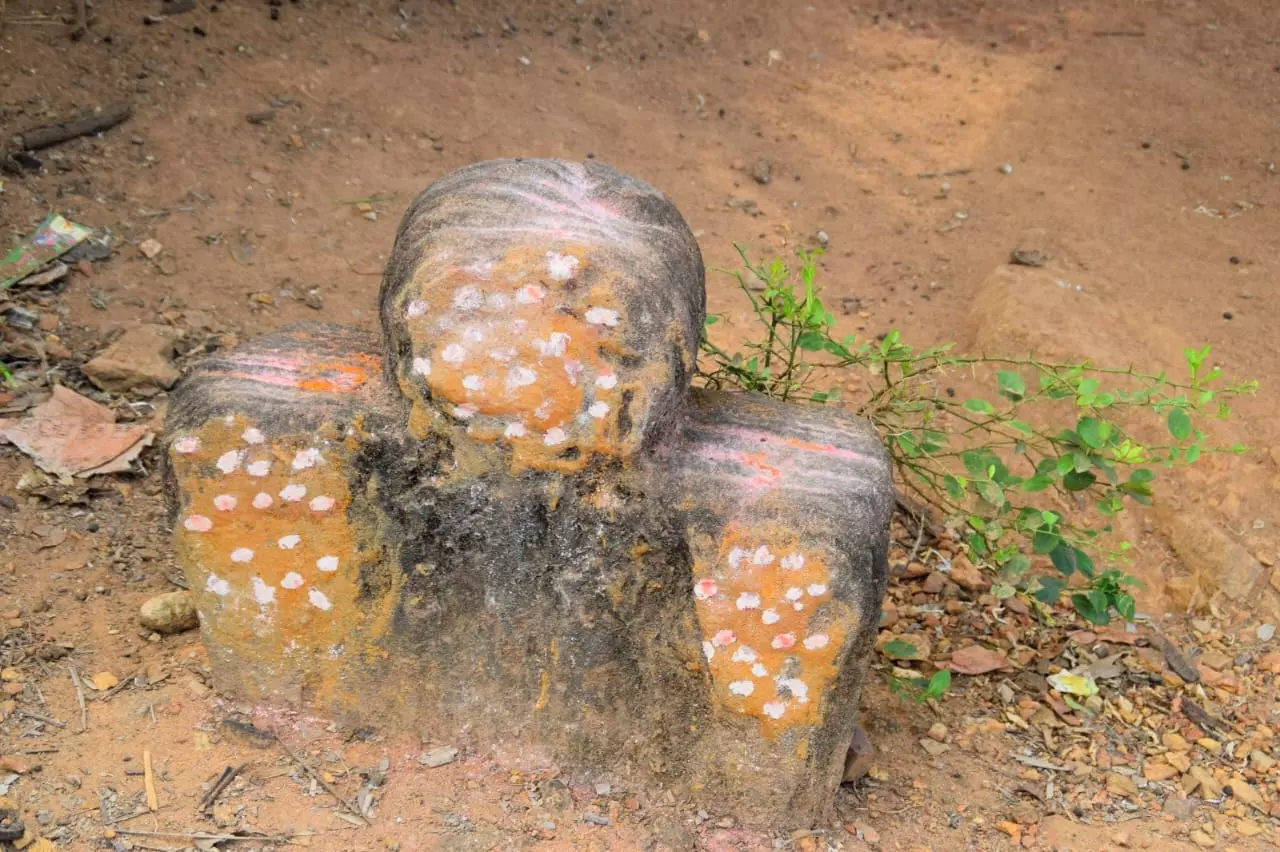
HYDERABAD: Megalithic burials consisting of dolmens and rare anthropomorphic upright stones have recently been discovered at the hillock region of Edjarlapalle, Venkatapur mandal, Mulugu district. The large cluster of Megalithic stone structures locally known as ‘Rakashasi Goollu’ or ‘Pandava Goollu’.
These ancient monuments were discovered by Kondaveeti Gopi Varaprasada Rao, a research scholar at Maulana Azad National Urdu University (Manuu), during his field explorations across Godavari basin, according to a statement.
The site is located on a rocky plateau and spread in nearly 40 acres, indicating the presence of a large Megalithic burial space. The Dolmens are formed by two or three upright stone slabs supporting a massive capstone. Several of these monuments are still intact, with capstones measuring up to 9 x 11 feet. The height of these structures’ ranges between 2 to 5 feet, said Gopi.
This indicates that a well-organised prehistoric community flourished in this region nearly three thousand years ago, he added. Some are seen as chamber-like formations with entrance openings, reflecting the funerary and ritual practices of prehistoric communities.
In addition to dolmens, a few anthropomorphic upright stones resembling human forms were also noticed. These stones, partly buried in the ground and rising 2-3 feet above the surface, are revered by local villagers as sacred symbols, the statement said.
The stones are shaped in a manner of a human form, standing vertically with a distinct head and body like appearance, Varaprasada Rao said.
Though a number of monuments have been damaged over time due to natural and human factors, around 40–50 Megalithic structures are still visible today. The density and scale of this site make Edjerlapalli one of the most important newly-identified Megalithic locations in Telangana, he said.
This discovery offers valuable insights into early human belief systems, mortuary traditions, and settlement patterns in the Deccan region. The site deserves immediate documentation, protection, and conservation, the research scholar added.
Varaprasada Rao said it also opened new avenues for archaeological research and cultural tourism in the region.
Such anthropomorphic monuments are uncommon in the Megalithic landscape of Telangana. Their presence at Edjerlapalli indicates a complex belief system in which early communities may have memorialised ancestors or revered spiritual entities in human form. Local villagers still regard these stones as sacred, Varaprasada Rao added.
