Medaram Jatara Reflects Tribal Valor, History of Sammakka–Saralamma

27 Jan 2026 12:43 PM IST27 Jan 2026 12:43 PM IST
Reconstructed shrine with 46 pillars highlights tribal culture and devotion to Sammakka–Saralamma
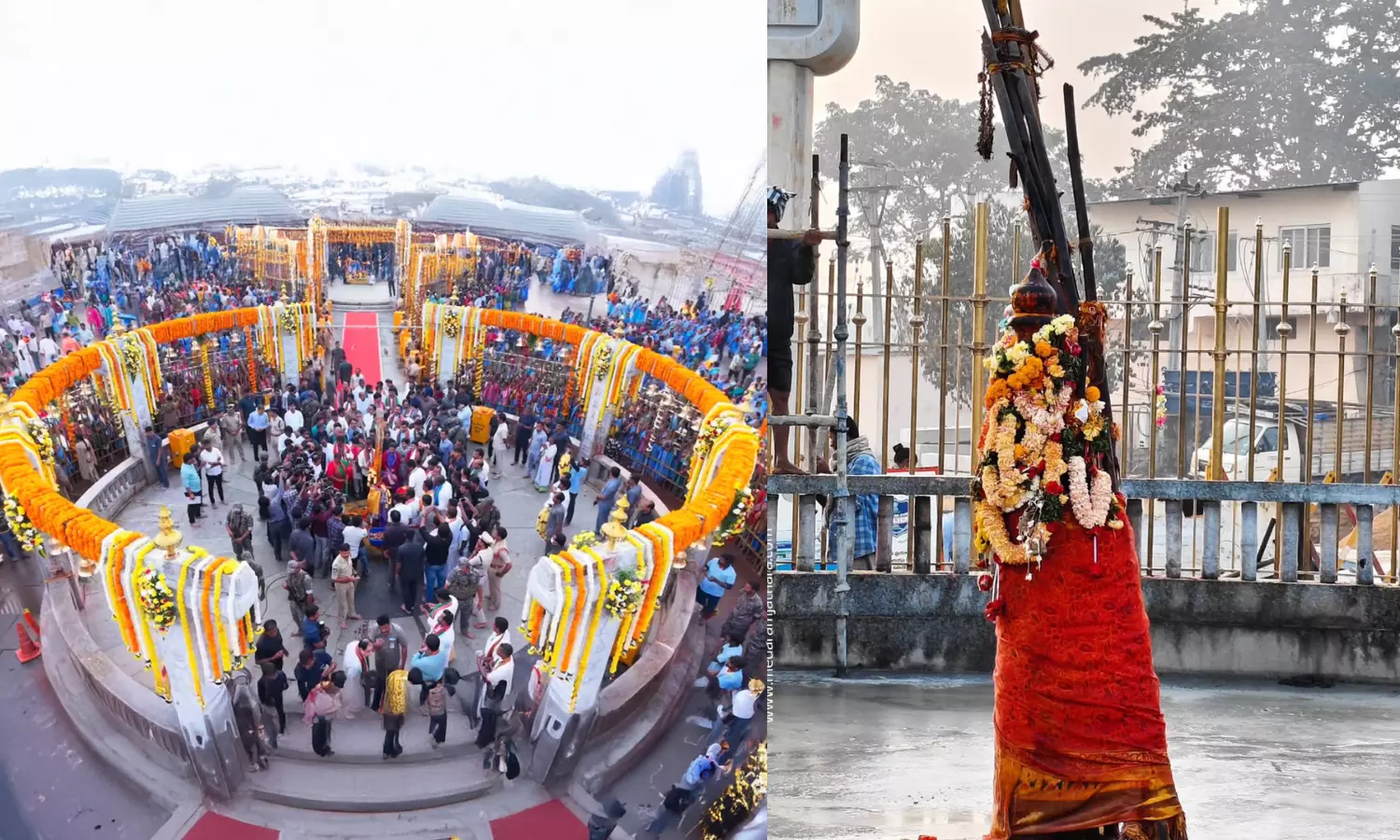
Sammakka Saralamma Jatara
Warangal: The Medaram Jatara, the largest tribal festival held in honour of forest goddesses Sammakka and Saralamma for their sacrifice and valour, attracts devotees not only from Telangana but also from Andhra Pradesh, Chhattisgarh, Maharashtra and Karnataka, besides people from abroad.
Held once every two years, the grand jatara is known for its religious significance and cultural importance. This year, special attention is drawn to the reconstruction of the Gaddelu (platform) complex at the shrine. Granite stones were specially brought from Rayachoti in Annamayya district and Allagadda in Nandyal district of Andhra Pradesh, sculpted by artisans and installed at Medaram.
The complex, built with 46 pillars, includes eight inner ornamental arches and one main outer arch, offering a grand visual appeal to devotees. Notably, more than 7,000 stone carvings depicting tribal culture, lifestyle and the legacy of the Koya tribe have been sculpted on these structures.
A popular legend is associated with the origin and conduct of the jatara, which continues to be observed with deep faith and tradition by lakhs of tribal and non-tribal devotees alike.
According to studies based on palm-leaf manuscripts and traditional festivals, the Koya tribal lineage, known as the Gottu Koya clan, is believed to have originated from Beramboina Raja.
Local legend says that Meda Raja, who once ruled this region, found an infant in the forest surrounded by tigers and lions. Amazed by the sight, he brought the child to his palace, named her Sammakka, and raised her along with his own daughter, Nagulamma. When they came of age, Meda Raja arranged their marriages with Pagididda Raja.
Sammakka later gave birth to Saralamma, while Nagulamma had two sons, Jampanna and Muyanna. Years later, when Kakatiya ruler Prataparudra attacked Polavasa, ruled by Pagididda Raja, Saralamma and other family members went to the battlefield. In the ensuing war, Saralamma, her husband and Nagulamma were killed, and Jampanna sacrificed his life by jumping into the Sampenga stream.
On learning about the tragedy, Sammakka went to the battlefield and fought bravely against the Kakatiya forces. Seriously injured, she is said to have left the battlefield with bleeding wounds and disappeared while heading towards Chilakalagutta hill. Her followers, who went in search of her, reportedly found a box containing turmeric and vermilion near an anthill. Believing it to be a divine symbol of Sammakka, they began worshipping it as the goddess.
Impressed by Sammakka’s courage and sacrifice, Prataparudra is believed to have ordered that a jatara be held every two years on Magha Shuddha Pournami. Thus, the historic Sammakka–Saralamma Jatara began, according to traditional and historical accounts.
( Source : Deccan Chronicle )

Next Story