TGBIE to Introduce Internal Assessments for All Subjects

CM Revanth Reddy approves key changes — First-year practicals, 80:20 evaluation pattern, reduced MPC syllabus, and new AEC group introduced.
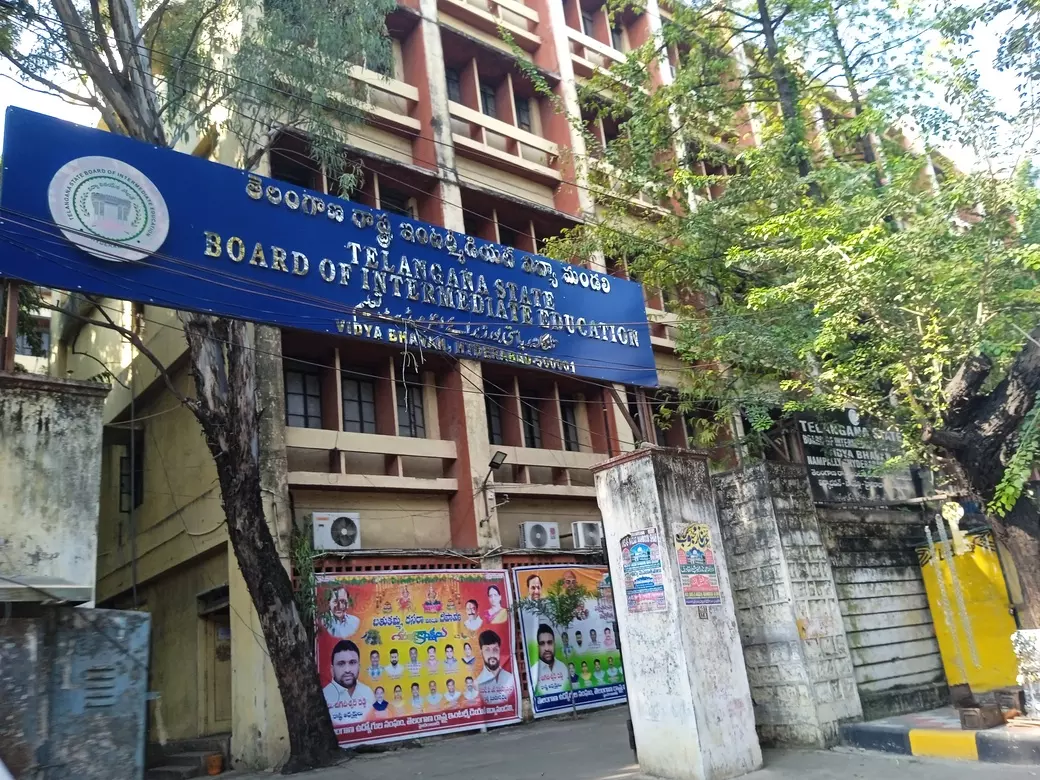
Hyderabad: In a major reform aimed at improving the practical knowledge and communication skills of intermediate students, the Board of Intermediate Education (BIE) has decided to introduce internal assessments for all subjects from the next academic year.
Until now, only second-year students had practical exams, with English practicals introduced for both first and second years in the 2023-24 academic year. “Under the new system, all subjects, including arts and languages — for both first and second year students — will have internal assessments, with 80 per cent weightage for theory and 20 per cent for internals,” said S. Krishna Aditya, secretary of the TGBIE.
The board has sent proposals seeking approval from Chief Minister A. Revanth Reddy, and the file was approved on Thursday. Krishna Aditya said that this move aligns with the CBSE pattern, which is also followed by 13 other education boards across the country.
A new course will also be introduced to strengthen the foundation of students opting for commerce in higher studies. The ACE — accounts, commerce, and economics — course will be launched from the next academic year. The mathematics exam pattern and syllabus, which were common for the MPC and MEC streams, will also be revised.
The board will modify the syllabus in alignment with the NCERT curriculum, and QR codes will be incorporated into textbooks for digital learning in collaboration with SCERT. A committee of subject experts will finalise the syllabus and internal exam pattern by December. Printing of the new textbooks is expected to be completed a month before the new academic year begins.
Explaining the purpose of internal assessments, Krishna Aditya said, “In Arabic, the focus will be on improving speaking skills to benefit students who plan to go abroad. In economics, students will participate in activities related to the state Budget, while in history, students may present a thesis project based on their local region.”
He added that each subject’s internal activities are being designed by expert committees to enhance students’ ability to express and apply what they learn.
