Live-in Relationship is Difficult to Prove, Say Activists

The judgment does not prescribe an exhaustive evidentiary test
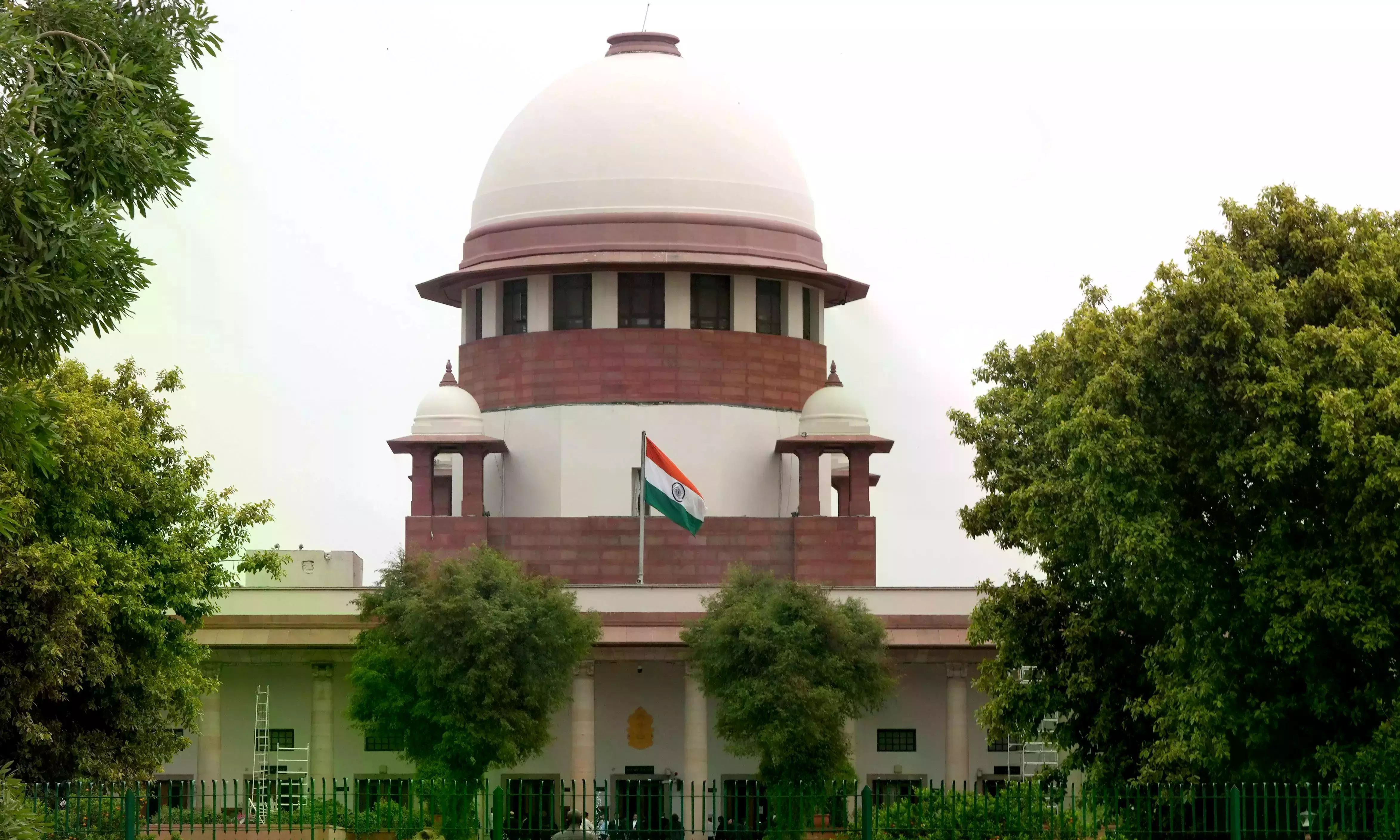
HYDERABAD: A woman in a live-in relationship can now seek criminal action under Section 498A of the IPC, which punishes cruelty by a husband or his relatives, if the relationship closely resembles a marriage and the couple intended to marry, the Supreme Court has ruled. However, women’s rights activists note that while the decision recognises that abuse can exist outside a formal marriage, proving the relationship and securing a proper police response may still be difficult.
“You cannot define violence or its nature based on a formal marriage certificate,” said Anusha Bharadwaj, founder and strategic adviser at VOICE-4. “Women in long-term live-in relationships can experience the same patterns that exist within marriages. Those patterns include control, cruelty and violence. The law in our country should respond to all such situations.”
The case arose from two complaints filed by a woman in 2016 who alleged that she and the accused married according to Hindu customs on October 17, 2010, and later lived together in Bengaluru. The accused disputed the validity of the marriage. The allegations included concealment of an earlier marriage, dowry harassment, physical cruelty and burn injuries to her leg.
The accused sought to quash the proceedings, arguing that Section 498A applied only to a valid marriage. The Supreme Court ruled that formal marital status had no rational link to the provision’s purpose and gave “husband” a broader, protective reading despite the usual rule that criminal laws are interpreted narrowly.
“A wrongdoer cannot take advantage of his own wrong,” said Aditya Kashyap, an advocate practising before the Supreme Court and Delhi High Court. “If his concealed marriage could be used to defeat Section 498A, his fraud would become his immunity.”
The court distinguished live-in relationships generally from the narrower category of a “relationship like marriage”. “Two things have to be shown,” Kashyap said. “First, that it was a relationship like marriage, on the well-settled indicators. Second, an intention to marry, which the court has newly added for the penal provision. Documentary and third-party evidence will weigh far more than assertion, though all of it remains a matter for trial.”
Kashyap said possible evidence could include an engagement, a fixed or negotiated wedding date, invitations and family negotiations. Messages exchanged at the time and a home established in contemplation of marriage could also support the claim. The judgment does not prescribe an exhaustive evidentiary test.
“The authorities should consider circumstantial evidence such as a shared residence and financial arrangements,” V. Sandhya, national committee member of the Progressive Organisation for Women. “Even women within marriage are not always protected properly. Women who are not legally married face greater difficulty because their relationships do not receive the same recognition.”
Additionally, Bharadwaj said police response could become the harder part of the ruling. “The police and legal systems have been slow to catch up even with the basic provisions of the Domestic Violence Act,” she said. “Such cases can arise in rural areas too, where the officer registering the complaint may not know how the law applies.”
The judgment also refers to personal autonomy, changing family forms and the recognition of same-sex relationships, but its ruling remains confined to a woman, a male partner treated as a husband and an intention to marry.
“The judgment may appear inclusive because it refers to same-sex relationships, but the protection remains heteronormative,” said Patruni Chidananda Sastry, LGBTQIA+ rights activist, drag artiste and founder of DragVanti. “It assumes abuse happens to a woman at the hands of a male partner. What happens when the survivor is a trans man, queer man or non-binary person?”
Sastry said queer-rights groups had encountered trans survivors of partner and family violence who lacked a direct legal remedy. The ruling also leaves unclear whether a trans woman would be treated as a woman under Section 498A and offers no clear remedy to two men, two women or non-binary survivors.