Likely Prehistoric Tool Making Site Found In Hyderabad

Four deep grooves, possibly linked to prehistoric tool making activities, have been identified: Reports
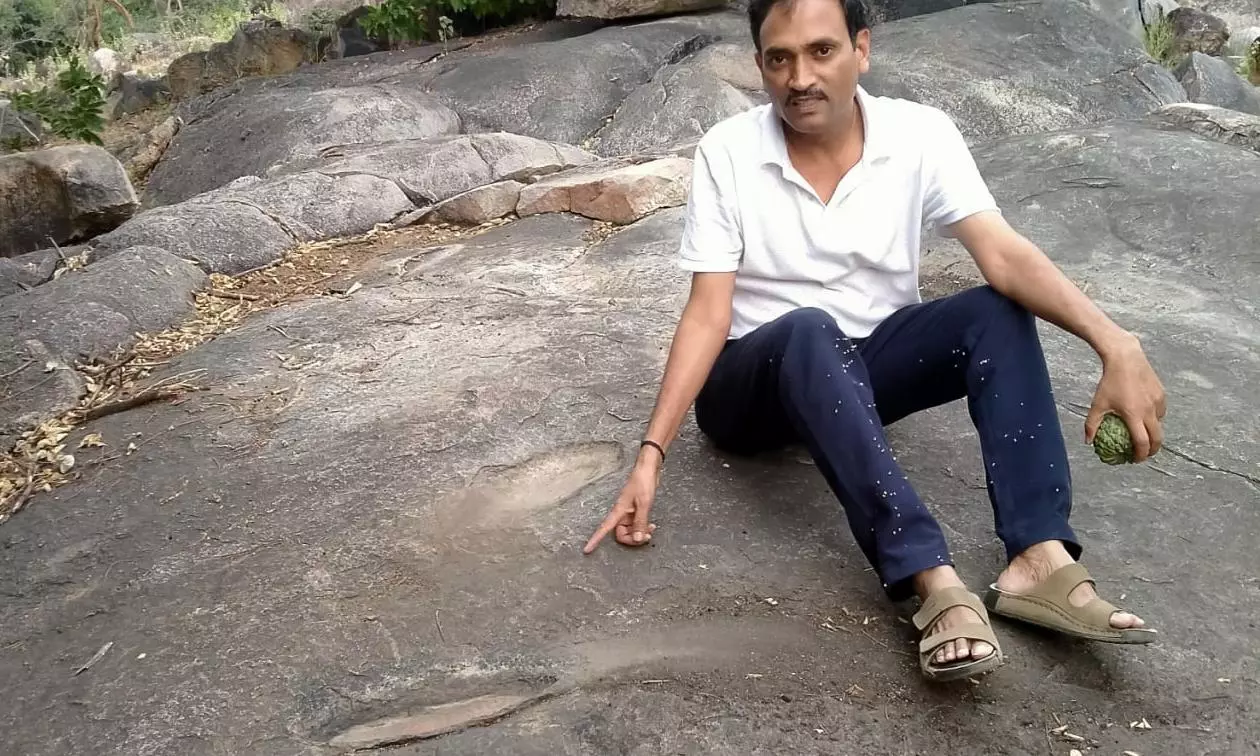
HYDERABAD: Four deep grooves, possibly linked to prehistoric tool making activities, have been identified near the Banda Juvvi Watch Tower in Mrugavani National Park, Chilkur, Rangareddy district. The grooves shed light on early human activity in the forest area around Hyderabad.
Following information from Rangareddy district forest official B Anand Kumar, history enthusiast Dr. Satyanarayana Dyavanpalli found the grooves, prompting a call for systematic archaeological survey to establish the origin, purpose and age of the markings.
Each groove is approximately one foot long and between two and four inches deep. They are located on a plateau-like rock surface overlooking valleys. The landscape features nearby water sources, valleys that may have supported hunting and gathering.
According to Dr. Dyavanapalli, the length and depth of the grooves raise the possibility that they were repeatedly used for grinding or sharpening stone implements, such as axes and other tools. Their possible association with the Neolithic-period, potentially dating to around the fifth millennium BCE, remains a hypothesis that requires scientific verification.
Another site of archaeological interest, located about one kilometre away near the Forest Trek Park features ochre coloured rock paintings on a formation resembling snake hood. The reported motifs include a turtle, an animal interpreted as tamed, hunting scenes, arrows, a possible representation of a fifth phratry or social subdivision of a group of people, and border-line designs.
These paintings may provide important clues about the cultural expressions, subsistence activities and social organisation of the people who created them, he said.
Dr Dyavanapalli urged the heritage department to conduct a systematic archaeological survey of the Banda Juvvi Watch Tower area and the nearby rock-art site. The investigation should document the grooves and paintings, examine the surrounding rock shelters and boulder formations, and look for associated evidence such as prehistoric stone tools, pottery fragments, rock bruises and other traces of human activity.