Residents said they had never witnessed such an episode before and questioned the silence of the Telangana Waqf Board.
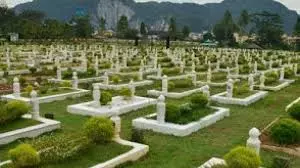
Hyderabad: The incident at Langar Houz, where a family was forced to exhume and rebury a relative’s body after a dispute over a grave, has brought renewed attention to the shrinking burial spaces in Hyderabad and the challenges faced by families seeking a final resting place for their dead.
Residents said they had never witnessed such an episode before and questioned the silence of the Telangana Waqf Board. “Can’t believe this happened in Langar Houz — a buried body exhumed after a grave dispute. No peace even after death? Where is the Waqf Board that claims to protect Waqf lands? Why this silence on such a serious issue?” said Abdul Khaliq of Mehdipatnam, recalling the hurdles he faced while burying his father during Covid.
The disappearance of functional graveyards has turned burials into a costly ordeal, with charges ranging fromRs 10,000 to overRs 1 lakh depending on the spiritual or historic importance of the graveyard. Families often rely on reusing an existing family grave if possible, as obtaining new space has become increasingly difficult.
“Many Muslim graveyards are under the control of land grabbers who do not allow burials. People are struggling for space. Caretakers are selling old grave slots forRs 10,000 toRs 30,000, and in some major dargah graveyards, the rates are even higher,” said Nayeemullah Shareef of the Waqf Properties Protection Cell. He urged the Revanth Reddy government to survey all Muslim graveyards, remove encroachments and enforce nominal fixed burial charges, urging that criminal action must be taken against violators.
Large-scale land encroachments remain a major reason for the shrinking burial grounds. Several Gazette-notified Muslim graveyards have already reached full capacity and can no longer accommodate new burials. Within GHMC limits, there are 723 Muslim graveyards, and Waqf Board records show most are full or rapidly nearing capacity. Nearly 86 graveyards have reported encroachments, prompting the High Court in earlier instances to summon the Waqf Board CEO.
To address the issue, the government has allotted land for new graveyards in several locations, including on the outskirts of the city. However, proposed graveyards within residential areas have sometimes faced local resistance and legal challenges, said Nayeemullah.
Deccan Waqf Properties Protection Society president Osman Bin Mohammed Al-Hajri termed the Langar Houz incident “one of the rarest in the history of burials in India” and said the government must ensure dignity for the dead. “The government should protect all graveyards with proper fencing and ensure adequate burial space within existing Waqf properties,” he said.
Waqf Board chairman Azmatullah Hussaini and CEO Asadullah did not respond to repeated calls seeking comment.

