Kurnool Tragedy: Delay In Arrival Of Ambulances Highlights Shortage Of Trauma Care

At 3.45 am, a major blaze gutted a private passenger bus near Chinnateruku village on National Highway-44 in Kurnool, claiming 20 lives.
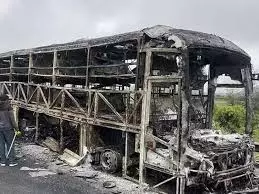
Hyderabad: At 3.45 am, a major blaze gutted a private passenger bus near Chinnateruku village on National Highway-44 in Kurnool, claiming 20 lives. Locals raced against time, shifting the injured in their own vehicles to the nearest hospital. The first ambulance arrived 30 minutes later after covering a 15-kilometre distance, they said. The delay once again exposed critical gaps in emergency response and trauma-care infrastructure on India’s national highways.
In 2022, more than 900 ambulances were deployed by the National Highways Authority of India (NHAI) at 50-kilometre intervals or at toll plazas to ensure timely medical attention for accident victims. In March 2024, NHAI signed an MoU with HLL Lifecare Limited to strengthen the Incident Management System (IMS), which includes ambulances, route-patrol vans, cranes, real-time tracking, and supervisory mechanisms.
However, experts pointed out that these measures largely remain on paper.
According to Prof. Shailaja Tetali, dean (research) at the Indian Institute of Public Health, Hyderabad (IIPH), the lack of a safe-system approach and coordinated response continues to make such accidents recurring tragedies. “We need a safe-system approach where there is a constant effort to improve systems and train people,” she said.
Prof. Shailaja emphasised the need for a centralised trauma-care network. “Setting up a trauma-care centre is expensive, but with better systems, communication, and training, the damage can be minimised. We need proper equipment and a triage system to prioritise patients based on urgency, especially when resources are limited.”
Rural India often lacks specialised trauma care, leading to delays in shifting critical patients. “Instead of first taking a critical victim to a primary health centre, they should be directly moved to the nearest trauma-care centre, which must be alerted in advance to prepare for treatment,” she added.
Dr Mukti Advani from IIPH said there is little awareness among highway-patrol teams about the nearest trauma facility. She suggested collaboration with navigation platforms for real-time identification of trauma centres. “With technology and synchronised planning, delays can be reduced significantly,” she said.
According to trauma specialist Dr Srinivas Kasha from a private hospital in Hyderabad, medical assistance must reach victims within 10 minutes of the incident. “These are not regular fire injuries. Internal trauma must be attended to immediately. Timely intervention and post-trauma care are crucial,” he said.
