KPHB Logs 5× More Drunk-Driving Cases Than Kukatpally

The traffic police booked 426 motorists for driving under the influence of alcohol during the weekend, but the data shows an unusual contrast: KPHB reported 53 cases, the highest among all, while Kukatpally – barely a few kilometres away – reported only 10
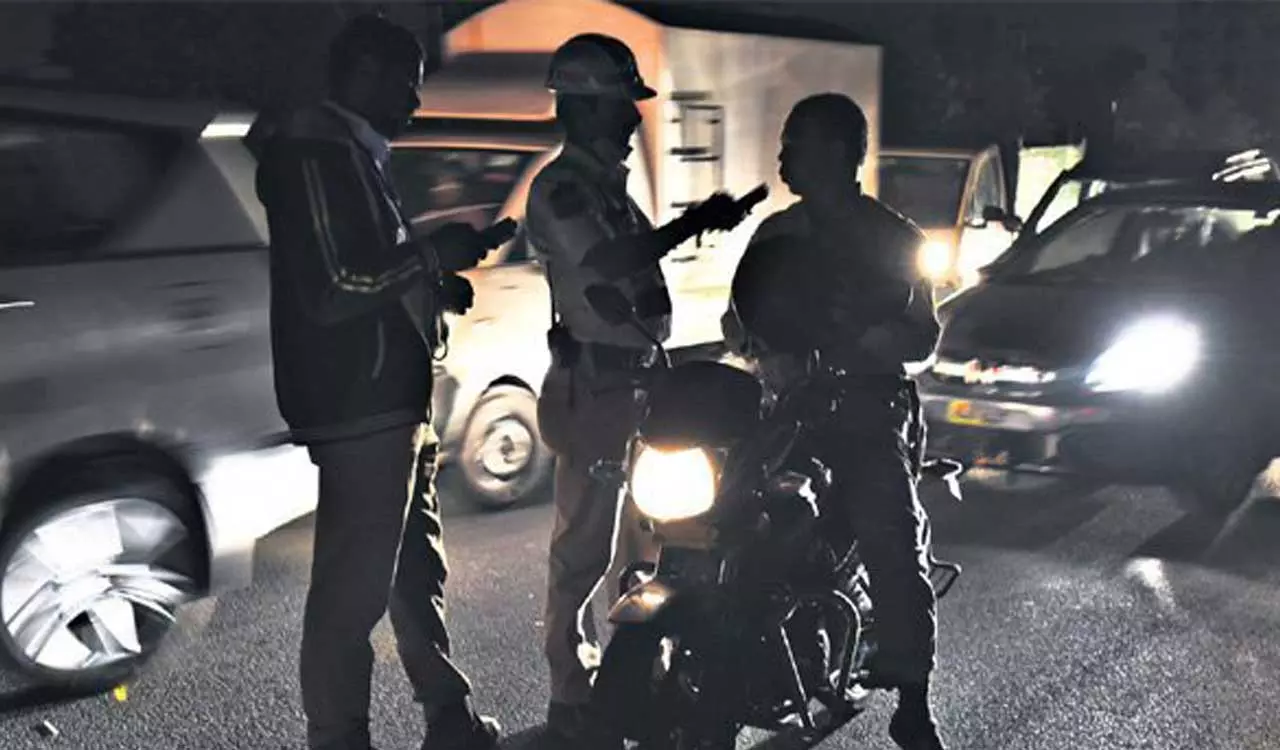
Hyderabad: Despite being located on the same stretch of road, the KPHB traffic police limits recorded five times more drunk-driving cases than neighbouring Kukatpally during the Cyberabad police’s weekend enforcement drive, data from the traffic police shows.
The traffic police booked 426 motorists for driving under the influence of alcohol during the weekend, but the data shows an unusual contrast: KPHB reported 53 cases, the highest among all, while Kukatpally – barely a few kilometres away – reported only 10.
A senior Cyberabad traffic official said the difference is largely due to access to liquor outlets and local drinking patterns. “KPHB has more permit rooms compared to Kukatpally, so many people come there to consume alcohol,” the official said. “These permit rooms allow people to drink and leave immediately, increasing the chances of drunk driving.”
KPHB traffic inspector G. Venkat said the numbers should not be interpreted as one area having more offenders. “The weekend mega drunk-driving checks are rotated across police stations. This week it happened in KPHB, so the numbers are higher. Last week Kukatpally booked around 50,” he said.
He also highlighted KPHB’s heavy traffic until late evening, often resulting in delays in the starting of the checking compared to other divisions. “Our roads remain busy till 9.30 pm, so we begin drunk-driving checks only after clearing traffic duties. In some areas, checks start earlier. The numbers depend on schedule,” he said.
KPHB and Kukatpally areas have been at the centre-stage of open boozing, with many residents flagging behaviours like hurling of empty beer bottles at the gated communities. Locals blame this on open spaces behind gated communities. They had also said that the offenders often flee the spot soon after they hear police coming in to catch them after complaints.
Many locals also flagged that despite the permission to have permit rooms, many wine shop owners encourage people to booze in the open, making it impossible, especially for women, to pass through the route. As per excise rules, wine shops are generally not supposed to be located within residential colonies. However, locals have highlighted that despite their widespread presence near residential areas, no action has been taken against the wine shop owners, neither by the excise police nor by the traffic or law-and-order police.
Speaking of the other areas, the senior official said that enforcement in rural belts continues to record higher violations because awareness of legal consequences remains low. “Drink-and-drive culture exists even in IT corridors, but people there are generally more aware and cautious,” he said.
Of the total cases, 323 involved two-wheelers, 17 auto-rickshaws, 85 four-wheelers, and one heavy vehicle. Around 368 persons recorded Blood Alcohol Concentration (BAC) levels between 35 mg/100 ml and 200 mg/100 ml, 43 persons between 201 mg/100 ml and 300 mg/100 ml, and 15 persons between 301 mg/100 ml and 550 mg/100 ml. All will be produced before court.
Police cautioned that under Section 105 of the Bharatiya Nyaya Sanhita, those causing fatal accidents while drunk may face up to 10 years’ imprisonment. Between December 1 and 6, courts disposed of 410 earlier cases, sentencing 41 offenders to jail and fine, 21 to fine and social service, while 348 were fined.
In Hyderabad, over two days, the traffic police booked 474 persons for driving drunk, including 381 two-wheeler riders, 26 handling three-wheelers and 67 at the wheels of four-wheelers.
In 89 cases, the blood alcohol content was between 30 and 50, and at the higher end, 12 drivers were found with 251-300 units and in nine cases the reading was above 300 micrograms of alcohol per 100 millilitres of blood. The legal limit is 30.
