KLIS Probe: Fact-Finding Commissions Are Not Punitive, Singhvi Argues Against BRS Leaders' Petitions

Abhishek Manu Singhvi defends Pinaki Chandra Ghose Commission proceedings; says challenge to Kaleshwaram report is an afterthought.
Hyderabad: Senior counsel Abhishek Manu Singhvi, representing the state government, told the Telangana High Court on Monday that former minister and BRS MLA T. Harish Rao had received “excess justice”, not merely natural justice, during the proceedings of the Justice Pinaki Chandra Ghose commission into alleged irregularities in the Kaleshwaram lift irrigation scheme (KLIS).
A division bench comprising Chief Justice Aparesh Kumar Singh and Justice G.M. Mohiuddin Singhvi was hearing a batch of petitions filed by BRS president and former chief minister K. Chandrashekar Rao, Harish Rao, IAS official Smitha Sabharwal and former chief secretary S.K. Joshi, who challenged the commission's report. The petitioners had sought directions to the government to not take action against them based on the commission’s report, particularly in the wake of the discussion held in the state Assembly.
Singhvi argued that Harish Rao had voluntarily participated in the inquiry and did not raise any objection regarding the procedure followed by the commission. According to him, there was no allegation from Harish Rao during the inquiry about denial of opportunity, no request for cross-examination and no protest over the process. The present challenge to the commission’s report, he contended, was a retrospective afterthought.
Singhvi said Harish Rao’s petition was based on the incorrect premise that fact-finding commissions were coercive or punitive in nature. According to him, such commissions were constituted only to gather facts and make recommendations, and the challenge to their legality was based on a misunderstanding of how they function.
Singhvi argued that accepting Harish Rao’s contention would effectively deprive the government of its authority to investigate issues involving public interest.
Senior counsel also pointed out that the Comptroller and Auditor General of India (CAG) had estimated the cost of the project at over `1.4 lakh crore, while more than `80,000 crore had already been spent. The financial burden of the project continued to affect the state, which was paying around `6,500 crore annually towards interest.
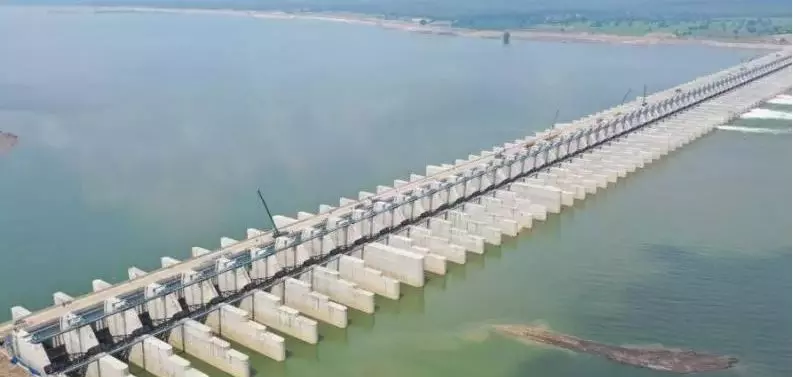
Singhvi said the decision to hand over the matter to the Central Bureau of Investigation itself showed transparency and the government’s bona fides, noting that many states ordinarily entrust such probes to their own police agencies. He also referred to concerns raised by the National Dam Safety Authority (NDSA) regarding the execution of the project, particularly the construction of the Medigadda barrage.
The court will continue hearing on Tuesday and the state government will submit objections in the petitions filed by Chandrashekar Rao, Sabharwal and Joshi.
