KCR Asserts Engineers Handled KLIS Project
The questioning of KCR began in secrecy after appearing before the Commission
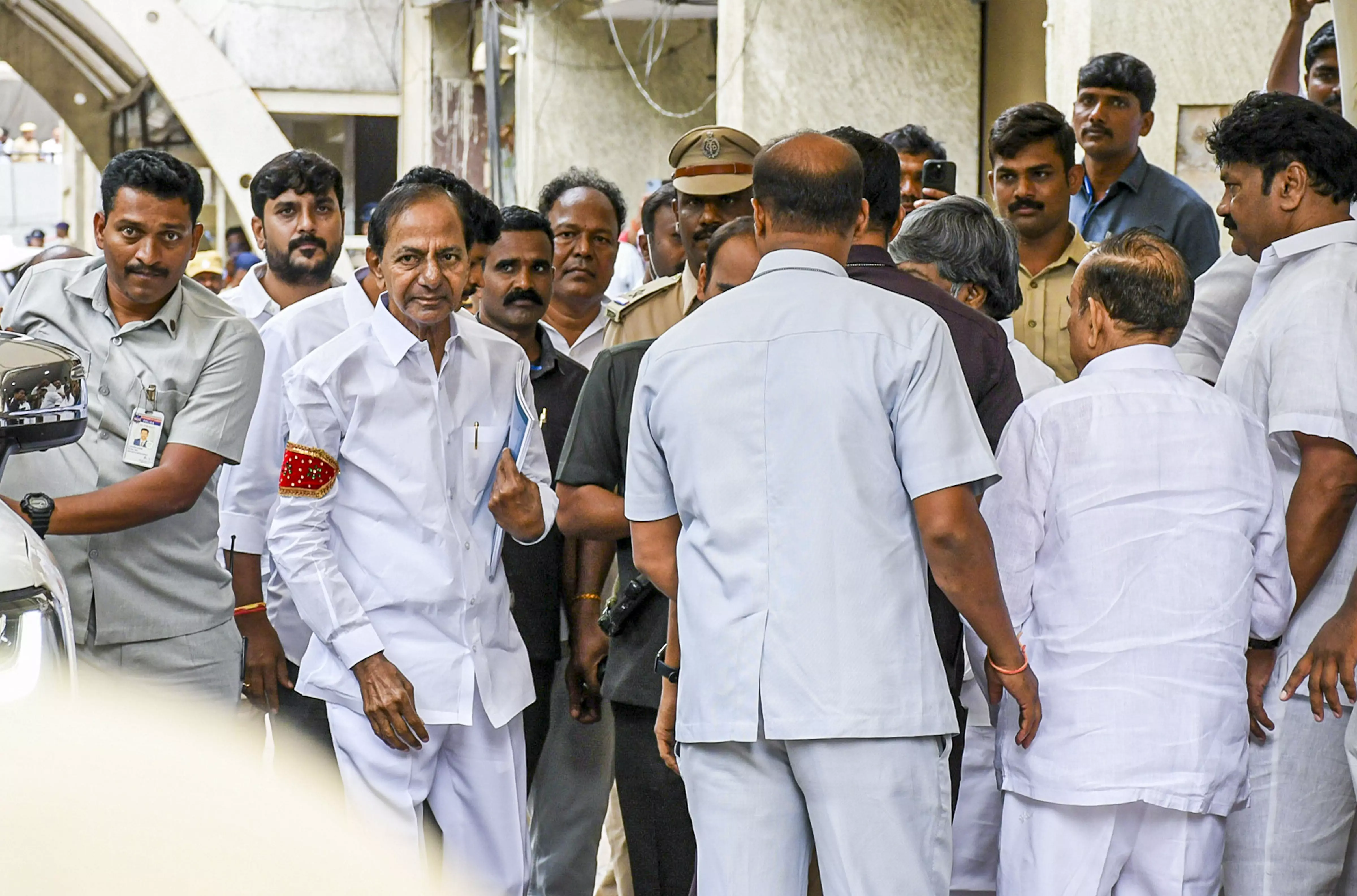
Hyderabad: The highly- appearance of former chief minister K. Chandrashekar Rao on Wednesday before the P.C. Ghose commission of inquiry in the Kaleshwaram project and his expected defence of the project and the decision-making, turned out to be a tame affair and was shorn of any drama with Chandrashekar Rao's questioning held in-camera as per his request.
However, Chandrashekar Rao's appearance before the commission remained significant as he is learnt to have made it clear that neither he nor any elected representative the then government, had any direct role to play in the designing, construction or maintenance of the project's barrages.
He is also learnt to have clearly stated that since the entire project was a massive one, the government took the decision to proceed with it, but all technical decisions were completely in the purview of engineers. He is learnt to have faced 18 questions and the hearing lasted just under 50 minutes.
Based on what emerged during the hearing, Chandrashekar Rao's responses to questions from Justice Ghose all pointed to the role of engineers, and technical decisions taken by them, indicating that any problems that may have arisen, were not a result of government decisions, and that neither he, nor anyone else in the government he led, had any role to play in the outcomes witnessed at the Medigadda, Annaram, and Sundilla barrages. There were around 4,000 engineers who were involved in construction of the Kaleshwaram project components, Chandrashekar Rao is learnt to have informed the commission.
Chandrashekar Rao is learnt to have said that construction of the barrages was done only after all required permissions were obtained from the Centre and various agencies, and that the plans for the project were prepared by WAPCOS, an organisation of international repute. As far as the taking up the project and decisions on this matter were concerned, all had Cabinet approval and everything was done with the approval of the government, he is learnt to have informed the commission.
To a critical question on the decisions taken on storing water at the barrages, something that several others, including senior irrigation engineers questioned before Chandrashekar Rao said were taken by the “government”, the former chief minister is learnt to have responded that “decisions were taken by engineers” based on the needs for lifting water from the three barrages at Medigadda, Annaram and Sundilla. In response to the question on why the locations of the barrages were changed, he informed the commission that the decision was based on technical reports, including those from WAPCOS, it is learnt.
The former chief minister also informed the commission that Maharashtra did not agree to a barrage at Tummidihatti, and that from Medigadda, there was potential to lift a total of 230 TMCft of water.
