Kazipet Dargah Gears Up for Three-Day Urs Celebrations

The dargah management committee appealed to devotees to attend the Urs festivities in large numbers.
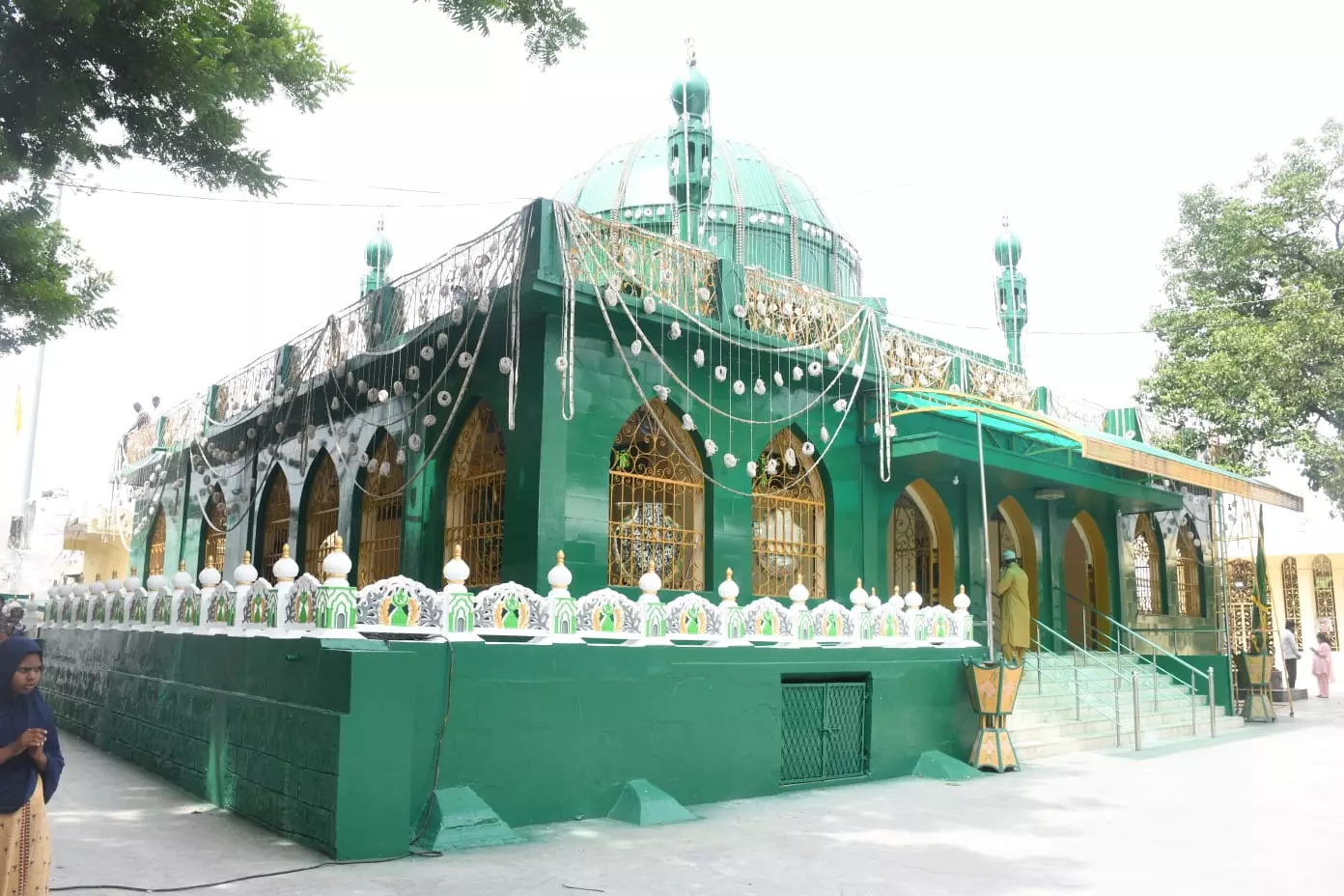
Kazipet:The Hazrat Syed Shah Afzal Biabani Dargah in Kazipet, a prominent landmark of Hanamkonda district, is known for its message of communal harmony, with people from different communities visiting the shrine and offering prayers. The three-day Urs-e-Sharif celebrations will begin on Monday.
The Urs-e-Sharif-2026 celebrations will be held from August 10 to 12, with the dargah management committee making arrangements for a series of spiritual programmes. District in-charge and Revenue Minister Ponguleti Srinivas Reddy will participate in the celebrations on the first day.
On August 10, the Sandal-e-Sharif procession will begin from Bada Ghar at 11 pm. Sajjada Nashin Janab Syed Shah Ghulam Afzal Biabani Khusro Pasha will lead the procession, which will be joined by Khulfa, Mureedeen and devotees. It is scheduled to reach the Dargah Sharif at 1 am, followed by a Mehfil-e-Sama (Qawwali) programme.
On August 11, Chadar-e-Gul will be offered at the dargah at 9 pm under the guidance of the Sajjada Nashin, followed by a Qawwali programme.
The concluding day on August 12 will feature Quran Khwani, Zikr and Rafayi Zarbat as part of the Badava programme. Rafayi Faqirs will later present spiritual demonstrations associated with the Sufi saint.
The dargah management committee appealed to devotees to attend the Urs festivities in large numbers.
According to historical accounts, Hazrat Syed Shah Afzal Biabani was born in Kazipet around 1795. He developed a spiritual inclination at an early age and is said to have memorised the Holy Quran by the age of 12 before studying Islamic religious texts and Sufi philosophy.
At 28, he is believed to have left home and spent nearly 12 years in meditation in the hillocks around Medak and Warangal. Devotees believe he later attained ‘tajalli’, or spiritual enlightenment, at Bandham Cheruvu near Kazipet.
Afzal Biabani is remembered for making human service his primary objective and helping the sick, poor and distressed. Historical accounts also credit him with opposing bonded labour and advocating social justice. His teachings and social service have helped the dargah emerge as a symbol of interfaith harmony.