Kalasagaram Festival: Celebrating Carnatic Music, Dance and Theatre

For the sisters Anahita and Apoorva, this was their first vocal concert for Kalasagaram, though they had come a decade ago for a collaborative appearance
HYDERABAD: The Kalasagaram festival closed on Sunday at Keyes High School, Secunderabad, after 10 evenings where Hyderabad’s audience met familiar names and younger voices in Carnatic music, dance and Tamil theatre. The programme ran from Vidwan Ramakrishna Murthy’s opening recital on November 28 to the violin duet of the Lalgudi scions, the Trichur Brothers, the nadaswaram ensemble led by Vidwan Vyasarpadi G. Kothandaraman, Tamil plays by Vedham Puthithu Kannan, and concerts by singers such as Vidushi Nithyasree Mahadevan along with the sisters Vidushis Anahita and Apoorva Ravindran.
“It’s always nice to be in the city of Hyderabad because the Carnatic music scenario is quite strong there and people listen to good quality Carnatic music,” Nithyasree told Deccan Chronicle, recalling that she has been coming here “from maybe the early 90s.”
Her return this season came after a gap of four or five years, and she spoke of the moment when Kalasagaram read out the list of past awardees ahead of her recital. “It was an emotionally elevating moment for me,” she said.
She described the title of Sangeetha Kalasagara conferred on her as “overwhelming” and the evening as “a humbling experience,” adding that a full audience with several performers present made the concert feel complete. She said Hyderabad listeners had long heard enough Carnatic music for her to approach them much the way she would approach Chennai. “They are quite knowledgeable. They like to listen to some real good stuff,” she said.
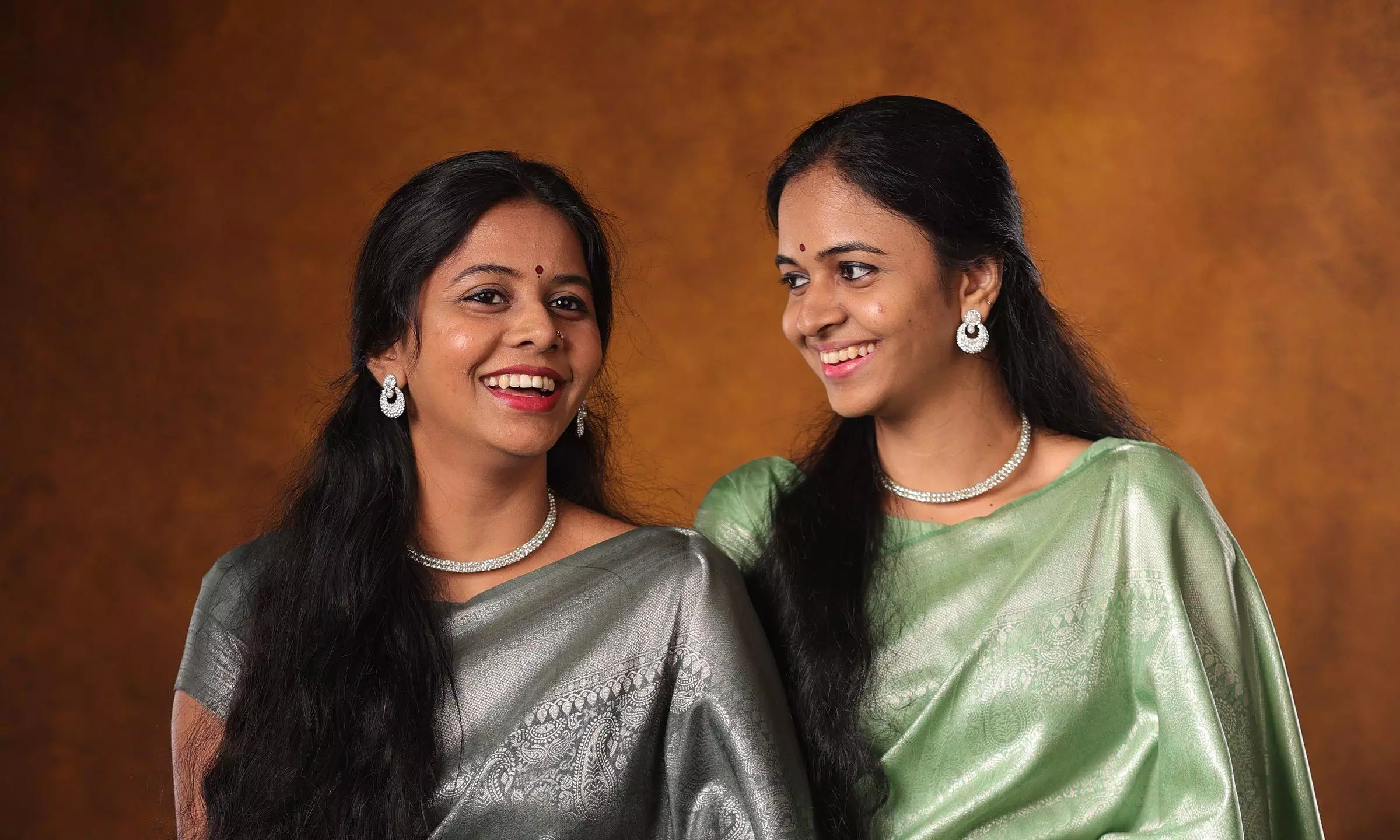
For the sisters Anahita and Apoorva, this was their first vocal concert for Kalasagaram, though they had come a decade ago for a collaborative appearance.
Anahita said their work had two distinct streams inside the same concert. “The music we create together is almost like a sum of two individual identities,” she said. She added that they have learnt over time “to keep the identity that each of us have musically intact” and still find a space where their ideas combine.
While describing the Hyderabad audience, she called the evening as a mix of seasoned rasikas and listeners who come for comfort or curiosity. “We were very glad to see the kind of response we got,” she said.
Anahita spoke about the effort Kalasagaram put into the event, including the décor that changed through the festival. She said she and Apoorva “thoroughly enjoyed seeing the décor every single day,” and felt that artistes notice when organisers give attention to such details. She recalled coming to Hyderabad almost 20 years ago on a government scholarship and watching performances at Shilparamam by groups from Kashmir and the northeast. Those memories remain strong for her because the city introduced her to art forms she would not have encountered at that age.
Language came up at length with Nithyasree, who sang compositions across Tamil, Telugu and other languages. She said vocalists carry a difficult task when switching languages inside a single concert. “Understanding the emotion and bringing the nativity of the language is very difficult,” she said. She added that she learns the meaning first, checks pronunciation and then tries to bring the intended feeling into her singing. Her grandmother and guru, the renowned D.K. Pattammal, shaped her discipline in this regard. “She used to always insist on correct enunciation and also bringing out the bhava in the most impeccable way,” she said.
When it came to younger listeners. Anahita said students respond when they find a story or an emotion inside the music and said she and Apoorva create short pieces for social media to give them an easy starting point. Nithyasree described the art as something that must remain open to change while keeping its older core alive.
“There is a boundary called grammar, there is a boundary called tradition, there is a boundary called your school of thought,” she said. She sees creativity inside those limits as something every artist carries. “All of us have a duty to maintain the classicism and the culture,” she said. She added that the old compositions and their original tunes “have to be maintained” even as time moves on.
The festival placed all these evenings inside Kalasagaram’s long run at Keyes High School, where concerts by names such as Kalyanapuram S. Aravind, the nadaswaram and thavil ensemble, and the theatre teams joined the music season.
Anahita described the organisers’ work as tireless and said the scale of the event is clear to any artiste who returns each year. For audiences and performers, the close of the 58th edition leaves the sense that the December season in Secunderabad continues to matter for music, even with a changing list of voices on stage.