Jagtial-Born IEEE Engineer Explains AI’s Role in Smarter Workplaces

Shivakumar highlights how AI tools save time and boost teamwork.
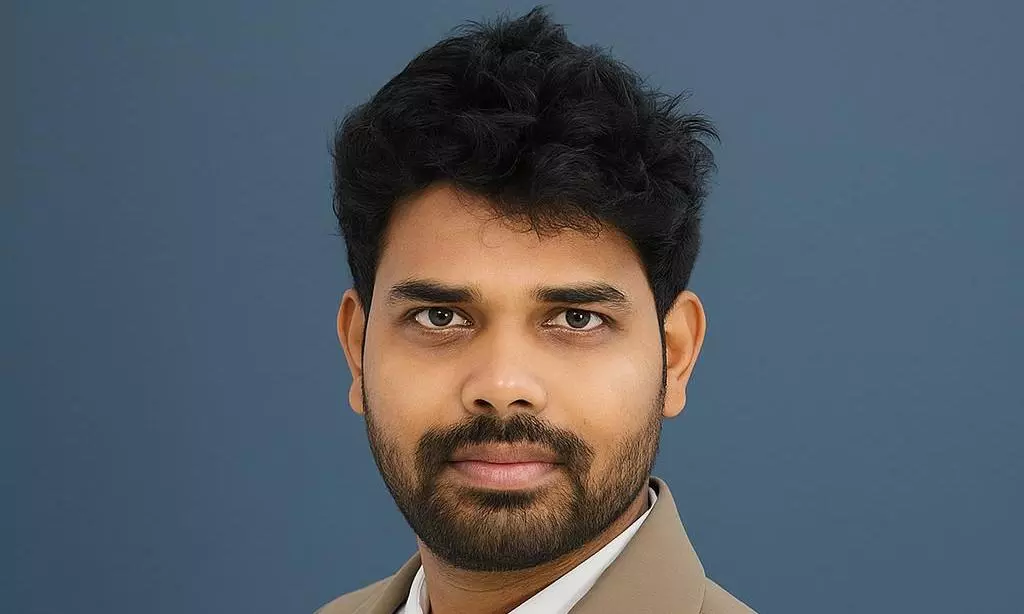
Karimnagar: Highlighting the crucial role of Artificial Intelligence (AI) tools, Bommakanti Shivakumar, a senior member of the IEEE (Institute of Electrical and Electronics Engineers) and Site Reliability Engineer at Adobe (US), who hails from Jagtial district, stated that AI is now poised to solve a critical workplace problem. His remarks came this month, dedicated to AI-related events.
He explained that companies often lose valuable time and miss key decisions because crucial information gets buried in long, unstructured discussions. According to him, AI systems can transform this chaos into clarity by organising and summarising essential information.
Shivakumar’s statement coincides with several AI-related observances, including National Women in AI Month to promote gender diversity, A Better Way with AI Day on October 23, World Coding Day on October 29, and National Cyber Security Awareness Month.
According to Shivakumar, the core issue is that time spent by executives and teams in strategic meetings often leads to scattered notes and miscommunication. Modern AI systems, especially those using advanced transformer models, can now process discussions and instantly generate clear, concise summaries. These tools automatically extract vital information such as key decisions, assign action items, and record accountability, ensuring that even employees who miss meetings receive accurate summaries of what was decided.
The benefits for business leaders are significant, extending far beyond simple note-taking. The technology ensures that every important decision is documented, improving accountability across teams. It can also analyse trends over time, helping identify recurring bottlenecks, stalled projects, or persistent issues slowing progress. However, for such systems to succeed, they must integrate securely and seamlessly with existing workplace tools like email and project dashboards.
Shivakumar added that successful adoption requires a cultural shift, with teams learning to trust and consistently use AI outputs. While human oversight remains essential, particularly in the early stages, the impact is already substantial, especially for Indian companies managing distributed teams across time zones. By saving hours otherwise lost to inefficient meetings, organisations can focus on innovation and better results. The ultimate goal of AI, he emphasised, is to support human intelligence by cutting through noise and highlighting essential insights for faster, more informed decisions.
