IRRI Develops New Climate Change-Resistant Varieties

IRRI’s new Rs 12-crore speed-breeding centre at Rajendranagar has accelerated the development of new varieties.
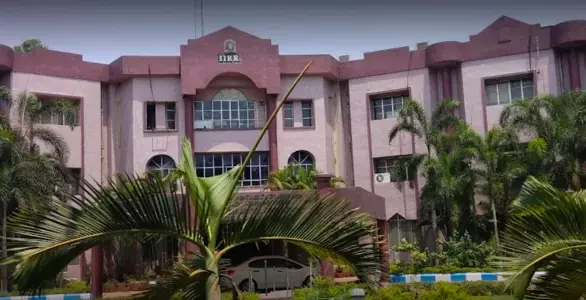
Hyderabad:With global weather shifts threatening crop yields, ICAR’s Indian Rice Research Institute has developed a series of high-yielding, climate-smart, and bio-fortified rice varieties, including DRR Dhan (Mahajya), DRR Dhan 89 (Super Swarna) and up to DRR Dhan 91. These varieties have been tailored to combat various environmental stresses and nutritional deficiencies. They were developed using advanced molecular breeding and marker-assisted selection (MAS) to introduce specific desirable genes.
The institute has also completed testing a few more climate-resilient paddy varieties, ranging from RRR Dhan 92 to 101, and is awaiting Gazette notification before their release. These latest varieties are designed to shorten crop duration, withstand El Niño-related stress, and deliver potential yields of more than 40 quintals per hectare.
IRRI’s new Rs 12-crore speed-breeding centre at Rajendranagar has accelerated the development of new varieties.
Deccan Chronicle spoke with IRRI principal scientist Dr Abdul Fiyaz for details on the facility, the varieties, and guidance for Telangana farmers ahead of the Kharif season. Below are edited excerpts.
Q: Telangana’s shift toward millets and horticulture, and the push for paddy diversification, have affected seed demand. How can IRRR support state seed hubs in ensuring the timely availability of stress-tolerant rice seeds?
A: The Telangana government is promoting only eight high-yielding fine-rice (sannaalu) varieties to ensure farmers receive the promised `500 per quintal bonus. These include BPT-5204 (Samba Mahsuri), RNR-15048 (Telangana Sona), HMT Sona, Jai Sriram, KNM-1638 (Kunaram Vari-2), WGL-44 (Siddi), WGL-962 (Warangal Vari-2), and JGL-1798 (Jagityal Sannalu). Advocating only these eight varieties could create an epidemic-like situation, which is not desirable. There are many good varieties developed by state and central institutions. We, along with Professor Jayashankar Telangana State Agricultural University and Acharya N.G. Ranga Agricultural University, have produced breeder and foundation seeds. Regional centres and the universities will supply certified seed to farmers. For public varieties, farmers should source seed from these trusted institutions.
Q: Farmers worry about procurement lists and market support. What do you advise?
A: If procurement or support is limited to a narrow set of slender-grain varieties, farmers could face market or MSP uncertainty. I recommend that state procurement lists include a broader mix of medium-stature, high-yielding, disease-resistant varieties so that farmers have viable choices. Until a variety is officially released and announced by our institute, no seed bearing our institute’s name will be available in the market. We will publicise releases through official channels and the media.
Q: Tell us about the speed-breeding facility. How did it come about and who can use it?
A: The facility, inaugurated by ICAR Director General M.L. Jat alongside the foundation stone for the Modern Seed Godown at our Rajendranagar campus, is designed to accelerate varietal development. Built at an investment of around Rs 12 crore, it provides one of the fastest speed-breeding capacities in India. It is not restricted to our institute; researchers from other public and private institutions can bring validated protocols and use the facility for any crop. We have already produced breeder and foundation seed of varieties developed here, so seed multiplication can begin as the season opens.
Q: What exactly is speed breeding and how does it shorten development cycles?
A: Speed breeding uses controlled growth chambers where light, temperature, humidity, and photoperiod are precisely managed to hasten plant growth and flowering. Under these conditions, a rice crop can reach flowering in as little as one to one-and-a-half months. By repeating sowing and harvest cycles—typically five to six generations in 12 months—we can advance generations far faster than under conventional field-breeding conditions. This makes it possible to compress a four-year development cycle into roughly one year while maintaining rigorous selection standards. When combined with modern breeding tools such as marker-assisted selection, genomic selection, and genome editing, speed breeding greatly enhances the efficiency of developing high-yielding, climate-resilient, and disease-resistant rice cultivars. This approach is increasingly being adopted to accelerate varietal improvement and address the growing challenges of food security and climate change.
Q: What are the main costs and technical challenges?
A: The primary additional expenses are energy costs for temperature and light control, and the equipment required for growth chambers. Scientifically, the workflow remains the same: we perform crosses, advance generations, and conduct field evaluations to confirm traits such as disease and pest resistance. We have developed and are refining rice-specific protocols to ensure consistent, reliable flowering and seed set within the shortest possible time.
Q: Where did the idea come from and has it worked elsewhere?
A: The concepts behind speed breeding draw on innovations from countries such as Australia and on space-biology experiments by NASA that studied germination and development under altered temperature and light regimes. Those experiments showed that flowering could be achieved in 30–35 days, which inspired the adaptation of the technique to multiple crops in India.
Q: Is India already using speed breeding at other centres?
A: Yes. Beyond IRRI Hyderabad, controlled-environment growth chambers or phytotron facilities exist at Tamil Nadu Agricultural University, International Rice Research Institute South Asia Regional Centre (IRRI ISARC) at Varanasi, and the National Speed Breeding Crop Facility at the National Agri-Food Biotechnology Institute (NABI) at Mohali, among others. Currently, there are four to five centres in India with specialised chambers tailored to different crops, and we expect this network to expand as protocols are standardised.
Q: What are the expected benefits for farmers?
A: The core benefit is the faster delivery of high-yielding, climate-resilient, and disease-tolerant varieties to farmers. Shorter development times mean we can respond more quickly to emerging pest pressures or climatic shifts and release suitable varieties for specific agro-ecologies sooner than before.
Q: Which rice varieties are ready or near release?
A: We released DRR 75 last year and have produced seed for multiplication. It has shown promising yields across regions, ranging from roughly 30 to 43 quintals per acre. This medium-slender-grain variety, with a crop duration of 125 days, is resistant to bacterial leaf blight and blast disease, and is also lodging-tolerant. In addition, climate-resilient lines—RRR Dhan 92 to 101—have completed testing and are being processed for publication in the Gazette and formal release.
Q: Final message for farmers ahead of Kharif?
A: Plant certified, locally suitable varieties with proven disease resistance and yield performance. Using quality seed this Kharif will improve crop security and returns, especially under uncertain weather conditions.
