IOD Unlikely To Come to India’s Rescue This Year, El Niño to Have Its Way

Scientists warn El Niño may persist into 2027, bringing drier conditions and prolonged heat
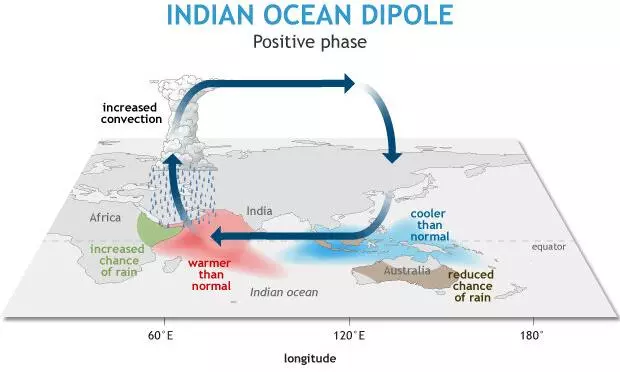
Hyderabad: The Indian Ocean Dipole, a weather condition that is marked by a difference in ocean temperatures in the Arabian Sea and the Bay of Bengal, and which when in a positive state drives moisture over India, resulting in rain and can offset the impact of El Niño on southwest monsoon, is unlikely to come to India’s rescue this year.
While there were some hopes among Indian meteorologists that the IOD, also known as ‘Indian Nino’ which is currently in a neutral phase, could turn positive sometime around September, these could just remain hopes that are unlikely to be realised. In the El Niño years of 1994 and 1997, the positive IOD had come to the rescue and India had received good rainfall.
According to Dr Ashok Karumuri, climate scientist from the University of Hyderabad, a positive IOD might as well be given up based on the way things are shaping up over the ocean. “The IOD has not happened so far, we cannot say if it will, but the odds are very low,” he said.
The climate scientist, one of the foremost authorities on El Niño, was speaking at the ‘El Niño: From Pacific warming to Telangana preparedness’ seminar organised by the state planning department on Tuesday.
With a positive IOD now appearing a remote and very distant and uncertain prospect, planners should factor in the projections that the current El Nino could last up to spring next year. According to Dr Roxy Matthew Koll, climate scientist at the Indian Institute of Tropical Meteorology, Pune, El Niño is expected to last not only till March-April of 2027, but it is also likely to keep the temperatures high even months after, potentially pushing 2027 to be the hottest ever year in observational records.
According to Dr Akshay Deoras, research scientist at the National Centre for Atmospheric Science and the Department of Meteorology, University of Reading, UK, “this year’s El Niño is growing so fast as if there’s no tomorrow. The models continue to predict drier-than-normal conditions in August and September, with the latter projected to have the largest deficit.”
He said this meant that the impact of drought will be felt during the first half of 2027 in regions getting less rain this monsoon. “That is where planning is needed. We could also expect a record breaking global average temperature over the next year, which will trigger extreme weather events. This can also lead to hot weather conditions in India in summer 2027, but it’s too early to say that with confidence,” he said.
Incidentally, the Hyderabad-based Indian National Centre for Ocean Information Services (Incois) too, in its bulletins on El Niño, said this year’s warming of the Central Pacific Ocean would even last up to May of 2027.
