Private internet service providers (ISPs) and cable operators have shown little interest in tackling the critical issue of removing unused, tangled, and dangerously dangling cables from power poles.
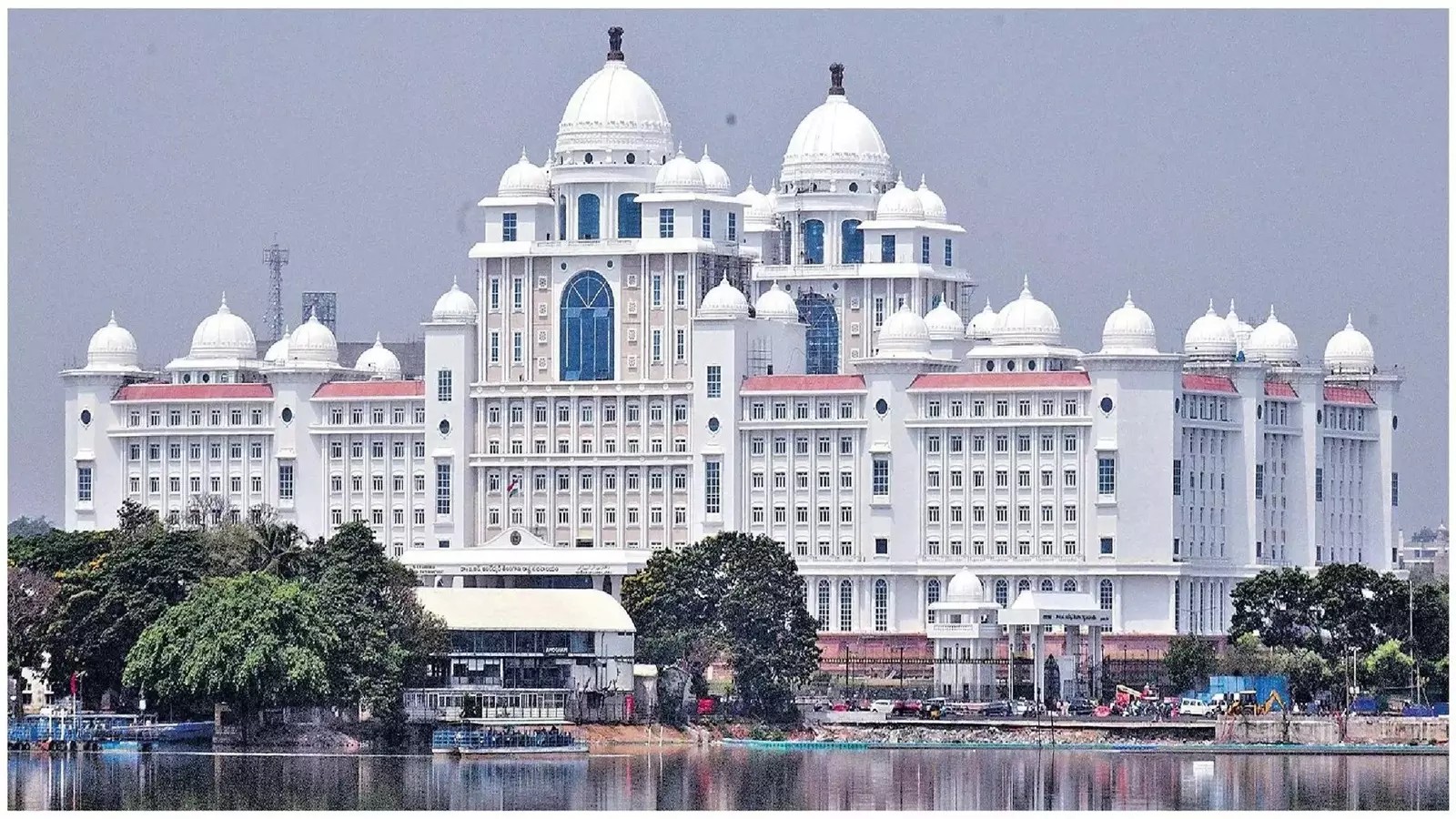
Hyderabad:Amid the ongoing cable-chopping exercise in the city, which has affected internet users and TV viewers for over three weeks, the State Secretariat faced a crippling internet blackout on Thursday, halting official work for several hours.
Officials said the blackout of internet and cable services was set to continue, or even worsen, with the southern discom (TGSPDCL) on the back of a court order cutting down cables illegally strung from electricity poles, even as service providers have not moved in a big way to remove their cables. The crackdown on the illegal cables started after the electrocution of six persons during a religious procession last month.
Official sources confirmed that TGSPDCL had so far cleared hanging, tangled, and unused cable bundles from two lakh power poles — roughly 10 per cent of the 20 lakh poles in the twin cities.
Private internet service providers (ISPs) and cable operators have shown little interest in tackling the critical issue of removing unused, tangled, and dangerously dangling cables from power poles. Instead, they have been sending misleading and repetitive messages to consumers, promising restoration of services “soon” while frequently extending vague timelines, officials said.
Dr N. Narasimhulu, director of operations, TGSPDCL, told Deccan Chronicle that while official permission for cable installation existed for only 1,73,608 poles out of the city’s 20 lakh poles, ISPs and cable TV providers had illegally laid cables on almost every pole.
Though empowered to cut cables hanging below 18 feet above the ground, power staff had limited their action to those hanging below 18 feet to minimise public disruption. TGSPDCL also invited cable operators and ISPs to join its drive to identify and help in removing defunct cables.
Ravi Kumar, a cable operator from Shalivahananagar, said that though he understood the need for safety, the abrupt cutting of cables without proper notice had disrupted their services and caused financial losses. Mohan Reddy from Saidabad lamented that many operators like him had been facing hardships as some legitimate connections were also affected.
Consumers were caught in the crossfire. Engineering student L. Rishab Reddy from Puppalguda said that after paying Rs 7,000 for a new connection, he had faced three weeks of internet blackout with only empty promises of quick restoration of services.
In Kukatpally and Vivekanandnagar, residents expressed mixed reactions. Sunita from Kukatpally’s 7th Phase called the disruptions frustrating, noting how sudden disconnections affected TV and internet services. Vivekanandnagar’s Girish Kumar supported the cleanup but urged better coordination to reduce inconvenience.
Over 14 months, the TGSPDCL said it had held six meetings with 32 cable operators, instructing them to remove unused cables and raise hanging bundles. Despite repeated warnings, providers failed to comply, forcing the Discom to remove low-hanging, tangled, and congested cables to ensure public safety and uninterrupted maintenance.
The tangled state of cables also hampers the power department’s ability to identify unused or defunct lines. In some instances, cables run from building to building or from poles to buildings across live electrical lines. When snapped by external factors, these wires fall onto power lines, causing outages and accidents.
Shocking situation
TGSPDCL’s rules require
Service providers to ensure safety measures for optical fibre installations.
Avoid obstructing maintenance work.
Paid leased poles for easy identification.
Fitting equipment like backhaul devices prohibited.
Tapping of electricity from low-tension lines banned.
Actual situation
Cables have been installed in disorganised bundles.
Some cables often hang as low as five feet above ground.
Cables run on top of power lines; snapped cables cause power outages.
In most cases, it is difficult to identify service provider cables.
Old cables not removed, increasing chaos.