Inside Skyroot's Final Push: 100 Engineers Work Round the Clock for Vikram-1 Launch

Speaking about India's growing space start-up ecosystem, Chandana said that nearly 400 start-ups had emerged in the sector over the past three to four years.
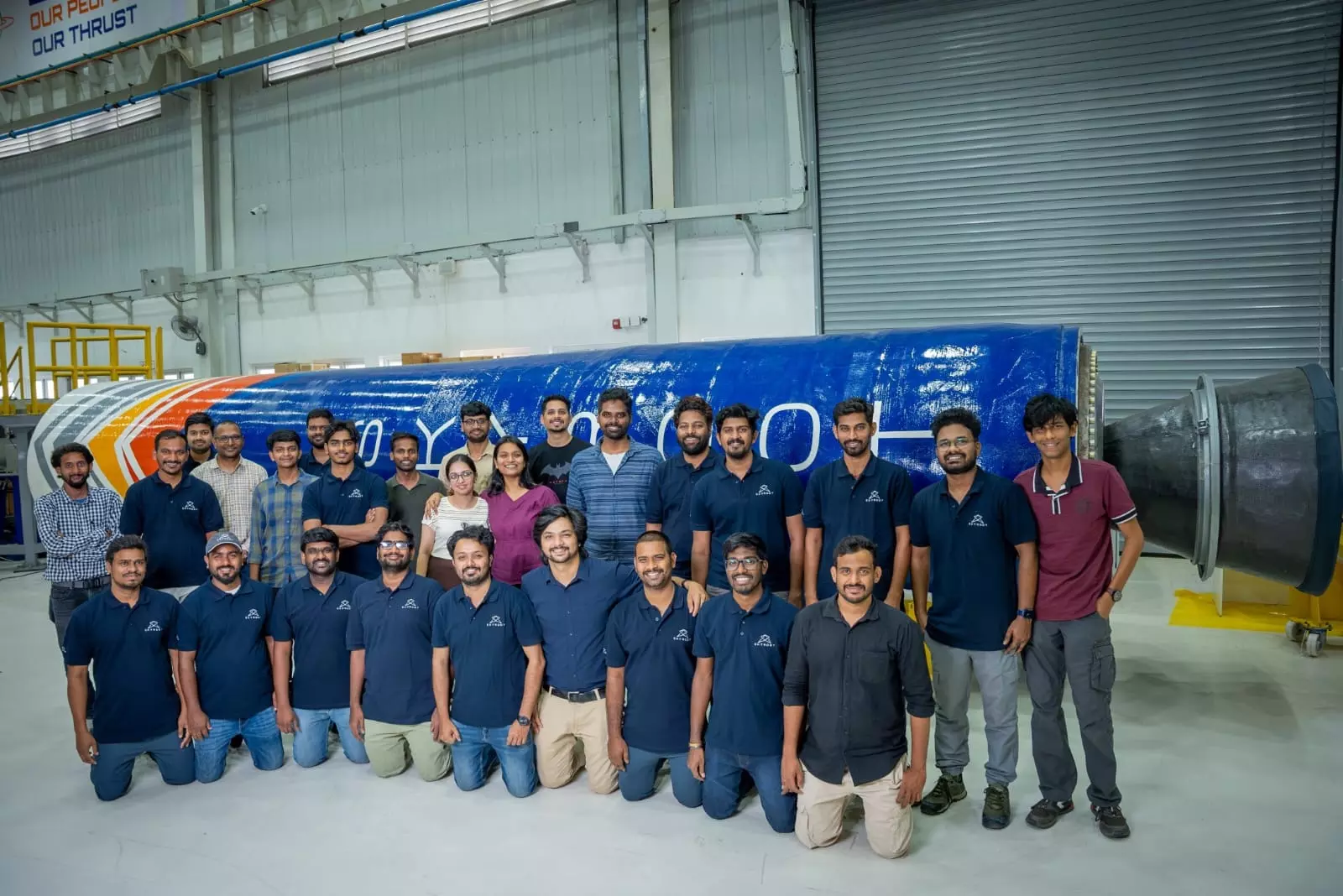
Hyderabad:Space scientists at Skyroot are putting in nearly 20-hour days ahead of the launch of the start-up’s launch of Vikram-I, India’s first privately design and developed orbital satellite. The launch has been has been scheduled between July 12 and August 4 from the spaceport at Sriharikota.
With the rocket fully integrated on the launch pad, the team is carrying out final health checks of all subsystems and verifying every connection in a sequential manner as part of the last phase of preparations.
"We start at 6 am on some days and on others at 8 am. After our meetings, we move to the facility. This has been our schedule for the last two weeks, and it often continues until 3 am or 4 am the next day," said Shreesha M., flight dynamics engineer who has been working with Skyroot for five years after being hired straight out of college as a fresher.
Shreesha and Pawan Kumar Chandana, cofounder, Skyroot, told Deccan Chronicle that around 100 engineers, not excluding technicians, were working round the clock in shifts at the launch pad in Sriharikota. Of them, around 30 were women engineers, who said they were confident about the systems they have tested and proud to be part of the mission.
"Several hundred more are supporting the mission from our Hyderabad office. Many of us are working 16 hours or more," Pawan Chandana said.
Chandana, Skyroot's co-founder and chief executive officer, told Deccan Chronicle, "The excitement is high as finally India's first privately developed rocket is on the launch pad, undergoing final checks before lift-off. It is historic for India, the space sector and also the global space industry, as there are hardly any companies providing regular access to space.”
“For Skyroot to be able to do this is a matter of pride. However, the next few days are important as rockets are complex and every detail has to be taken care of to ensure a successful lift-off and flight. We are making every possible effort. It is a learning test flight for us."
Speaking about India's growing space start-up ecosystem, Chandana said that nearly 400 start-ups had emerged in the sector over the past three to four years.
"India's ambition is to become a $44-billion player in the global space market by 2032. We are among the leading start-ups in India and are building major milestones. It is exciting to see how it shapes us and how, as an ecosystem, we can shape the global market in return," he said.
On Skyroot's future plans, Chandana said the company aimed to increase the frequency of launches. "We built a factory inaugurated by Prime Minister Narendra Modi, and it has the capacity to build a rocket every year."
Comparing Vikram-1 with Skyroot's previous mission, he said, "This mission is ten times more complex than the first. We have gone through the countdown process before, so we are prepared, focused, excited and also nervous because rockets are inherently complex."
Chandana credited Hyderabad's ecosystem for Skyroot's growth. "The success of Skyroot is because we are based in Hyderabad. We have access to a great ecosystem of talent, manufacturers and testing facilities. We fondly call it Rocket City. There are government testing labs where we can frequently test our systems."
