Hyderabad Real Estate Trend: Future City is Gachibowli in Waiting

For high-rise projects of 50 floors and above, this translates into a four-year delivery timeline—both realistic and efficient.
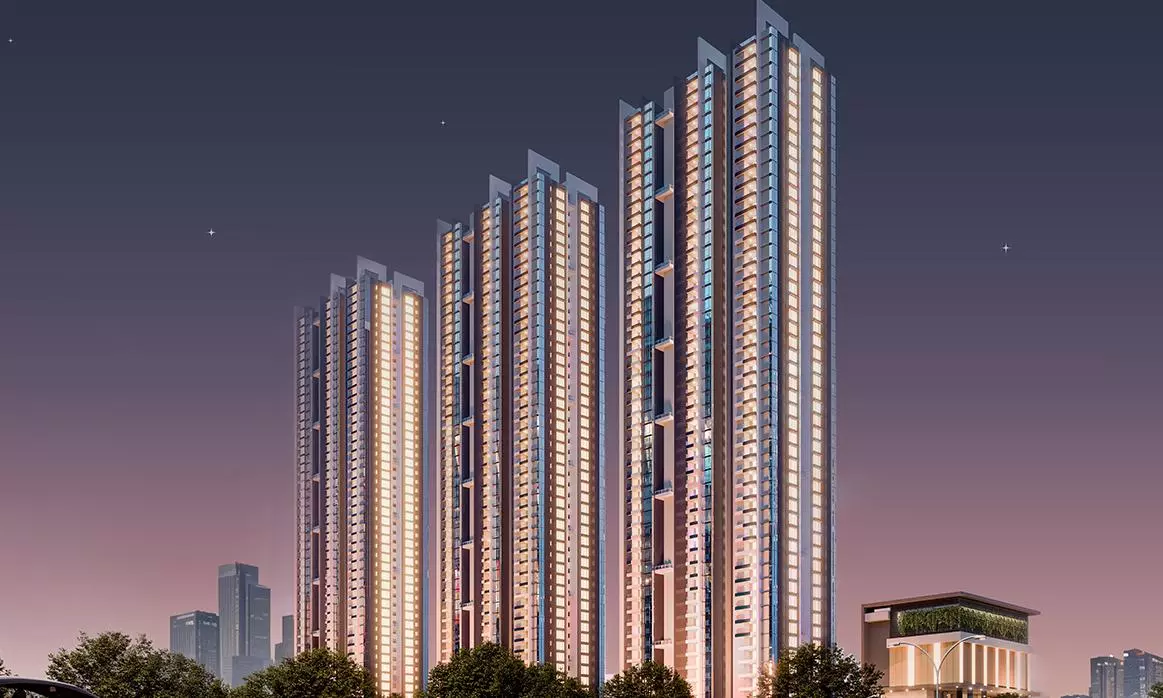
Hyderabad's real estate sector has witnessed a defining shift over the past few years, and much of that story is rooted in the city’s booming western corridor. Ajitesh Korupolu, the CEO of ASBL, offers a front-row view of this transformation and what’s shaping the next wave.
“The per capita office space in that area is very high,” Ajitesh points out, referring to West Hyderabad, particularly the financial district. “Most developers chase where there are commercial establishments. With leasing activity being very strong, there’s a clear demand for housing because that’s where the workforce is headed.”
But the draw isn’t just offices. “West Hyderabad has done exceptionally well in the F&B space,” he adds. “Big restaurants, breweries—everything that high-income professionals want. Add to that good roads and strong social infrastructure, and you see why there’s such consumer interest.”
It’s a formula that has worked. “Hyderabad did around 50,000 apartment sales last year, and we will hit a similar number this year,” he says. “The financial district alone commands nearly 25% of that. For a single market pin code, that’s massive.”
Ajitesh is pragmatic about market fluctuations. “Resale returns are cyclical. Post-2020, the global economy saw a lot of easy money—low interest rates, more liquidity. Real estate surged, but so did every other asset, from crypto to equities,” he says. “But after the Russia-Ukraine war and interest rate hikes globally, capital started moving out of emerging markets.”
Ajitesh Korupolu, the CEO of ASBL
The correction, he believes, isn’t necessarily a bad thing. “It’s made homes more affordable compared to the post-COVID boom. The pace is slower now, but still healthy—and more sustainable.”
What’s equally striking is how construction itself is changing in Hyderabad. “Ten years ago, we used to build the traditional way—columns, beams, slabs done on-site,” he explains. “Now, almost 90% of the market has shifted to aluminium formwork or mivan technology. These systems bring higher quality, faster speed, and better safety.”
He elaborates: “In the earlier method, it took 20 days to complete a floor.With this technology, it’s just 10 days per floor. Plus, the concrete walls offer more strength than brick.”
For high-rise projects of 50 floors and above, this translates into a four-year delivery timeline—both realistic and efficient.
Why Gated Communities Are the Future
For the modern homebuyer, Ajitesh believes lifestyle amenities have become non-negotiable. “Fifteen years ago, people lived in standalone buildings. But security was low, and basic needs like a walking track didn’t exist. Today, safety, walkability, and wellness are key,” he says.
“In gated communities, you have 24x7 manned security, CCTV surveillance, and internal amenities like jogging tracks, sports courts, and kids' play areas. It’s a big leap in quality of life.”
And there’s more behind the shift—especially from dual-income households. “A lot of our customers are working couples in their childbearing years. So either the wife’s or husband’s parents live with them, or they need day care. In our newer projects, we have introduced massive crèches with trained nannies and even co-working spaces nearby.”
One such development has a co-working tower just 50 meters from a fully equipped crèche. “The idea is to make life easier for working mothers. They can walk over during breaks, know their child is in good hands, and not have to work from the bed,” he says.
Ajitesh also highlights a shift in who’s making decisions. “Earlier, women were secondary decision-makers. Now, 85% of our buyers are dual-income couples, and women are equal—if not primary—decision-makers in the home-buying process.”
Looking Ahead: South Hyderabad and the Fourth City Corridor
With the west close to saturation, where’s the next big growth zone? Ajitesh is clear. “The South—especially the Fourth City corridor—is what Gachibowli was 20 years ago,” he says. “The government has announced 16,000 acres, and another 5,000 around the airport ecosystem. That’s 20,000+ acres of planned development.”
He sees early signs already. “They have released a master plan with 100-feet-wide roads and set up a dedicated municipality. There’s even talk of an outlet mall, retail spaces, theaters—it’s all starting. Once people come for leisure, offices will follow, and then housing. It’s going to be very organised.”
He’s quick to temper expectations. “I am not being speculative—it’s just facts. If you have a 5–7 year investment horizon and are looking at long-term returns, South Hyderabad is very promising.”
As someone who’s built his company in the heart of Hyderabad’s most dynamic zone, Ajitesh sums it up simply: “We are the only developer with four active projects in the financial district. I tell everyone—we were born out of the financial district.”
For now, his eyes are still on the west, but his gaze is clearly shifting southward—where the next chapter of Hyderabad’s growth story is already being written.
