Indonesia Explores Farm Research Ties With UoH

Discussions also covered agricultural policies, artificial intelligence and mechanisation in farming, and opportunities for human resource development and academic exchanges.
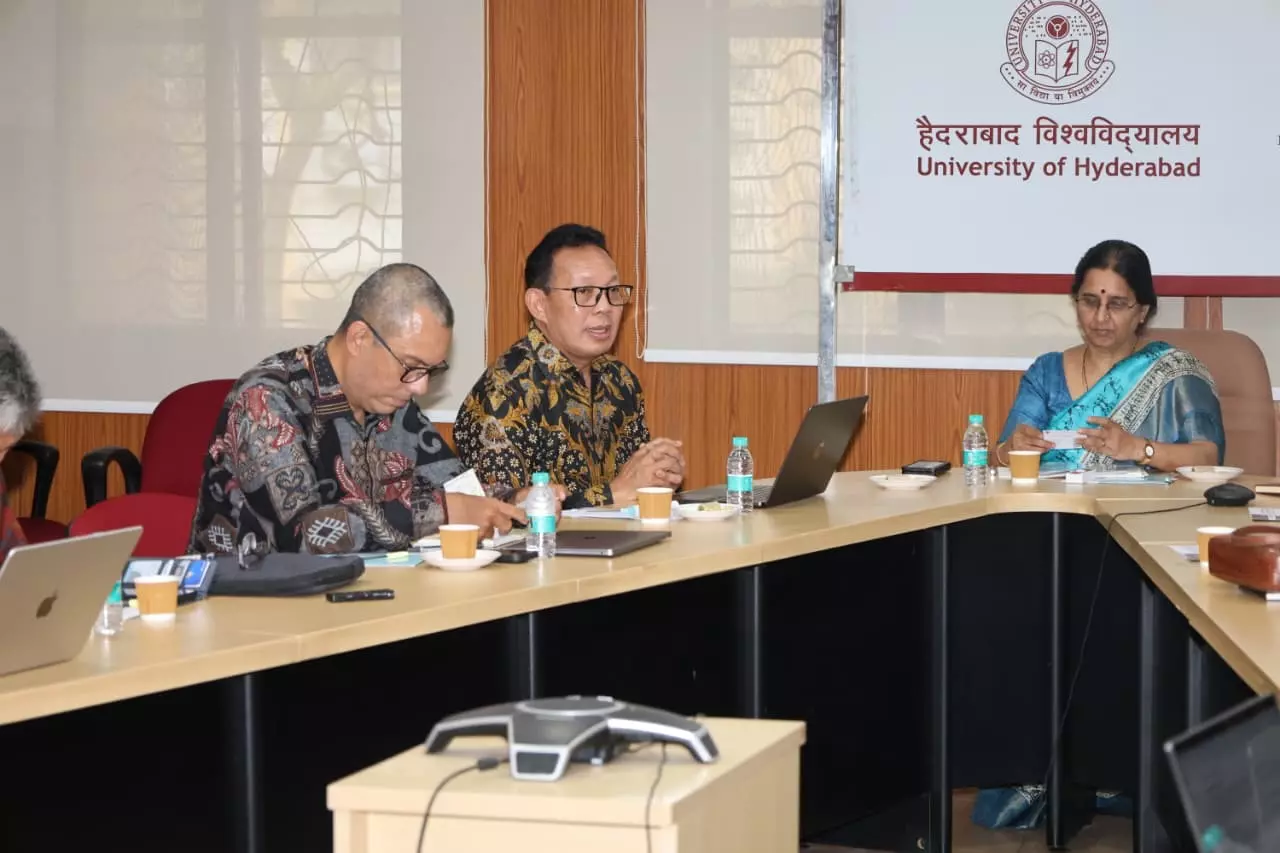
Hyderabad:As Indonesia works towards food self‑sufficiency, a 12‑member team from its higher education and research ecosystem visited the University of Hyderabad (UoH) on Tuesday to study agricultural research and explore collaborations in food security and sustainable farming.
The visit was organised under the ‘Lesson Learn Agricultural Alternatives’ programme, a joint initiative of Indonesia’s Ministry of Higher Education, Science and Technology and the Ministry of State Secretariat. UoH said the programme is linked to Indonesia’s national priority of strengthening food security and reducing dependence on imports.
The delegation included Junaidi Khotib, secretary, Directorate General of Research and Development, Ministry of higher education, science and technology, along with representatives from universities and government institutions.
Vice‑Chancellor (in‑charge) J. Anuradha said collaborations between institutions in India and Indonesia could help address shared challenges in sustainability, agriculture and food systems through joint research and knowledge exchange.
Faculty from the School of Life Sciences and Department of Plant Sciences presented UoH’s work in dryland agricultural management, natural farming, permaculture, digital agriculture technologies, climate‑resilient food systems and sustainable crop production.
Discussions also covered agricultural policies, artificial intelligence and mechanisation in farming, and opportunities for human resource development and academic exchanges.
The delegation later visited laboratories and research facilities to gain a closer understanding of UoH’s work. According to the university, the interaction laid the groundwork for future collaborations in research, training and knowledge sharing, particularly in food security, sustainable agriculture and climate resilience.
