Indiramma Houses in Forests May Open Podu Pandora's Box

The stand of the Centre in backing such permissions could play a major role in aiding the beneficiaries.
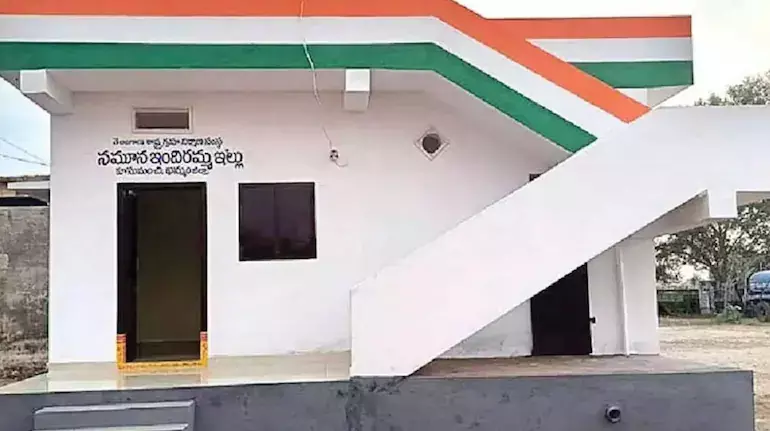
Hyderabad:One of the flagship programmes of the state government, Indiramma Illu housing, appears all set to open the question of whether or not podu rights on forest land given to tens of thousands of applicants are valid, and if houses granted under the scheme to build on podu land could overnight leave the beneficiaries liable for punishment for encroachment of forest land. The stand of the Centre in backing such permissions could play a major role in aiding the beneficiaries.
Even as officials have begun flagging the prospect that the state government could well face the charge of encouraging illegal encroachment of forest areas under the guise of Indiramma Illu houses, the Central Empowered Committee (CEC) of the Supreme Court, looking into complaints of alleged illegal granting of podu rights, is expected to meet next week and begin going through every podu ‘patta’ and determine if these were issued as per the Recognition of Forest Rights (RoFR) Act.
According to sources, thousands of Indiramma Illu have been granted to beneficiaries who received RoFR rights issued by the tribal welfare department. “Every one of such permissions is by any means, an encroachment of the forest, and this cannot be permitted. Even in parcels where podu rights were given, it was only for agriculture and no habitation rights are mentioned,” a forest department official told Deccan Chronicle.
“The podu rights issued in Telangana are to be examined by the CEC, which will also be taking into account how a majority of the pattas issued in the last round in 2023 were given despite the forest department’s opposition as no proof existed that the applicants were practicing agriculture in the claimed forest land prior to December 2005, a primary requirement under the RoFR Act,” another official explained.
The only saving grace for the Indiramma Illu scheme could be the affidavit filed in the Supreme Court in another case related to the PM Awas Yojana in RoFR land parcels. The Centre informed the court this past February that, as per the Act’s provisions, ‘habitation rights’ can be granted for RoFR beneficiaries provided these rights were approved by a grama sabha. Incidentally, part of the cost of each Indiramma Illu unit comes from the PMAY scheme.
However, there is no clarity on this, a forest department official said. The current understanding is that a temporary housing structure such as a hut or a shelter can be replaced with a permanent house, only provided it is on the RoFR land. The extent of the new house cannot be more than the existing hut or shelter; otherwise it will become an encroachment even if on podu land as the land belongs to the forest department.
There is a misconception that because the word ‘patta’ is used, podu rights holders also have rights over the land. “The only rights they have is to practice agriculture, and the land is still considered forest,” according to forest department officials.
With the government pushing ahead with the housing scheme, forest officials say that they are finding themselves between a rock and a hard place on the matter. “If we overlook the matter, we will be punished for failing to protect forests. If we oppose, then we will run afoul of ministers and MLAs and the government,” a forest department official said.
Sources said that in a northern Telangana district, of the more than 450 Indiramma houses granted in forest areas, less than 10 were on podu land parcels, and nearly 100 beneficiaries were non-tribals. In another district, just 11 of the around 200 approved houses were on podu land. A similar situation exists in all districts where the housing scheme beneficiaries were permitted to build houses in forest land, according to sources.
Housing scheme meets forest laws
Thousands of Indiramma Illu permits issued in forest land parcels come under scrutiny.
Central Empowered Committee set up by the Supreme Court to check every granted podu claim.
Questions raised on whether houses can be built on podu land given for farming.
Most houses may be seen as fresh ‘encroachments’ of forests.
Houses granted in sanctuaries, tiger reserves, need stricter clearances.
Centre has said ‘habitation rights’ can be granted for RoFR beneficiaries provided these rights were approved by a grama sabha.
