India’s First Japanese Bio-Lace Tech Pilot Cuts Nala Water Pollution By 90% in City

Sewage is pumped into the pilot unit and HMWS&SB is examining whether the technology can be placed in flowing nalas and streams
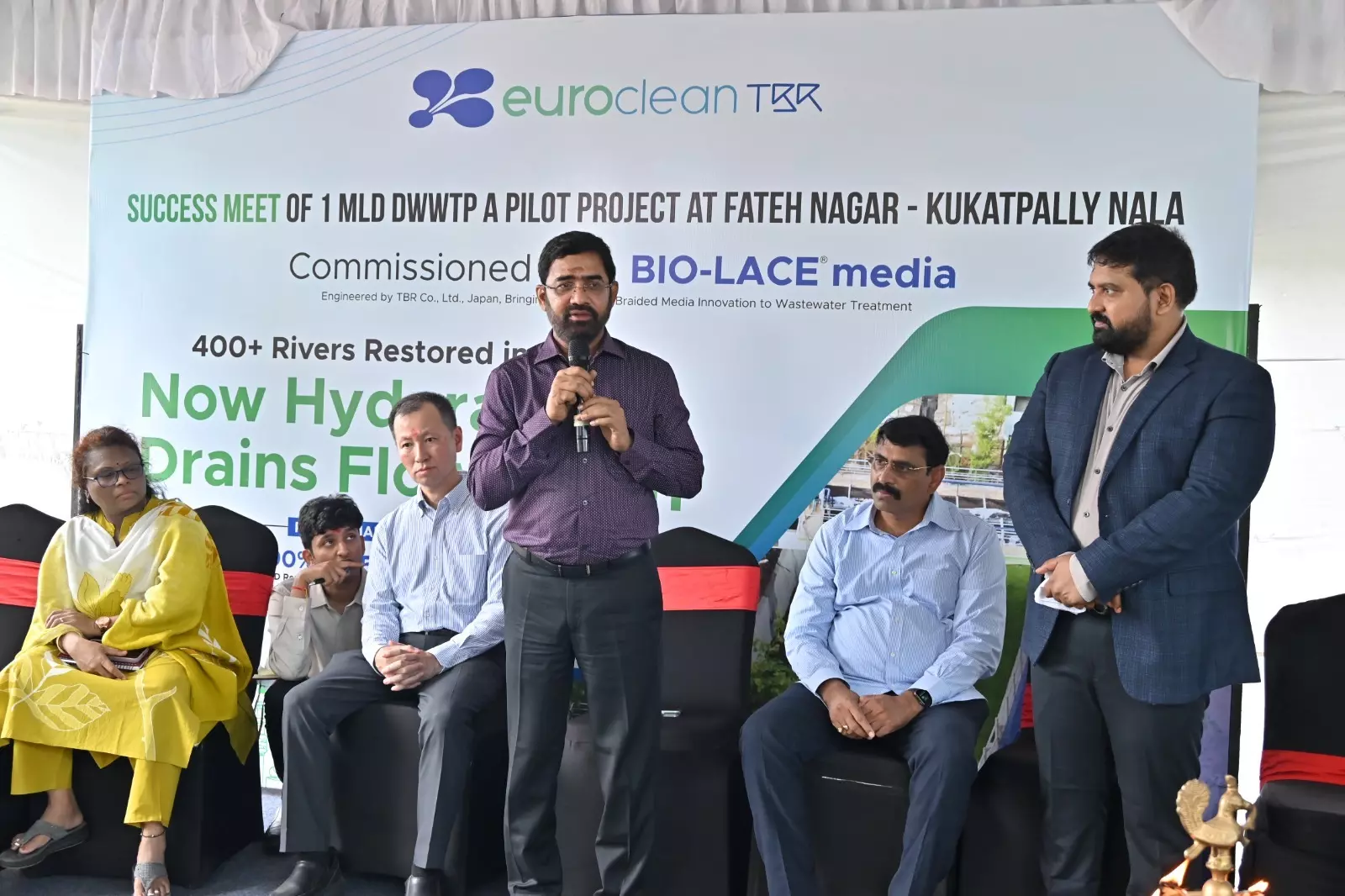
HYDERABAD: A one million-litre-a-day sewage treatment plant, running a pilot project using Japan’s bio-lace technology, has reduced biological oxygen demand by 90 per cent, and total suspended solids by 85 per cent in polluted nala water, according to HMWS&SB. This is India’s first pilot demonstration of bio-lace technology for treating flowing polluted nala water.
Board managing director K. Ashok Reddy reviewed the project at the Fatehnagar sewage treatment plant alongside representatives from Japan International Cooperation Agency, TBR Co. Ltd. and Euroclean TBR Group.
Ashok Reddy said the system could provide an environment-friendly option for urban drains. The technology has been used to restore more than 400 rivers and waterways in Japan. “We are moving rapidly towards achieving this objective within the coming year,” he said, referring to the state government’s plan to stop untreated sewage from entering the Musi.
Sewage is pumped into the pilot unit and HMWS&SB is examining whether the technology can be placed in flowing nalas and streams. Ashok Reddy asked officials to evaluate the project before considering use elsewhere.
Officials said bio-lace requires 70 to 85 per cent less land than conventional sewage plants, cuts power use by more than half, uses naturally occurring microorganisms instead of chemicals, produces less sludge and lowers maintenance costs.
TBR representatives said the treatment reduced foul odour and improved dissolved oxygen levels. Future use will be considered after Pollution Control Board evaluation. Euroclean TBR Group CFO Vijay Kumar said the results strengthened confidence in its use across Indian cities.
