Trump’s H-1B Fee Only For New Entrants

20 Sept 2025 10:46 PM IST20 Sept 2025 10:46 PM IST
The clarification sent a huge wave of relief among Indian professionals on H-1B visas in the US, who had been gripped with panic, fear and concern after Trump signed the proclamation
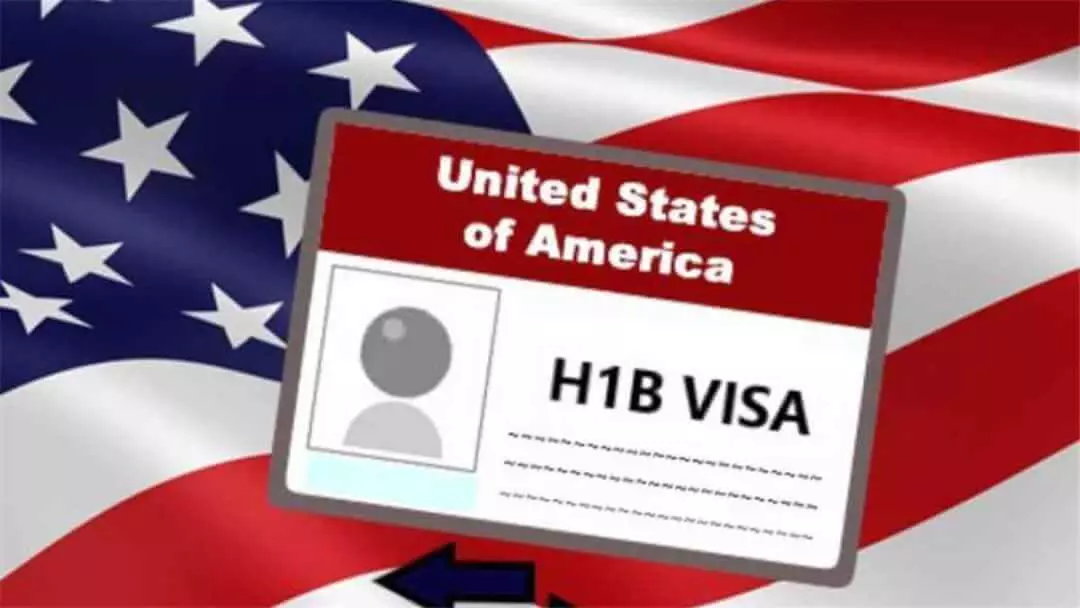
The Donald Trump administration has clarified that the new USD 100,000 fee for H-1B visas does not apply to current visa holders and is a one-time payment only for new petitions.
The Donald Trump administration has clarified that the new USD 100,000 fee for H-1B visas does not apply to current visa holders and is a one-time payment only for new petitions. The clarification is a cause of huge relief for thousands of panic-stricken professionals working in the US, including those from India, who are concerned about being impacted by the new rule.
The US Citizenship and Immigration Services (USCIS) said in a statement on Saturday that President Trump's new H-1B visa requirement applies only to new, prospective petitions that have not yet been filed.
H-1B petitions submitted before the effective proclamation date of September 21 are not affected. Those visa holders currently outside the US also do not need to pay the fee for reentering the country.
White House Spokesperson Taylor Rogers told PTI that "President Trump promised to put American workers first, and this commonsense action does just that by discouraging companies from spamming the system and driving down wages."
"It also gives certainty to American businesses that actually want to bring high-skilled workers to our great country but have been trampled on by abuses of the system," she said.
A White House official told PTI that the USD 100,000 fee is a one-time charge that applies only to the petition. "It only applies to new visas, not renewals or current visa holders. It will first apply in the upcoming lottery cycle. It does not apply to 2025 lottery winners."
In a memorandum, USCIS Director Joseph Edlow wrote that the proclamation -- 'Restriction on Entry of Certain Nonimmigrant Workers' -- issued by Trump on Friday only applies prospectively to petitions that have not yet been filed.
The proclamation does not apply to individuals who "are the beneficiaries of petitions that were filed prior to the effective date of the proclamation, are the beneficiaries of currently approved petitions, or are in possession of validly issued H-1B non-immigrant visas".
"All officers of the United States Citizenship and Immigration Services shall ensure that their decisions are consistent with this guidance. The proclamation does not impact the ability of any current visa holder to travel to or from the United States," the memo said.
White House Press Secretary Karoline Leavitt also said on X that "to be clear", the USD 100,000 is not an annual but a one-time fee that applies only to the petition.
"Those who already hold H-1B visas and are currently outside of the country right now will not be charged USD 100,000 to re-enter. H-1B visa holders can leave and re-enter the country to the same extent as they normally would; whatever ability they have to do that is not impacted by yesterday's proclamation," she said.
Leavitt added that the proclamation applies only to new visas, not renewals, and not current visa holders and will first apply in the next upcoming lottery cycle.
The clarification sent a huge wave of relief among Indian professionals on H-1B visas in the US, who had been gripped with panic, fear and concern after Trump signed the proclamation.
When asked if the hiked fee would apply to the H-1B visa holders already in the country, for renewals or for those applying for the first time, Commerce Secretary Howard Lutnick had said, "Renewals, first times, the company needs to decide. Is that person valuable enough to have a USD 100,000 a year payment to the government? Or they should head home, and they should go hire an American."
"It can be a total of six years, so $100,000 a year. So either the person is very valuable to the company and America, or they're going to depart, and the company is going to hire an American.
"That's the point of immigration -- hire Americans and make sure the people coming in are the top people. Stop the nonsense of letting people just come into this country on these visas that were given away for free. The President is crystal clear. Valuable people only for America. Stop the nonsense," Lutnick had said.
Widespread panic, confusion and concern had gripped Indians in the US on H-1B visas in the hours after Trump's order to impose the fee, with many cancelling travel plans at the last minute while waiting to board flights to the homeland and several others already in India scrambling to return.
Immigration attorneys and companies sounded the alarm for H-1B visa holders or their family members currently outside the US for work or vacation, asking them to return to the US before the proclamation kicked in on September 21.
"H-1B visa holders who are out of the US on business or vacation will get stranded unless they get in before midnight September 21. H-1Bs still in India may have already missed the deadline, as there is no way a direct flight from India will get in time," eminent New York-based immigration attorney Cyrus Mehta had said in a post on X.
Earlier, in a move that will impact thousands of Indian tech professionals, Trump signed a presidential proclamation making it mandatory for their sponsoring employers pay a one-off charge of $100,000 per year per visa beneficiary if they wish to enter the United States.
This is about Rs 88 lakh per year, or about Rs 2.6 crore for the three-year tenure of the highly sought-after visa. This is in addition to the existing $1,700–$4,500 fee. It was later clarified that this is for fresh H-1B visa holders.
The new fee, signed by Trump, will take effect on September 21 at 12.01 am Eastern (9.31 am IST), and was described by the US administration as a measure to counter the abuse of the H-1B system and to prioritise higher-paid, higher-skilled entrants.
Before the latest announcement, panic-stricken H-1B visa holders holidaying outside the US tried to rush back before the deadline. This led to a spike in airfares. Several social media reports also spoke of Indians who had boarded aircraft in the US to head home for the holidays disembarking in a hurry to avoid leaving US shores. Late reports said some passengers bound for the US had disembarked at Gulf stopovers.
President Trump signed a presidential proclamation, ‘Restriction on entry of certain nonimmigrant workers’, on Friday, saying abuse of the H-1B visa programme was a “national security threat.”
Under the proclamation, the department of homeland security (DHS) and the state department were instructed to refuse admission to H-1B holders who attempt to enter the country after the effective date, unless their employer had submitted the $1,00,000 payment. Employers must also retain documentation proving the payment at the time they file petitions and consular officers and border officials will verify payment before issuing visas or admitting travellers. The restriction applies to people outside the United States and is set for 12 months unless extended.
For Indian nationals, the largest single national group in the H-1B programme by far, the consequences are catastrophic. According to data from the United States Citizenship and Immigration Services (USCIS), Indians accounted for 71 per cent of all H-1B holders in 2024, with 2,83,397 approvals from India out of a total of 3,99,395. The next highest is China with 11 per cent.
A large majority of H-1B approvals are concentrated in technology, financial, engineering and professional services roles that rely on the visa route. Amazon, Tata Consultancy Services (TCS), Microsoft, Meta and Apple are respectively the top five employers with the most H-1B visas, with Amazon employing 10,044 H-1B holders.
If employers decline to pay the charges, now clarified to be effective only for new entrants, H-1B workers stranded outside the US will be denied re-entry. The proclamation also directs rule-making to raise prevailing wages and to prioritise higher-paid applicants, signalling a long-term shift in the US immigration priorities.
The proclamation further states that the DHS can exempt an applicant from paying $100,000 if it determines that hiring the applicant does not pose a threat to the security and welfare of the United States, and that their hiring is in the national interest.
The announcement prompted immediate alarm among businesses that rely heavily on foreign tech talent and industry groups warned of serious disruption. India’s IT trade body Nasscom described the policy as “concerning,” saying the abrupt timeline and steep fee could unsettle on-shore delivery models and harm both US companies and global supply chains.
( Source : Deccan Chronicle with agency inputs )

Next Story