India adds Telangana’s megalithic menhirs to tentative Unesco list

Inclusion in tentative list will improve chances of getting Unesco recognition in due time
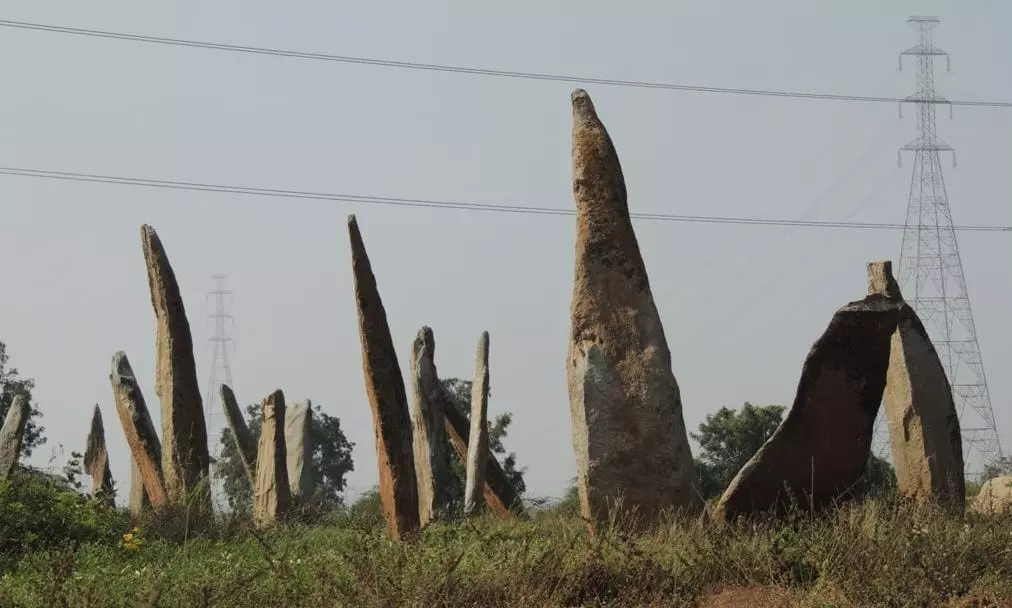
Hyderabad: The Central government has added Telangana’s 3,000-year-old megalithic menhirs site at Mudumal village in Narayanpet to a tentative list from India seeking Unesco World Heritage recognition.
The tentative list serves as an inventory of important heritage sites that countries intend to nominate for Unesco recognition in the future. Inclusion in this list is a mandatory step before a site can be considered for the prestigious World Heritage tag. Currently, Telangana has only one Unesco-recognised world heritage site — Ramappa temple.
The ancient stone structures at Mudumal not only shed light on burial rituals and anthropological practices but also serve as one of South Asia’s earliest representations of night skies.
In December 2024, Deccan Chronicle reported that efforts were underway to get Unesco recognition for the megalithic site.
Speaking to Deccan Chronicle, Prof K.P. Rao said they are making efforts to bring the Unesco World Heritage Site tag for Mudumal. “The proposal for the World Heritage Site tag has already been sent to the Archeological Survey of India. The ASI will forward the application at the global level.”
Spread across 89 acres, there are about 80 tall (10-15 feet high) stone structures arranged in lines and some 1500 boulders aligned in various formations, like circles, straight lines and others. There are around 25 circular formations, 15-20 metres in diameter. A lot of these formations were destroyed when the lift irrigation project was brought in in the nearby areas. The stones were removed to allow the agricultural land to spread.
Apart from Telangana’s megalithic menhirs, the Central government has included five other heritage sites to its tentative list, which include Kanger Valley National Park in Chhattisgarh, Ashokan edict sites spread across multiple states, Chausath Yogini Temples, Gupta temples in North India, and the palace-fortresses of the Bundelas in Madhya Pradesh and Uttar Pradesh. With the latest additions, India has 62 sites on the tentative list.
Currently, 43 sites in India have been recognised as Unesco World Heritage Sites. Among them, 35 are cultural sites, seven are natural sites, and one is classified as mixed. In 2024,
India hosted the Unesco World Heritage Committee meeting for the first time, during which the Moidams of Assam, the burial mounds of the Ahom Dynasty, were granted Unesco recognition.