In School For 5 Years, But Can’t Read Class 2 Books: Telangana’s Literacy Paradox

The Periodic Labour Force Survey 2025 puts Telangana’s literacy rate among people aged seven and above at 74.6 per cent, compared to 81.1 per cent across India.
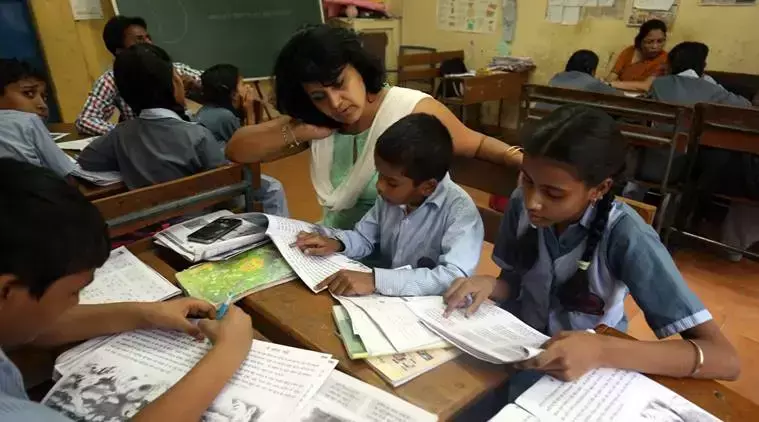
HYDERABAD: International Literacy Day arrives in Telangana against the mismatch of a student who spends five years in school but cannot read Class II texts. The state can count more people as literate while school assessments continue to record weak learning because the two numbers measure different things. The harder question is whether the number describes what a person can actually do.
“Definitely the literacy rate is increasing. But the definition of literacy itself is a very narrow definition,” said R. Venkat Reddy, national convener of MV Foundation, that works against child labour and for children’s right to full-time formal schooling. His work deals directly with children whose presence in school has to translate into actual learning. “Just enrolling is not enough. Going to school is not enough.”
The Periodic Labour Force Survey 2025 puts Telangana’s literacy rate among people aged seven and above at 74.6 per cent, compared to 81.1 per cent across India. The figure measures population literacy. It does not test whether schoolchildren can read at grade level or understand what they encounter in a textbook. Unesco itself treats literacy as a continuum that includes reading, writing, numeracy, understanding, interpretation and communication.
Access presents a different picture. The Annual Status of Education Report (ASER) of the Union education ministry estimated that 2.5 per cent of rural Telangana's 15- to 16-year-olds were out of school in 2024, against 7.9 per cent nationally. Low exclusion from school and poor learning could exist at the same time. Reddy saw that failure as a child-rights issue. He said learning should be appropriate to a child’s age and class, and described weak learning outcomes as “also a violation of child rights”. Schools, he said, required proper teachers, facilities and learning inputs. He also called for greater public investment in school education and linked the growth of private schooling to parents seeking alternatives when public provision does not meet their expectations.
Gusti J. Noria, president of The Hyderabad Public School Society, spoke specifically about literacy among children from underprivileged backgrounds. Noria said the ability to read, understand and communicate confidently can affect how those children fare throughout their education. He argued that schools have a responsibility to support those skills among children who have fewer educational advantages.
Further, Akunuri Murali, retired IAS officer and former chairperson of the Telangana Education Commission, placed responsibility for weak literacy on governments that, he argued, had failed to monitor foundational learning closely enough. “We need to make every school in this country an illiteracy-free school,” he said.
Murali’s prescription was deliberately granular. He wanted FLN (foundational literacy and mumeracy) tracked “school after school, student after student”. He also rejected adult-literacy programmes as a substitute for a school system that taught children properly in the first place. “Functional literacy can serve a limited purpose,” he said, but “literacy comes with education”. His criticism extended across political parties, which he said have failed to give literacy and education the priority required.