IIT Hyd To Ramp Up Its Green Power Use, Cut Emissions

Officials said water systems had been redesigned to suit the region’s hard rock terrain. “Rainwater is channelled through bio-swales into interconnected lakes and ponds for groundwater recharge and reuse, while also reducing monsoon runoff,” one of the officials added.

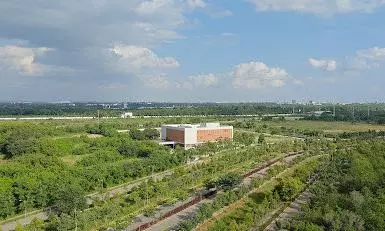
Hyderabad: IIT Hyderabad has begun expanding solar power generation and redesigning cooling and water management systems as part of its plan to reduce campus emissions and move towards Net Zero by 2030, institute officials said.
Speaking to Deccan Chronicle, IIT Hyderabad director B.S. Murty said the focus was on restructuring how the campus functions on a daily basis. “This is not about adding green features in isolation. We are redesigning core systems so energy, water, cooling, and ecology work together,” he said.
According to him, the campus currently operates close to 1 megawatt of solar power. Ongoing projects, including the installation of solar panels over parking areas and rooftops, are expected to raise total capacity to about 4.5 megawatts. “This would allow a substantial portion of the campus’s electricity demand to be met internally,” he explained.
Murty also said that reducing electricity demand was as important as clean energy generation. Hostel buildings have been equipped with radiant cooling systems that use chilled water instead of conventional air-conditioning, while high-efficiency ceiling fans are being installed across academic and residential buildings.
Officials said water systems had been redesigned to suit the region’s hard rock terrain. “Rainwater is channelled through bio-swales into interconnected lakes and ponds for groundwater recharge and reuse, while also reducing monsoon runoff,” one of the officials added.
Sustained tree plantation drives over the past six years have increased green cover, with officials documenting more than 60 bird species on campus. Waste segregation, composting, biogas generation, and cycling support are being used to reduce daily environmental impact.
He said progress would be reviewed periodically as the campus works towards its 2030 target.
