High-speed impact studies are used to design stronger vehicles that absorb crashes better, buildings that withstand shocks, and protective materials for helmets and defence gear.
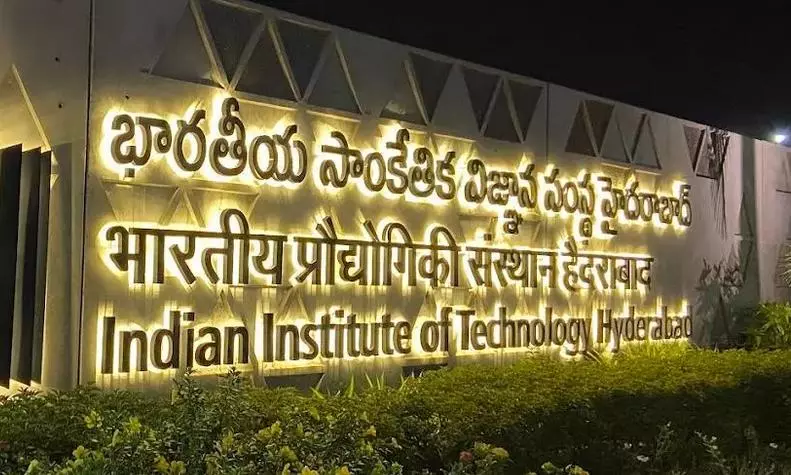
Hyderabad: A device built using everyday plumbing pipes is now helping researchers at the Indian Institute of Technology Hyderabad (IIT Hyderabad) study how materials behave under extreme impact.
At the High-Speed Experimental Laboratory (Hi-SEAL), a student-led team under assistant professor S. K. Karthick has developed a low-cost light gas gun that can fire small projectiles at speeds of up to 0.8 km per second, close to the speed of sound. Unlike conventional systems requiring expensive infrastructure, the team used commercial PVC pipes, commonly found in buildings, to construct the 10-metre barrel. The entire setup cost about ₹50,000.
High-speed impact studies are used to design stronger vehicles that absorb crashes better, buildings that withstand shocks, and protective materials for helmets and defence gear. They also help engineers test how everyday materials fail under sudden stress, reducing risks in transport, construction and consumer products. “A light gas gun helps us recreate high-speed impacts in a controlled way,” said Karthick. “This is useful to understand how materials fail, how shock waves behave, and how structures respond under extreme conditions.”
The project involved students G. Sri Datta Krishna, Y. V. Karthik, M. N. Marzouq, T. Harshada and M. Raj Kiran Reddy, along with several undergraduate contributors. The team also had to solve practical challenges. “Measuring speed was difficult because the projectile moves faster than sound,” said Karthick. “So the students built a low-cost system using sensors to calculate velocity accurately.”
Stopping the projectile safely was another hurdle. Students designed a sand-filled box to absorb the impact. “Sometimes the simplest ideas worked best,” Karthick said. After initial struggles to reach higher speeds, the team eventually crossed the sound barrier.
The group is now exploring ways to scale up the system for advanced research, including collaborations with defence laboratories.

