IIIT-H To Develop Drones With Adaptive Abilities

AI-driven systems enable drones to operate in uncertain conditions
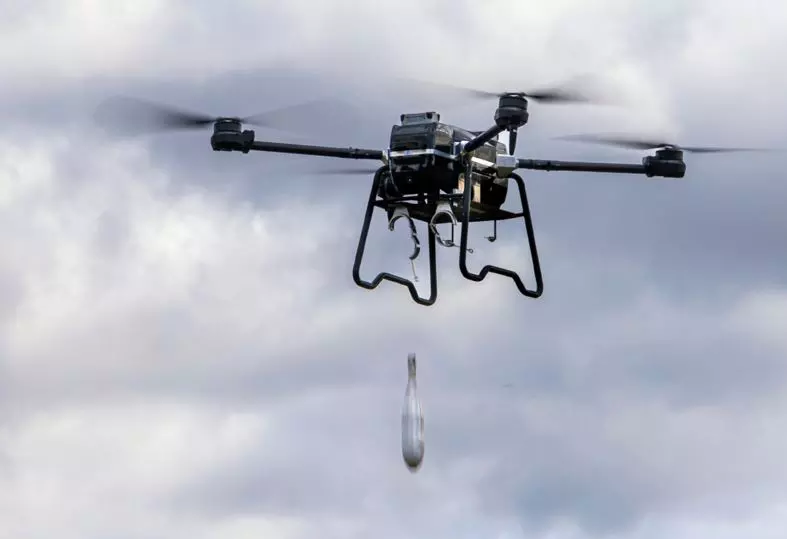
Hyderabad: Drones that can think and adjust in real time, even without full information, are being developed at the Robotics Research Centre of the International Institute of Information Technology, Hyderabad (IIIT-H).
Led by Prof. Spandan Roy, the lab is working on control systems that allow machines to operate in uncertain, real-world conditions where factors like wind, weight changes and movement cannot be fully predicted.
“You don’t know the dynamics, but still, how can you control the system? Instead of relying on perfect data, the team builds systems that adapt as they operate,” Prof. Roy said, explaining the idea behind the work.
This approach becomes critical in tasks like dropping supplies during flood rescue. A drone releasing a payload suddenly becomes lighter and unstable. “When it drops, the drone suddenly shoots up, the dynamics switch completely,” he said, describing how the system has to adjust instantly.
The lab is also working on drones carrying suspended loads, where swinging payloads can become dangerous. “If a human is just under the payload, it’s pretty nasty,” he said, adding that the focus is on stabilising such systems in motion.
In another project, drones are fitted with robotic arms to pick and place objects mid-air. This adds complexity, as every movement affects balance. “The force must be enough to grasp but not so high that it destabilises the drone,” Prof. Roy said.
The team has also developed a motor-free gripper inspired by a slap band, and is working on systems that can catch objects mid-air by absorbing impact. “If the hand is hard, the ball drops. If it’s soft, it absorbs the impact,” he said, drawing a parallel with cricket.
Beyond lab work, some projects are moving into real-world use. Reconfigurable drones that adjust to payload size are being tested with defence applications.
In agriculture, the team has developed drone-based pollination. “They were hoping for 90%. We achieved 123 per cent,” Prof Roy said, referring to field results that surpassed manual methods. The lab has produced nearly 30 journal publications in six years and follows a collaborative model where students lead projects based on expertise.
