Hyderabad Set For Grand Sadar Celebrations
The annual event, which began humbly in 1942 as a community gathering, has evolved into a grand citywide spectacle showcasing majestic bulls, music and dancing crowds: Reports
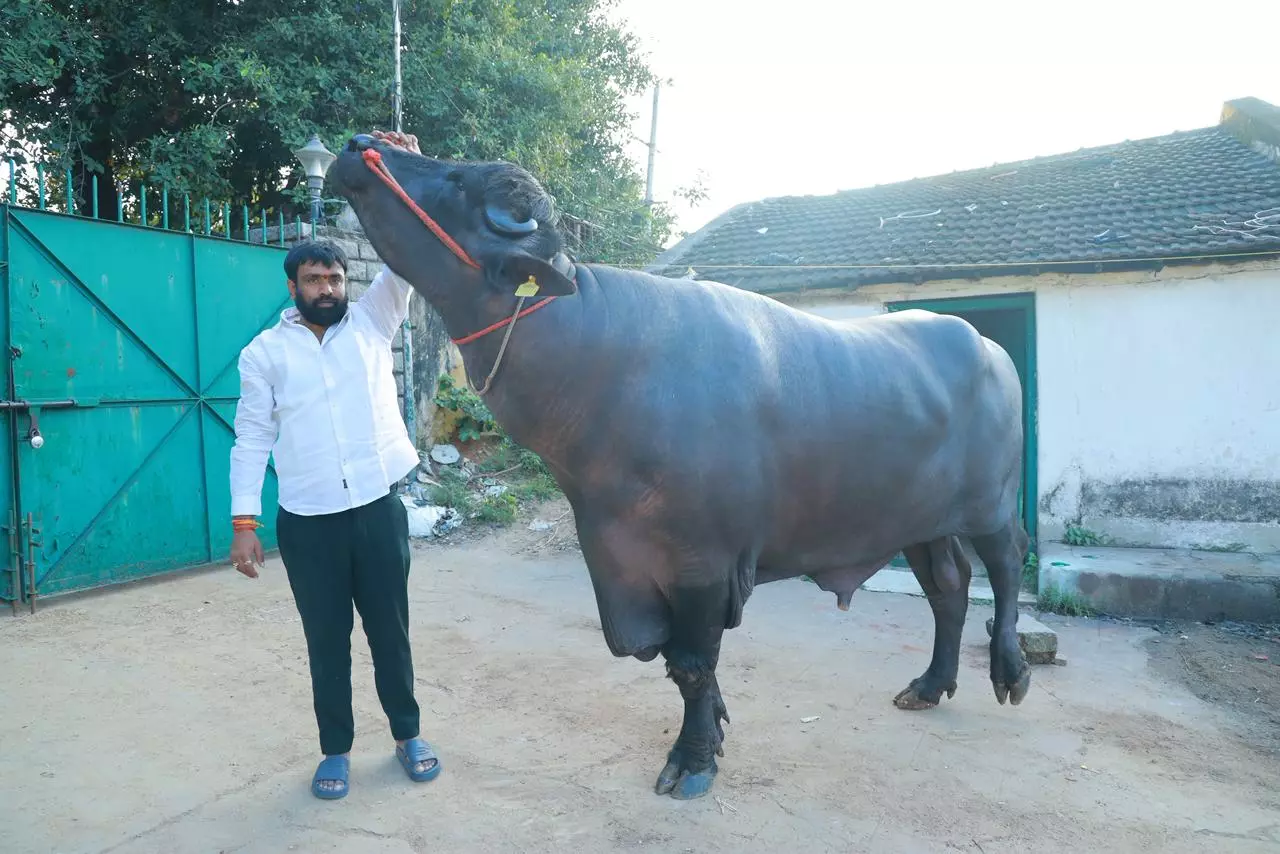
HYDERABAD: ‘Rolex’, the offspring of Haryana’s legendary Yuvraj, once valued at ₹7 crore, will take centrestage at this year’s Sadar Sammelan — the grand post-Diwali celebration of the Yadav community. The Sadar Sammelan — also known as Dunnapothula Panduga — will be held on Wedneday at the YMCA crossroads in Narayanguda, marking one of the biggest processions of the year.
The annual event, which began humbly in 1942 as a community gathering, has evolved into a grand citywide spectacle showcasing majestic bulls, music and dancing crowds.
Veteran community leader Shivaji Yadav recalled that the Sadar Sammelan began as a modest gathering during the Nizam’s era, where Yadav families met annually. “Now the festival has become a mega celebration, drawing people from all walks of life,” he said.
Edla Hari Babu, the owner of ‘Rolex’, said preparations are in full swing for the festival. “In 2014, I brought ‘Yuvraj’ to Hyderabad, and the entire city came to see him. It became the highlight of the festival that year.” ‘Yuvraj’ was used to inseminate a cow here, and ‘Rolex’ was born. Later came ‘Badsha’.
“This year, we are bringing nine bulls and 140 buffaloes to the sammelan,” he said. Born and bred at Musheerabad’s dairy farm, Rolex carries forward the legacy of Yuvraj, a 6.5-foot-tall, 1,600-kg Murrah breed bull. Sources said Yuvraj’s semen, valued at nearly `1 lakh per sample, was used for breeding Rolex.
Dr Madhusudan, joint director of animal husbandry, Rangareddy district, said these bulls are recognised for their superior genetic potential and require careful maintenance. “The Murrah breed needs careful handling as it is prone to seasonal diseases, making immunisation essential. They are raised on a prescribed pattern of feed with a balanced diet and regular exercise.”
He said the semen from such bulls was used for further breeding. “Though expensive, it benefits other dairy owners, too. These animals are rare, and sometimes they become difficult to control. Even veterinarians face challenges handling them due to their sheer size and strength,” he explained.