Hyderabad: Science, Technology Key To Protecting Oceans, Say Experts

INCOIS also launched the IRSC to create a collaborative ecosystem for research scholars through mentorship, interdisciplinary projects, outreach activities and academic engagement programmes: Reports
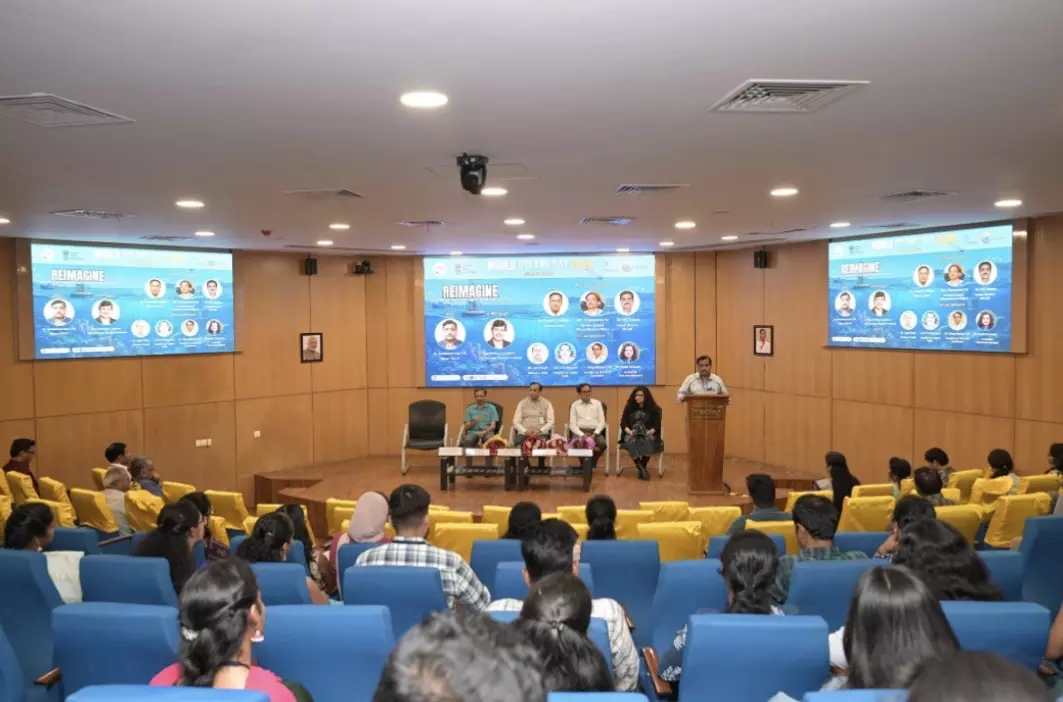
HYDERABAD: Protecting the oceans will require approaches that go beyond traditional governance systems and place greater emphasis on science, technology and international collaboration, experts said at the World Oceans Day celebrations organised by the Indian National Centre for Ocean Information Services (INCOIS) in Hyderabad on Monday.
The event coincided with the launch of two new initiatives by INCOIS — NIRMAL Sagar, a marine litter tracking programme for the Indian Ocean Region, and the INCOIS Research Scholars Collective (IRSC), a student-led platform aimed at promoting research collaboration and professional development among young scientists.
Observed annually on June 8 under the United Nations framework, World Oceans Day this year was themed “Reimagine: Beyond the World We Know, A New Relationship with Our Ocean”, highlighting the need for sustainable and innovative solutions to emerging ocean challenges.
NIRMAL Sagar aims to establish an integrated framework for tracking marine litter across the Indian Ocean Region. According to INCOIS, the programme will use ocean modelling, satellite remote sensing, artificial intelligence and machine learning tools to identify litter hotspots, monitor the movement of marine debris and support targeted clean-up efforts. The initiative aligns with the Swachh Sagar, Surakshit Sagar campaign and the United Nations Sustainable Development Goals.
INCOIS also launched the IRSC to create a collaborative ecosystem for research scholars through mentorship, interdisciplinary projects, outreach activities and academic engagement programmes.
Speaking at the event, INCOIS director Balakrishnan Nair T.M. highlighted the role of ocean science and services in promoting sustainable development and disaster resilience. Scientists from the ministry of earth sciences stressed the need to strengthen ocean observation systems and improve ocean literacy.
During a technical session, experts discussed ocean governance, the blue economy, climate change and marine resources. Arpita Goswami, co-founder of Neer Arnav Research, called for science-based, ecosystem-oriented ocean policies. Varsha Kelkar of the University of Mumbai spoke on opportunities and challenges in ocean governance and marine genetic resources, while David Legler of the US National Oceanic and Atmospheric Administration (NOAA) underscored the importance of sustained ocean observations and international cooperation in understanding climate variability.
The programme also featured competitions and outreach activities aimed at encouraging greater public engagement with ocean science and conservation.
