Hyderabad Police Bust Film Piracy Gang, Arrest 5 Persons

“The most shocking aspect of this case is that the accused were hacking the digital satellite system and uploading pirated movies online, earning income through betting and gaming app advertisements”: Report
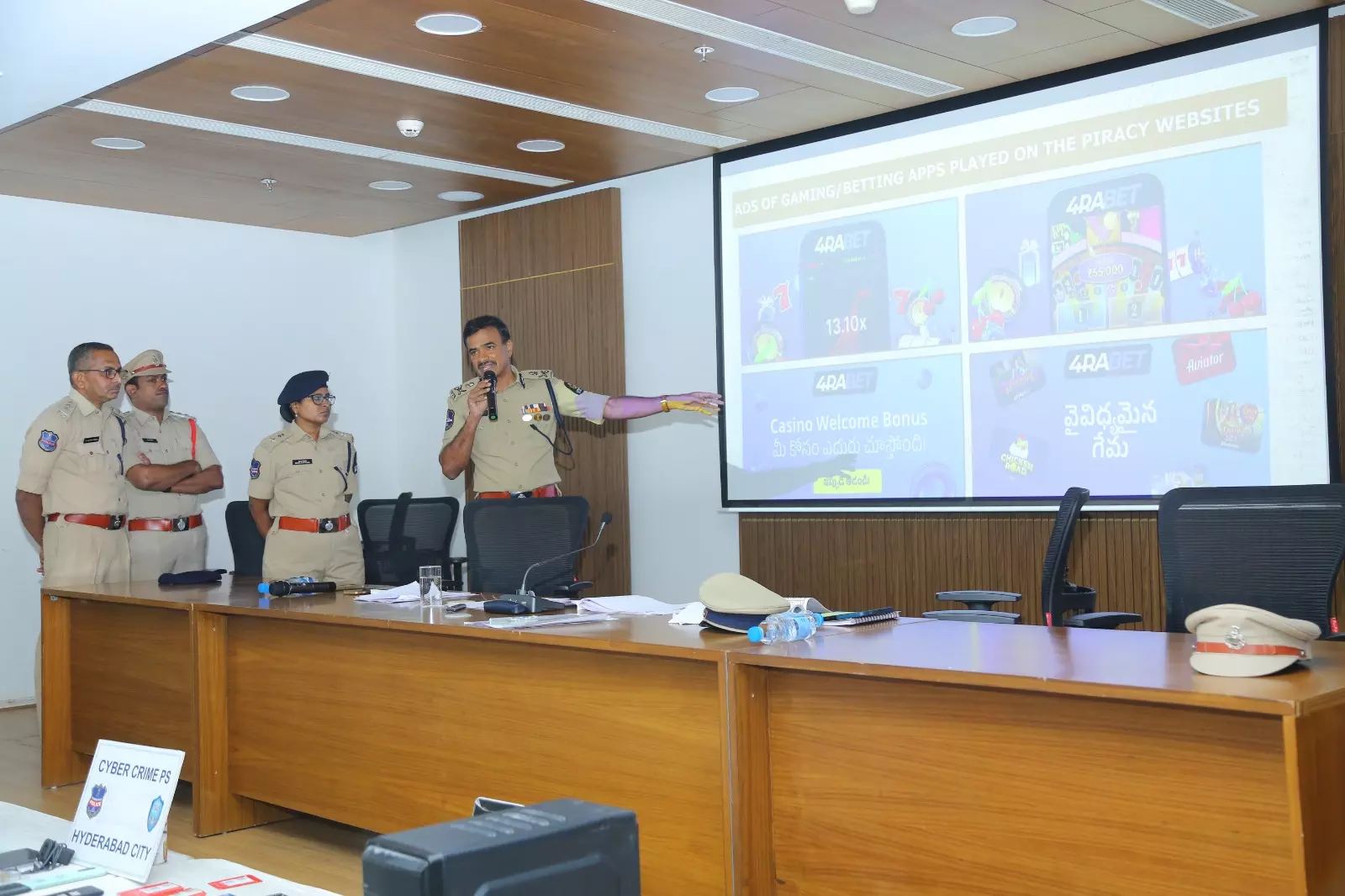
HYDERABAD: The city cybercrime unit (CCCU) busted what it called the country’s largest interstate film piracy gang with the arrest of five persons who had allegedly pirated over 500 movies, causing a financial loss of around ₹3,700 crores to the Telugu and Tamil film industries. The CCCU personnel have issued notice to five others for aiding and abetting the crime.
“The most shocking aspect of this case is that the accused were hacking the digital satellite system and uploading pirated movies online, earning income through betting and gaming app advertisements,” said Hyderabad police commissioner C.V. Anand, announcing the arrests.
The arrests were the result of a comprehensive investigation into the piracy of several new Telugu films, including ‘HIT: The Third Case’, ‘#Single’, ‘Kuberaa’, and ‘Hari Hara Veera Mallu’, which had been uploaded onto illegal websites, said Hyderabad police commissioner C.V. Anand.
The accused were identified as Ashwani Kumar, 21, of Gulzarbagh, Bihar; Cyril Infant Raj Amaladoss, 32, a crypto trader from Tamil Nadu; Jana Kiran Kumar, 29, a resident of NGOs Colony, Vanasthalipuram from East Godavari; Sudhakaran, 31, from Tamil Nadu; and 23-year-old Arsalan Ahmed, a student from Bihar.
The CCCU had received a complaint from Yarra Manindra Babu, representing the Anti-Video Piracy Cell (AVPC) of the Telugu Film Chamber of Commerce (TFCC), Hyderabad. He reported that the Telugu film ‘#Single’, released on May 9, 2025, and ‘HIT: The Third Case’, released on May 1, 2025, were illegally circulated online on the very first day of release. The cell also alleged that the Telugu film ‘Kuberaa’ was pirated and uploaded on to certain websites on the day of its release.
Based on this complaint, special teams were formed to investigate, Anand said.
The accused allegedly confessed that they had been engaged in piracy mainly in two ways: first, by leaking HD copies of films from digital service providers; and second, through cam releases, which involve camcorder recordings of on-screen projections in theatres on the first day of release, made using handheld cameras, smartphones, or hidden recording devices, Anand said.
This enabled the gang to pirate movies still in their theatrical run and not yet released for personal viewing. In other words, through camrips, leaked studio copies, or hacked distribution channels, the accused made pirated versions widely available, Anand explained.
Police seized several electronic items, including CPUs, a tablet, hard disks, mobile phones, laptops, dongles, pen drives, a webcam, memory cards, and processors, which were being used by the accused in committing the offences.
Anand said: “There is nothing free in the world. Pirated content may appear free, but it comes at a huge cost. Piracy is used as bait to steal people’s identities, infringe on data privacy, spread malware, and ultimately facilitate online fraud, financial scams, and other cybercrimes.”