Hyderabad Gurudwara Turns 100, Celebrations With Run and Walkathons

The gurudwara played a role in providing shelter to migrant Sikhs who arrived in Hyderabad after leaving their homes during the 1947 Partition of India and Pakistan.
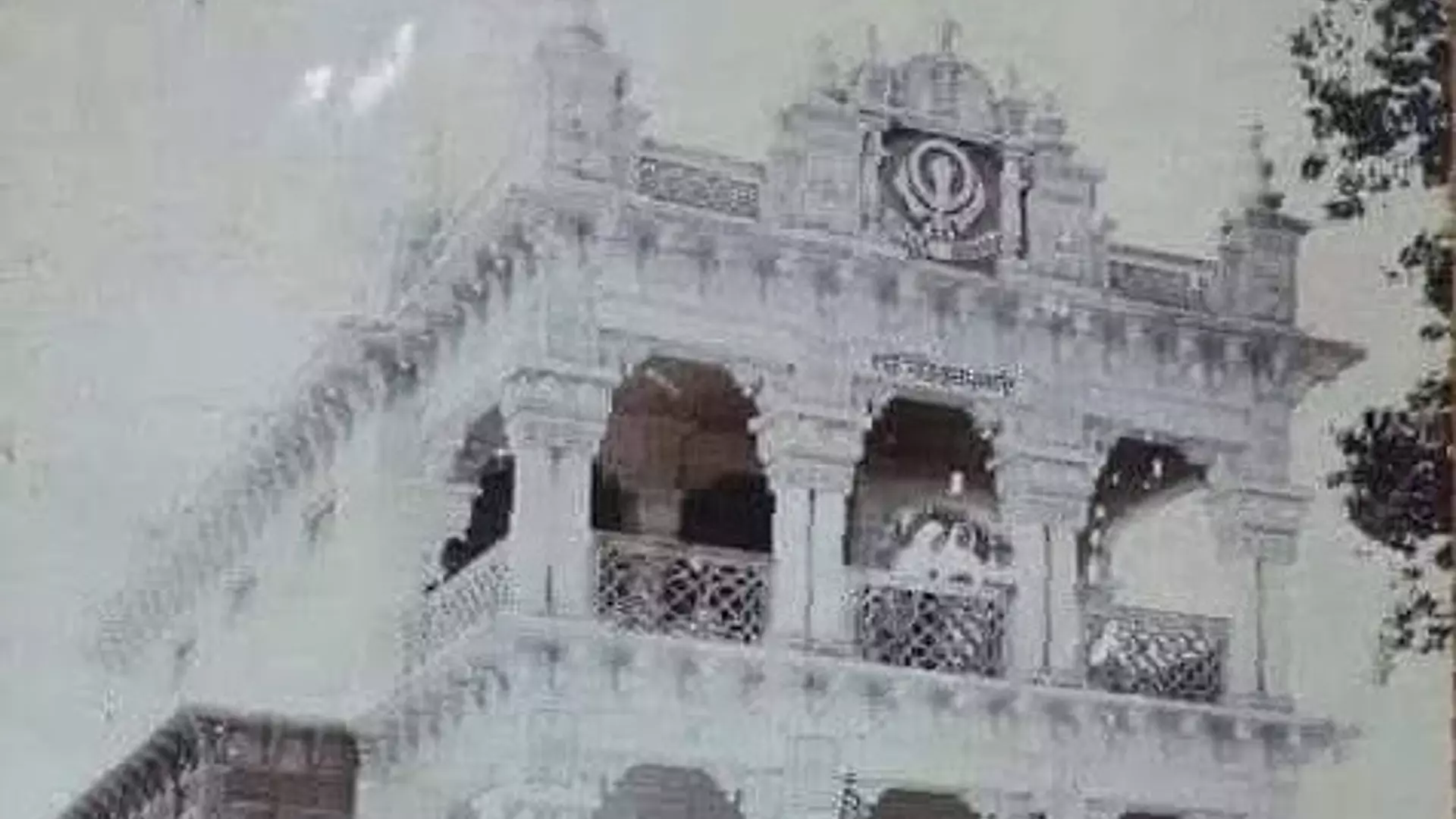
Hyderabad:Central Gurudwara Sahib Gowliguda is marking 100 years since its establishment in 1926, with the Sikh community organising a series of events to commemorate the centenary.
The gurudwara played a role in providing shelter to migrant Sikhs who arrived in Hyderabad after leaving their homes during the 1947 Partition of India and Pakistan. It also sheltered people from surrounding areas, irrespective of caste and creed, during the 1970 floods.
As part of the centenary celebrations, the Sikh community will organise 3K and 5K runs and a family walkathon, with organisers expecting about 5,000 participants. The event will be held under the theme of faith, sewa, one family, one Panth, one Sangat and one community.
The walkathon will be flagged off at the HMDA Grounds near IMAX, Khairatabad, and will pass through People's Plaza and Necklace Road before returning to the HMDA Grounds. Committee members said the gurudwara, which began as a place of worship a century ago, had over the decades become a spiritual home, cultural anchor and centre of community service for generations of Sikhs.
Tracing the history of the gurudwara, Dr Sajjan Singh, member of the Sikh Heritage Preservation and Conservation Committee, Amritsar, said, “From 1920, a Sikh platoon was stationed at Gowliguda to provide security to the British Residency, now the Koti Women’s College. In 1923, during an inspection, Salar Jung III found the platoon personnel absent and learnt that they had gone to Gurudwara Barambala at Sikh Chawani, Kishan Bagh, to offer prayers. Realising that the soldiers had to travel a considerable distance for worship, he sanctioned funds for the construction of a gurudwara at Gowliguda.”
On the architectural style of the gurudwara, Dr Sajjan said, “At the time, Hyderabad’s architecture was largely influenced by Mughal, Persian and Kakatiya styles, and local builders had little familiarity with Sikh religious architecture. A team of construction experts was therefore sent to study the design of a gurudwara in Lahore, and the Gowliguda Gurudwara was subsequently built on similar architectural lines.”
The presence of Sikhs in Hyderabad dates back to 1832, according to Dr Sajjan. Explaining their early presence in the city, he said, “Sikh forces arrived in Hyderabad in 1832 and were stationed at Sikh Chawani in Kishan Bagh, also known as Govind Nagri. The fourth Nizam allotted about 200 acres of land to the contingent near Mir Alam Tank, which was then associated with the city’s early water filtration system. From this base, Sikh troops were later deployed to different parts of the Nizam’s dominion.”
