Hyderabad Gets Ready For Lunar Eclipse Tomorrow

Enthusiasts are gearing up to view the total lunar eclipse that will begin at 8.58 pm on Sunday in India. The eclipse will last for 5 hours and 27 minutes, but the dramatic total phase will last for 82 minutes.
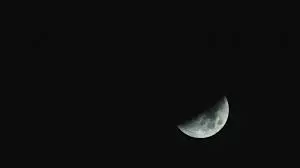
Hyderabad: Enthusiasts are gearing up to view the total lunar eclipse that will begin at 8.58 pm on Sunday in India. The eclipse will last for 5 hours and 27 minutes, but the dramatic total phase will last for 82 minutes.
The sky is expected to be clear when the eclipse begins over Hyderabad. Officials said they expected to complete the Ganesh nimajjanam festivities, starting at 6 am on Saturday, before the eclipse began on Sunday night.
Many temples have declared closure from about 4 pm on Sunday in preparation for the eclipse.
The last total lunar eclipse visible from Hyderabad occurred on November 8, 2022, and the next, a partial eclipse, will be on March 3, 2026.
Speaking to Deccan Chronicle, Dr K. Mruthyunjaya Reddy, director of the G.P. Birla Archaeological, Astronomical and Scientific Research Institute, said, “A lunar eclipse can occur only during a full moon, when the Sun, Earth, and Moon align perfectly. The Earth’s shadow consists of two parts: the faint outer penumbra and the dark inner umbra.”
There are three types of lunar eclipses: penumbral, partial, and total. During a penumbral lunar eclipse, the Moon passes only through the faint penumbra. The dimming is often too slight to be noticed by the naked eye. During a partial lunar eclipse, a part of the Moon passes into the umbra, creating a distinct dark “bite” on its surface.
During a total lunar eclipse, the Moon enters the umbra and takes on a striking reddish-orange hue, earning it the name “Blood Moon.” This colour is due to ‘Rayleigh scattering’, the same phenomenon that makes Earth’s sky appear blue. The atmosphere scatters blue light more effectively, allowing red light to pass through and bend into the Earth’s shadow, which then illuminates the Moon.
A total lunar eclipse is not rare, as it can be seen once every 2.5 years on average from any given location. However, factors like cloud cover can affect visibility, making a clear view a special treat.
Dr Akshay Bedakere, an ophthalmologist, said, “This lunar eclipse can be safely observed with the naked eye. Unlike solar eclipses, which require utmost care, lunar eclipses pose no risk.”
Eclipses provide unique opportunities to study celestial bodies and their interactions. The brightness and colour of the Moon during totality can reveal the amount of dust and aerosols in Earth’s atmosphere. Volcanic eruptions, for instance, can lead to a much darker “Blood Moon” due to increased particles in the air. As the Moon’s surface cools rapidly in the Earth’s shadow, scientists can measure its thermal properties, helping to map different types of lunar soil and rock.
