Hyderabad Faces Garbage Surge: 9,000 Tonnes Daily in 2025

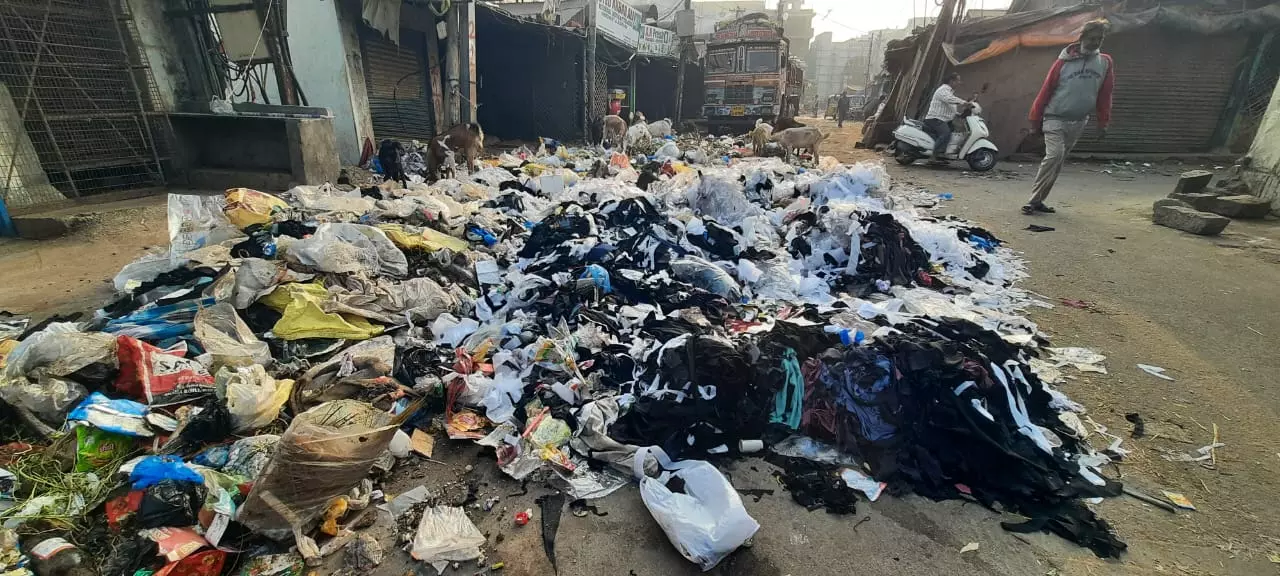
Hyderabad: For a city that dreams of competing with the best in the world, Hyderabad lags behind when it comes to cleanliness. And if the amount of garbage that the city might generate — around 9,000 tonnes a day — this year, up from the average that GHMC officials estimate ranged between 7,000 and 8,000 tonnes a day in 2024 is anything to go by, the problem can only worsen.
If the city dumps 9,000 tonnes of garbage a day, it would amount to 32,85,000 tonnes, or 32.85 lakh tonnes of trash a year. This doesn’t factor in the trash generated during the many festivals and events the city celebrates.
Incidentally, this past December, the city produced an average of 8,300 tonnes of garbage a day with the 56 municipal solid waste transfer stations in the city processing between them some 2,58,000 tonnes of such material.
The single largest component of this humongous amount of waste is what the GHMC calls easy to degrade green waste – 1,16,100 tonnes. Hyderabadis threw away some 11,610 glass and ceramic wastes in the same month, and interestingly the people of the city apparently love coconuts with 20,000 tonnes coming from the remains of this tough to crack nut.
Asked about the plans to deal with the mounting challenge, GHMC commissioner K. Ilambarithi told Deccan Chronicle that municipal solid waste processing facilities are on the anvil. Once they start functioning, then every little bit of waste will be processed.
“A large chunk of the waste will be used as fuel to generate electricity at these plants, while a good portion of the waste will be composted and sold as fertiliser, something that is already being done at Jawaharnagar,” he pointed out.
As per plans, five of these facilities, which are to be located in Sangareddy, Rangareddy, Yadadri Bhongir, and Medchal-Malkajgiri districts, could come on stream in the near future.
On whether these facilities will result in bad odour or pollution in the surrounding areas, Ilambarithi said, “these are state-of-the-art facilities and there would be no such issues. Also, these will eliminate the need for landfills like the landfill legacy in Jawaharnagar.”
One challenge Hyderabad faces, as do many other cities in India, is the habit of people throwing trash wherever they please. Officials tasked with GHMC’s garbage management activities, said that the city needs a huge dose of civic sense, adding that penalties ranging from Rs 100 to Rs 10,000 can be levied for throwing trash in public places. But before cracking the whip, the civic body itself needs to get its act together on various fronts, the officials said.
“Our priority is to provide facilities for people to dispose of their garbage safely, including bins at garbage vulnerable points (GVPs). We have also launched a drive in commercial areas where every shopkeeper must keep a bin so that customers can leave the trash in them. The first step is to provide the facilities, the second is to create awareness and co-opt everyone to keep the city clean. Penalising is the last option, but that too will come,” Ilambarithi said.
Infograph
What makes up city’s trash heaps
Green waste: 44%
Plastics: 13%
Coconuts: 8.5%
Cloth: 8 %
Hard to degrade (wood): 6.5%
Paper: 6.5%
Leather/rubber/jute: 6%
Stones: 3%
Metals: 1.5%
Ceramics/glass: 1.5%
Others: 1.5%
Penalties in place
Littering on roads, in open spaces: Rs100
Throwing litter in drains: Rs 1,000
Shop owners littering: Rs 1,000
Bulk garbage dumping on streets: Rs 2,000
Throwing litter around bins: Rs 100
Open urination: Rs 100
Dumping of unauthorised debris: Rs 10,000
Dumping of wastes/garbage into nalas: Rs 10,000
How garbage is mounting up
2016: 4,000 tonnes per day
2020: 5,500 to 6,000 tonnes per day
2024: 7,000 to 8,000 tonnes per day
2025: Likely 9,000 tonnes per day
Annual garbage in 2025, at 9,000 tonnes a day: 32,85,000 tonnes.
