Hyderabad Resonates With Durga Puja Spirit

“Our goal is to make the Prabashi Durgotsav not just a religious gathering but a true celebration of Bengal’s cultural richness. The Chau Dance performance, the Grameen Bangla themed idol and the recreation of Dacres Lane are all efforts to keep our heritage alive for the younger generation while giving the entire community a memorable festive experience": Anirban Guha, general secretary, Probashi association.
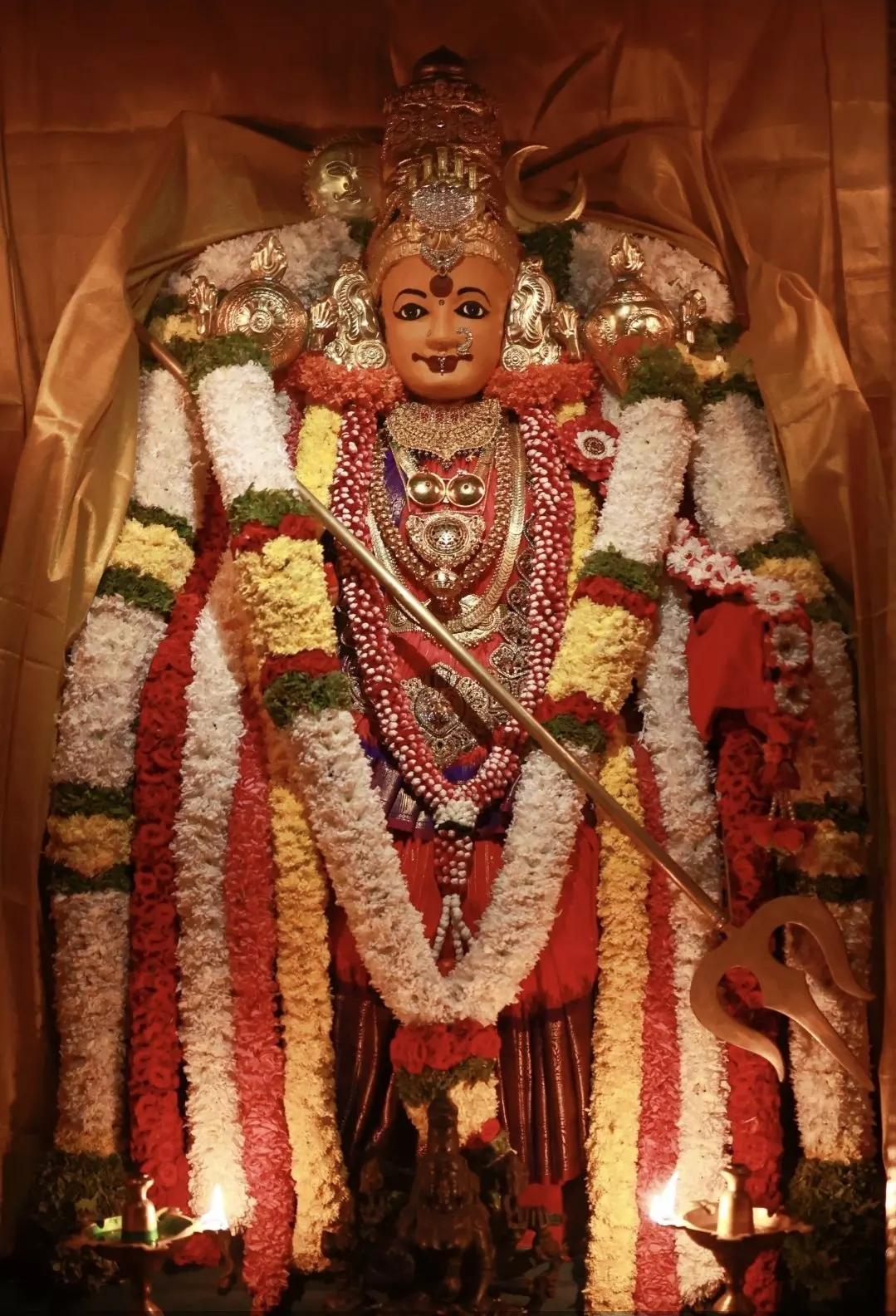
HYDERABAD: Hyderabad waits for the drumbeat, as the city knows what is coming and why it matters. The puja mood has already tilted toward the weekend, and a bit early this year, and as Satyajit Ray had his character exclaim in the 1979 film Joy Baba Felunath, "Porshu toh Shoshti", (the day after tomorrow is Shoshti), reminds us that the first big surge of devotees is almost here. The anticipation is perhaps equivalent to a feeling that the festival belongs to more people than before, and that the scale, the food, the music and the rituals have grown with the city’s confidence.
“It is Sarbojonin because it belongs to all,” says Abhijeeth Bhattacharjee, vice president of Secunderabad’s Bangiya Sanskritik Sangha, at Keyes High School puja, in its 60th year. The festival is expected to cross four lakh footfalls and will have more than fifty food stalls. Additionally, the pandal tips its hat to Rajput arches and windows. “This year is not just another festival,” says Bhattacharjee. “It honours the senior members and forefathers who built this institution.” Access helps the mood there as the Metro stop at Secunderabad sits a short walk away and parking has been arranged at nearby colleges so families can stay longer for plays, music and late evening aarti.
Close by is the oldest puja of the city. Hyderabad Bangalee Samity readies its 84th year at NTR Stadium with three pandals, one for Ek Challer Protima, another for bhog and Annadanam, and a third for music and theatre. The menu stays stubbornly familiar and loved, with khichudi, labra, beguni, payesh and chutney served to thousands every afternoon. “Ours is an inclusive puja,” says HBS vice president Biswajit Mukherjee. “Hindus gather for the rituals, Telugu families celebrate Bathukamma alongside us, and Muslim brothers run biryani stalls. Everyone shares the space without discrimination.”
North of the cantonment, Lothkunta’s Bani Sangha has created quite a stir this year with their `1.5 crore worth of property. It stretches the calendar from Chaturthi with competitions, dance, drama and a Navami concert by Jeet Ganguly. West of the tech corridor, the Prabashi Association in Nizampet leans into a Gram Bangla theme, a terracotta-style idol against a mat-woven backdrop and a Purulia Chau performance led by Gautam Mahato. A recreated Dacres Lane returns with cooks brought from Bengal, which explains the steady flow from KPHB, Miyapur and Chandanagar at dinnertime.
“Our goal is to make the Prabashi Durgotsav not just a religious gathering but a true celebration of Bengal’s cultural richness. The Chau Dance performance, the Grameen Bangla themed idol and the recreation of Dacres Lane are all efforts to keep our heritage alive for the younger generation while giving the entire community a memorable festive experience,” said Anirban Guha, general secretary, Probashi association.
Hyderabad did not arrive here overnight. The first community puja in the city is remembered as a ‘ghot’ puja in 1942 under the Nizam era, and HBS has pulled that into its 84th year. The festival widened over decades as Bengalis settled across the twin cities, over the years. Nonetheless, the pattern remains the same with morning pushpanjali, afternoon bhog, evening arati, Sandhi Puja at the turn of Ashtami and Navami, and Sindoor Khela before immersion.
The weekend will test how far Hyderabad’s pujas have travelled from community corners to citywide stages. One organiser calls it a reunion more than an event, a place where alumni groups fix chai meets under string lights while children line up for drawing contests and the elders wait for the first conch call. “We serve free bhog to anyone who comes,” says Mukherjee, which is a simple promise and a statement of intent.
