HRF said hospitals such as Osmania General Hospital, Gandhi Hospital, MNJ Cancer Hospital, Niloufer Hospital, Government Maternity Hospital, Koti, and Modern Government Maternity Hospital, Petlaburj are facing acute shortages of doctors, infrastructure and essential services.
Hyderabad: The Human Rights Forum (HRF), Hyderabad city unit, has raised serious concerns over the deteriorating conditions in major government hospitals in Hyderabad, urging the Telangana government to take immediate corrective measures to safeguard patients’ right to timely and dignified healthcare.
In a representation addressed to Chief Minister A. Revanth Reddy, with copies to senior officials in the health department, HRF said hospitals such as Osmania General Hospital, Gandhi Hospital, MNJ Cancer Hospital, Niloufer Hospital, Government Maternity Hospital, Koti, and Modern Government Maternity Hospital, Petlaburj are facing acute shortages of doctors, infrastructure and essential services.
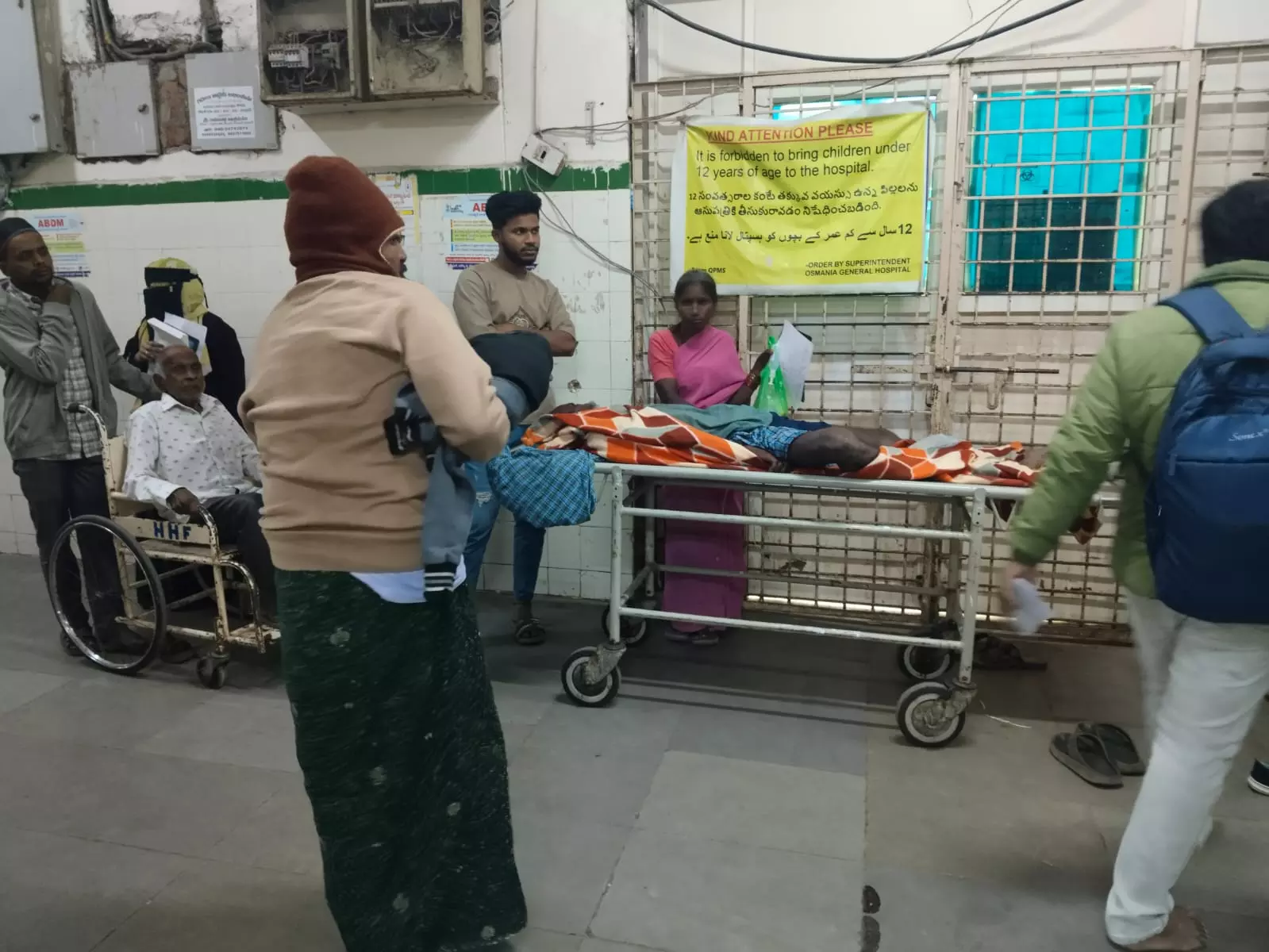
According to HRF, hundreds of patients report to casualty and emergency wards every evening, but doctor availability is grossly inadequate. Often emergency services are being run by a single doctor, leading to long waiting hours and sufferings. The forum also pointed to shortages of wheelchairs, stretchers, oxygen cylinders and support staff, forcing patients’ relatives to manage critically-ill patients on their own.
Highlighting the human cost of these gaps, vice president, Hyderabad City Unit, HRF, Syed Bilal said, “One accident victim the other day was waiting at Osmania General Hospital with a broken leg, but had to wait for nearly three hours as no doctor was available. This is not an isolated incident but a reflection of the systemic neglect in our public hospitals.”
Superintendent, Osmania General Hospital, Dr Rakesh Kumar Sahay, speaking with Deccan Chronicle explained, "The Human Right Forum of Hyderabad City Unit must understand the world pattern for distributing doctors in the evenings. There are doctors for every category according to their fixed timings in causality, emergency etc."
HRF said inadequate bed capacity, faulty or outdated medical equipment and prolonged delays for diagnostic procedures—sometimes stretching to two or three days—are further worsening the crisis. Doctors are overburdened with excessive patient loads and administrative work, while the availability of medicines remains erratic even after patients are admitted.
Terming the situation in emergency and casualty wards as particularly distressing, HRF demanded immediate recruitment of doctors, nurses and paramedical staff, expansion of bed capacity, repair and upgrading of equipment, and uninterrupted supply of medicines and oxygen.
“Public healthcare is a fundamental responsibility of the state. The present conditions are severely compromising citizens’ right to medical care,” Bilal said, urging the government to act without delay.