Hospitals Oppose Panel’s Hospital Room Tariff Proposal

Private hospitals have opposed a parliamentary panel’s proposal to benchmark basic room tariffs against nearby three-star hotels, saying hospital costs include specialised infrastructure, patient safety and round-the-clock clinical services.
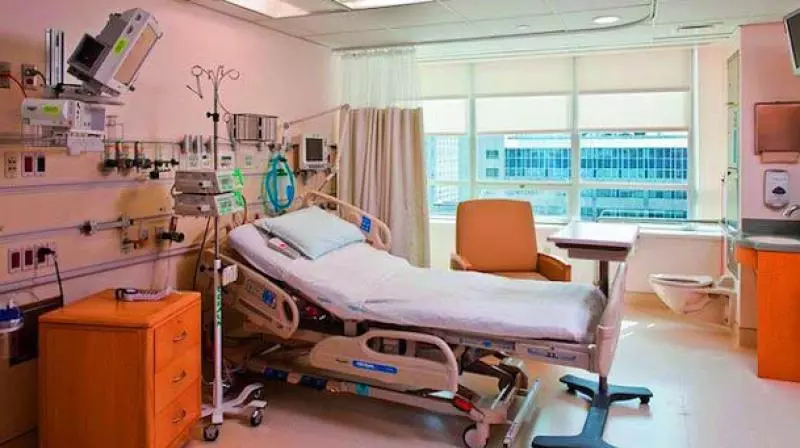
A parliamentary standing committee's recommendation to cap basic room tariffs in private hospitals in large metropolitan cities at the average rates charged by nearby three-star hotels has triggered a debate over how hospital costs should be assessed.
The parliamentary standing committee on health and family welfare has proposed making the room tariff benchmark mandatory, while allowing hospitals to bill separately for resident doctors, nursing, consumables, meals and laundry. It has also recommended fixed package rates for surgeries, disclosure of estimated treatment costs before admission and a fast-track ombudsman mechanism to address disputes over inflated bills.
According to the committee, the average cost of hospitalisation in government facilities is around `6,631, compared with more than `50,500 in private hospitals.
Doctors and hospital administrators said the need to make healthcare affordable and transparent was clear, but argued that hotel room tariffs did not account for the infrastructure and services required to operate a hospital.
“A hospital room is not simply a place where a patient stays; it is an extension of the clinical care environment,” said Dr Hemanth Kaukuntla, senior cardiothoracic surgeon. He cited infection-control systems, emergency power, medical gases, nursing availability, monitoring equipment and access to critical care among costs that were not immediately visible to patients.
“Comparing a hospital room directly with a three-star hotel room may not provide an accurate picture of the value or cost involved,” he said, adding that affordability should be pursued through greater transparency, with the benchmark based on healthcare infrastructure and the level of clinical care required.
Dr Kishore B. Reddy, managing director of a private hospital, said the objective of making healthcare affordable was legitimate but cautioned against a blanket approach to regulating hospital charges.
“The cost of delivering advanced healthcare is driven by significant investments in infrastructure, medical technology, highly skilled manpower, patient safety and quality systems,” he said. In tertiary and quaternary care, he said, such investments were substantial and necessary for complex treatments.
“A price cap that looks only at what the patient pays, without adequately considering the underlying cost of delivering that care, could unintentionally discourage investment in advanced healthcare infrastructure,” Dr Reddy said.
Mahendra Pala, COO of a group of hospitals, also questioned the use of hotel tariffs as a benchmark for hospital room costs. “It’s almost controlling the price without controlling the cost,” he said.
He cited costs associated with HVAC and infection-control standards, biomedical waste management, emergency power, trained nursing staff, regulatory compliance and maintaining hospital infrastructure round the clock, irrespective of occupancy.
“If affordability is the objective, the solution should address the entire healthcare cost ecosystem rather than simply controlling one visible component of the bill,” Pala said.
Pala suggested that the government and hospital associations form a joint task force to develop a costing framework based on actual healthcare delivery costs and regional variations instead of using hotel tariffs as the benchmark. The committee's recommendations are not yet mandatory. They would require acceptance by the government and subsequent regulatory or legal measures, including action at the state level, before becoming binding on private hospitals.
