Highly Endangered Indian Grey Wolf Found in ATR
The Indian Grey Wolf was once common across India's grasslands and semi-arid regions, and its discovery in the Amrabad landscape is an important conservation milestone that underscores the ecological value of the tiger reserve, officials said.
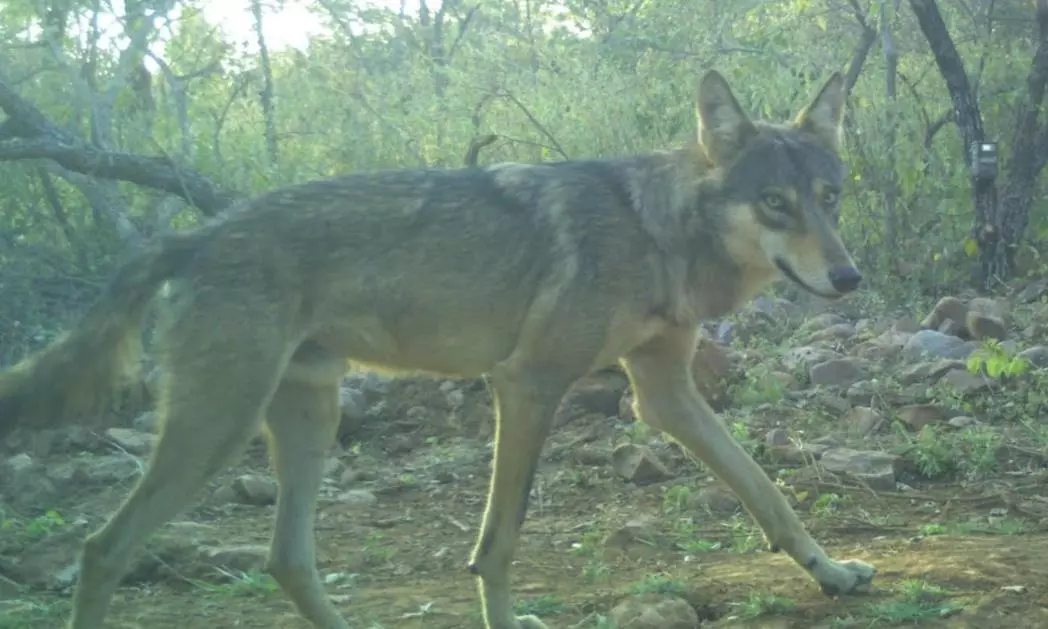
Hyderabad: The All India Tiger Estimation (AITE) 2026 has thrown up a pleasant surprise for Telangana. Camera traps set up as part of the exercise to estimate tiger numbers in the Amrabad Tiger Reserve have captured images of the Indian Grey Wolf, a highly endangered species that is increasingly rare because of habitat loss and whose numbers are estimated at just around 3,000 in India.
The Indian Grey Wolf is a protected species under Schedule I of the Wildlife (Protection) Act, 1972, affording it the highest level of protection, on par with the tiger. The IUCN Red List classifies the wolf as a vulnerable species.
The wolf, photographed by camera traps in a plains area of the Amrabad Tiger Reserve, is part of a pack of around five or six, it is learnt. This is a critical discovery of a threatened species in the tiger reserve. One of the last known confirmed sightings of the wolf was in Nizamabad district in 2021, forest officials said.
The Indian Grey Wolf was once common across India's grasslands and semi-arid regions, and its discovery in the Amrabad landscape is an important conservation milestone that underscores the ecological value of the tiger reserve, officials said.
The exercise also captured images of various other wildlife, including leopards, sloth bears, dholes (wild dogs), golden jackals, jungle cats, rusty-spotted cats, Asian palm civets, small Indian civets, nilgai, sambar, spotted deer (chital), chinkara, wild boar, and the chousingha (four-horned antelope). The presence of such a wide variety of species reaffirms the significance of the Amrabad Tiger Reserve as one of India's premier wildlife habitats, officials said.
The exercise also confirmed encouraging results from the Mouse Deer Soft-release Programme in ATR, with camera traps capturing images of the mouse deer. This is clear evidence that the programme has been successful and that the species has established itself in its natural habitat. It also highlights the effectiveness of the forest department's scientific wildlife management and habitat restoration efforts, according to ATR Field Director Dr Sunil S. Hiremath.
