HC Takes Up Case of Living Man Sent to Mortuary

The panel comprising Chief Justice Aparesh Kumar Singh and Justice G.M. Mohiuddin is dealing with PIL registered pursuant to directions of the Chief Justice on the basis of a letter addressed by Bathini Komuraiah, advocate.
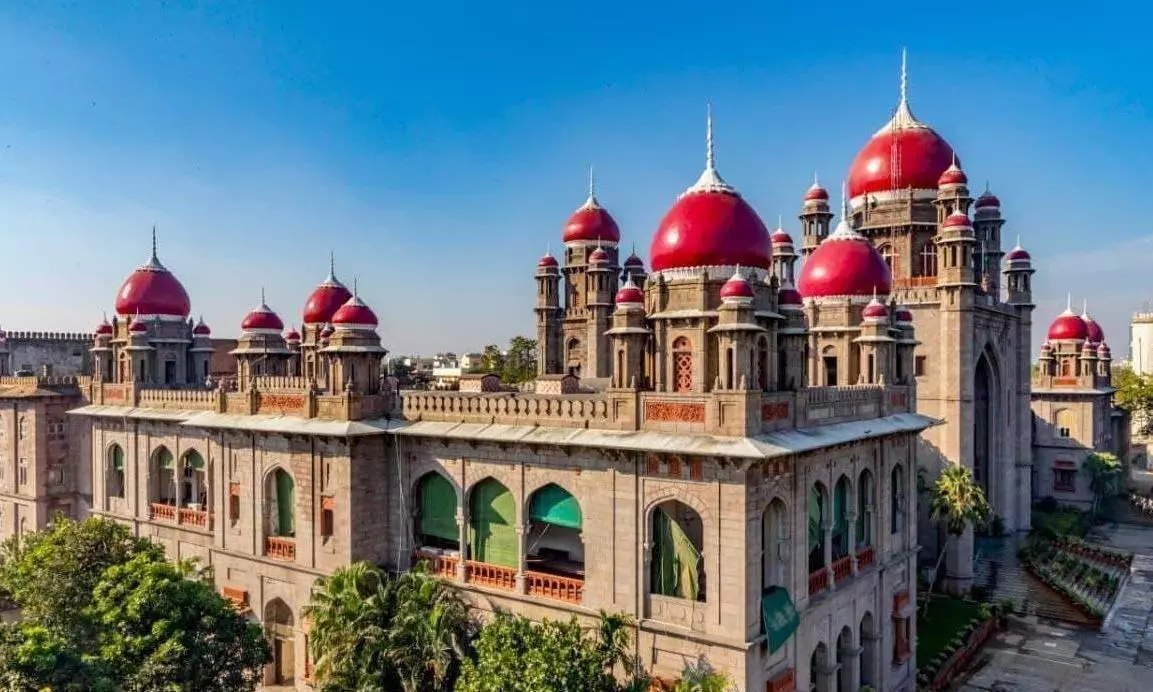
Hyderabad: A two-judge panel of the Telangana High Court took on file a public interest litigation (PIL) concerning an incident where a person who was alive was allegedly shifted to a mortuary. The panel comprising Chief Justice Aparesh Kumar Singh and Justice G.M. Mohiuddin is dealing with PIL registered pursuant to directions of the Chief Justice on the basis of a letter addressed by Bathini Komuraiah, advocate. The letter referred to a news report on October 31, 2025, regarding the alleged incident. The letter stated that one V. Ravi, resident of Jayyaram (Laxyaram) in Chinnaguduru mandal of Mahbubabad district, who was suffering from kidney and other ailments, had approached the district government hospital seeking treatment. It was alleged that hospital staff refused to admit him on the ground that he was not accompanied by an attendant and did not possess an Aadhaar card.
The letter stated that the patient remained near the hospital canteen premises for nearly three days, during which his condition deteriorated and he became unconscious. Presuming him to be dead, hospital staff shifted him to the mortuary. The following day, sanitation staff were said to have noticed signs of movement and alerted the police, who shifted him for medical treatment. The PIL sought a directions that medical or government staff should not deny treatment on the ground of non-availability of assistance on lack of identity documents, and called for strict enforcement of fundamental rights in the matter relating access to healthcare. Counsel appearing for the state sought time to place on record a comprehensive affidavit detailing the policy decisions and guidelines governing the provision of medical facilities to persons suffering from serious or life-threatening ailments. The panel granted the government three weeks to file the counter affidavit and posted the matter for further hearing.
PCB directed ensure no sewage reaches lake
Justice N.V. Shravan Kumar of the Telangana High Court directed the Pollution Control Board to ensure that no sewage or pollution was let into existing water bodies during the construction of a drainage system under the AMRUT 2.0 scheme at Nagarkurnool district. The judge was dealing with a plea filed by Galimudi Prashant Kumar of Lingotam village, Achampet mandal, alleging that the Achampet municipality commenced construction of drainage canals without obtaining mandatory environmental clearances from the PCB and approvals from the minor irrigation department. It was contended that the drainage was being designed to discharge untreated wastewater into Chavatakunta and irrigation tanks serving Lingotam.
The petitioner pointed out that Lingotam lay at a lower elevation than Achampet town and depended on Chavatakunta, nearby tanks and a canal for agricultural irrigation and domestic use. According to the petitioner, the absence of a sewage treatment plant would result in pollution of water bodies, rendering the water unfit for agriculture, cattle and human consumption. During the hearing, the PCB contended that no representation was pending before it. The petitioner informed the court that a representation was made on February 4. Reference was made to a communication issued by the deputy executive engineer (irrigation) on January 12. Restricting the relief sought, the petitioner requested disposal of the representation within a time-bound period. The judge directed the PCB to consider the representation of petitioner along with the communication from the irrigation department and ensure that no sewage or pollution is let into existing water bodies. The exercise was directed to be completed within eight weeks.
Notice to police over attempt to grab graveyard land
Justice Laxmi Narayan Alishetty of the Telangana High Court ordered notice to the Goshamahal station house officer in a plea alleging encroachments in a graveyard situated at Chudi Bazaar, Hyderabad. The judge was dealing with a writ petition filed by Shaber Bakash, who alleged that the authorities failed to remove illegal huts and temporary sheds purportedly erected in the graveyard known as ‘Hijdun Ka Kabrastan’. The petitioner contended that the inaction of the respondents in not removing the alleged encroachments was illegal, arbitrary, and violative of the principles of natural justice, besides being in breach of constitutional protections. It was contended that despite submitting a representation to the authorities, no steps were taken to address the grievance. The judge directed the respondents to obtain instructions in the matter and posted the matter for further hearing.
HC recalls orders in commercial dispute
A two-judge panel of the Telangana High Court recalled its earlier order in a commercial dispute between Data Evolve Solutions Private Limited and Digi Yatra Foundation (DYF). The panel comprising Justice Moushumi Bhattacharya and Justice Gadi Praveen Kumar was dealing with a petition filed by the foundation seeking recall of an order passed on January 30, in a civil revision petition instituted by Data Evolve, under which the commercial court at Rangareddy district was directed to dispose of an interim injunction application within a fixed time. At the hearing, counsel for DYF submitted that the grievance was not against the merits of the case but against the time-bound direction issued earlier. It was pointed out that several applications seeking rejection of the main suit were pending before the commercial court and that this fact was not brought to the notice of the High Court at the time the earlier order was passed.
Counsel appearing for the Airport Authority of India (AAI) supported this submission. On the other hand, counsel for Data Evolve Solutions contended that the defendants were delaying the proceedings by filing multiple applications to stall consideration of the interim relief sought by the company. After considering the submissions, the panel observed that while the petition did not strictly satisfy the legal grounds for review, the court had issued the earlier direction without being informed about the pending applications. The judges noted that, as a matter of settled practice, applications seeking rejection of a suit must be decided before any interim relief is granted. Accordingly, the bench recalled the earlier direction and ordered the commercial court to first hear and decide seven pending applications seeking rejection of the suit within two weeks. The court made it clear that no further such applications would be entertained, observing that defendants could not be permitted to repeatedly file similar pleas to delay proceedings. The commercial court was directed to hear the interim injunction application alongside the rejection pleas, but to pass orders on it only after deciding those applications. The High Court also fixed March 31 as the outer limit for disposal of the injunction application, if it survived. The panel noted that claims relating to intellectual property violations gave rise to recurring causes of action and emphasised that judicial directions must balance fairness to both sides.
