HC Says CCTV Footage Of Court Cannot Be Provided To Individuals

A division bench comprising Acting Chief Justice P. Sam Koshy and Justice Narsing Rao Nandikonda dismissed a writ petition filed by Ranjit Charan Kumar, who sought CCTV footage of the court premises recorded on April 20.
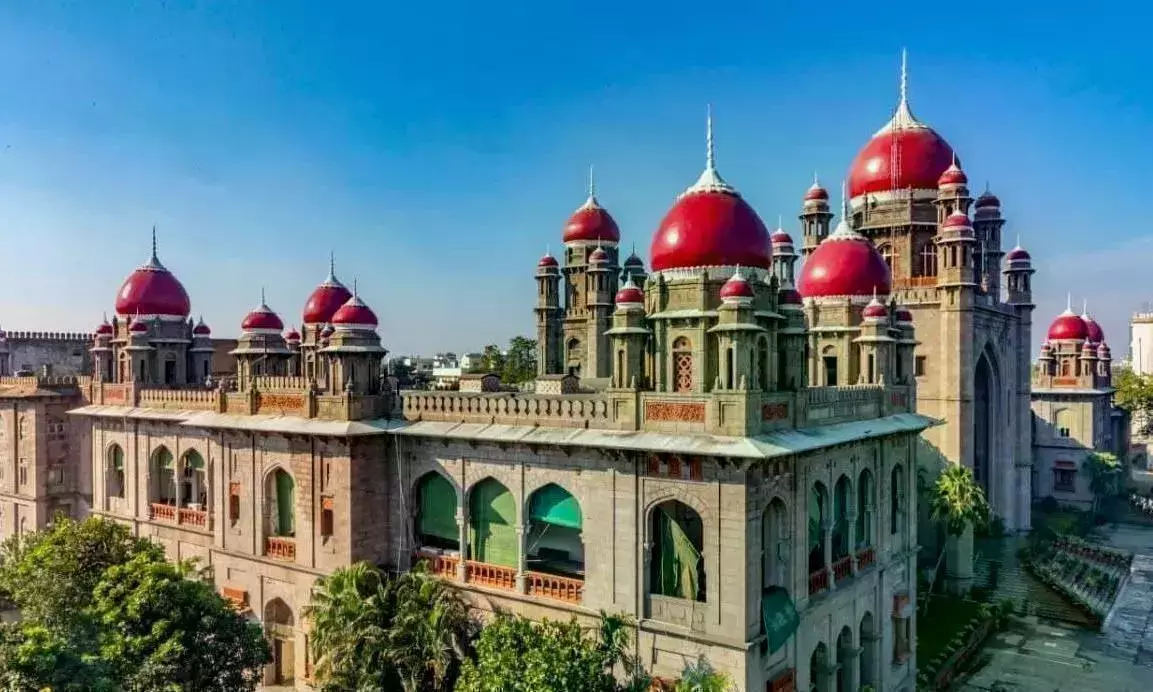
Hyderabad:The Telangana High Court has declined to provide CCTV footage from cameras installed on its premises to an individual for personal purpose under RTI Act or any other request. The court clarified that such footage may be made available to investigating officers when required for the investigation of a complaint or an FIR.
A division bench comprising Acting Chief Justice P. Sam Koshy and Justice Narsing Rao Nandikonda dismissed a writ petition filed by Ranjit Charan Kumar, who sought CCTV footage of the court premises recorded on April 20.
The petitioner had challenged the inaction of the authorities in furnishing the CCTV footage preserved for the specified date. He questioned the denial of access on the basis of Circular No. 11 of 2024, issued by the High Court on July 18, 2024, and sought a direction to the authorities to provide the footage.
The bench observed that the High Court had issued the circular on its administrative side, directing district unit heads to not provide CCTV footage relating to court proceedings or other proceedings under the Right to Information Act. The circular was issued in view of the directions of the Supreme Court.
The court held that granting the relief sought by the petitioner would be contrary to the existing administrative circular as well as the directions issued by the Supreme Court.
Clarifying the circumstances in which such footage could be accessed, the bench observed that CCTV footage could be made available to an investigating officer if sought in connection with the investigation of a complaint or an FIR, for investigation purposes.
BCI stays the proceedings of Telangana Bar Council
Hyderabad:The Bar Council of India (BCI) has issued crucial directives to the Telangana Bar Council, placing an interim stay on certain resolutions reportedly taken by few members of managing committee including those relating to the formation and reorganisation of committees.
On October 11, the proceedings of Telangana Bar Council reflected the constitution of the executive, enrolment, legislative, privileges, rules, library, finance and disciplinary committees.
The BCI has raised objections to the alleged unilateral decisions and stressed the need to follow the statutory provisions of the Advocates Act, 1961, while constituting committees and conducting the affairs of the State Bar Council.
As part of its interim directions, the BCI stayed the operation of ROC No. 510/2026 and initiated an examination of complaints concerning the minutes of the Telangana Bar Council general body meeting held on October 11. The complaints reportedly alleged that objections and dissenting views expressed by members were not properly recorded in the minutes.
The BCI has directed the chairman and secretary of the Telangana Bar Council to submit their explanations, along with the relevant records. The matter was expected to be examined further in light of the submissions received.
To ensure that the advocate enrollment process continued without interruption, the BCI has directed the formation of a special committee comprising the chairman, vice-chairman and the BCI member representing Telangana.
HC questions police not filing FIRs on the complaints
Hyderabad:The Telangana High Court has taken a serious view of the police closing a complaint regarding a mob attack on a petitioner and his family members on the ground that the matter had been settled between the parties, despite allegations of serious offences and the availability of supporting evidence.
The court was dealing with a writ petition seeking directions to the police to act on complaints dated June 2 and 9, 2026, alleging that a group of people had attacked the petitioner and his family. The petitioner contended that the incident was captured on CCTV and that the police failed to register a case despite receiving complaints and supporting material.
Counsel for the petitioner submitted that the petitioner had been taken to hospital for treatment following the alleged attack. Despite furnishing evidence, including photographs, the police had not initiated appropriate action, forcing him to approach the High Court.
The assistant government pleader for home submitted that an inquiry had been conducted into the complaint. The police reportedly found that the petitioner's son was involved in a rape case registered as Crime No. 448 of 2026 under the BNS.
According to the police, a group had assembled in front of the petitioner's house, where an argument took place between the petitioner and others. The matter was settled between the parties, following which the complaint was closed. The petitioner was informed of the decision through the Petition Management System (PMS), the government pleader submitted.
Petitioner's counsel disputed the police's version, arguing that an alleged mob attack involving serious offences could not be disposed of merely on the ground of a settlement. The court questioned the police’s reliance on a sexual harassment case against the petitioner’s son while dealing with the complaint of alleged attack.
