HC Rejected Pakistan Citizen`s Allegations Against Indian Home Ministry For Compelling To Obtain LTV

The court held that a continuous 31-year-long stay in India by a person born abroad, or in Pakistan, did not automatically confer Indian citizenship or not give any exceptions from applying for the long-term visa (LTV), even though the person had arrived in India as an infant with their family.
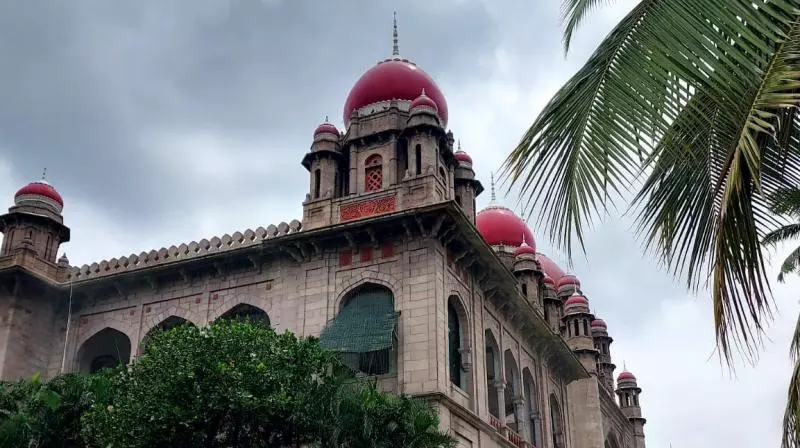
Hyderabad: The Telangana High Court held that documents such as Aadhaar, voter ID and PAN cards and educational certificates cannot, by themselves, confer or establish Indian citizenship under the Citizenship Act, particularly when the nationality of such persons is governed by the passport, visa status and orders under the Foreigners Act, 1946.
The court held that a continuous 31-year-long stay in India by a person born abroad, or in Pakistan, did not automatically confer Indian citizenship or not give any exceptions from applying for the long-term visa (LTV), even though the person had arrived in India as an infant with their family.
Stating this, Justice Nagesh Bheemapaka of the High Court declined to grant relief to 33-year-old Pakistan-born Syed Ali Hussain Razvi, a resident of Yakutpura, Hyderabad. He had alleged harassment by the police by being asked to obtain a LTV, as mandated by the Union home ministry in April 2025, after the Pahalgam attack.
The petitioner claimed that officials of the Pakistan branch of the police Special Branch were repeatedly visiting his residence and compelling him to apply for an LTV, threatening that he would otherwise face prosecution. He said he had been living in the city for over 31 years, was married to an Indian citizen, and was leading a settled family life with two children. He relied on Aadhaar card, voter ID, PAN card, driving licence and educational certificates to support his claim.
Opposing the plea, authorities stated that the petitioner was born in Karachi, Pakistan, in 1991 and had arrived in India in 1994 along with his mother on a Pakistani passport and visit visa. They submitted that while his mother had been applying for LTV extensions over the years, the petitioner himself never obtained one. The respondents pointed out discrepancies in the petitioner’s identity particulars, including differences in name and year of birth between Pakistani records and documents submitted in India.
It was stated that petitioner’s mother was born here on 19.08.1969, obtained an Indian passport on 19.06.1989 from the Regional Passport Office, Hyderabadm and married a Pakistani citizen on 09.07.1991 here. After marriage, she went to Pakistan along with her husband in 1991 and resided at Karachi. During her stay in Pakistan, she was allegedly subjected to physical and mental harassment by her husband, who forcibly took away her Indian passport, procured a Pakistani passport for her, and sent her to India for delivery.
The petitioner stated that he was born in India on 17.07.1992 and that his mother returned to Pakistan after delivery. When his mother became pregnant for the second time, her husband divorced her and sent her to India in 1994, from she she has been continuously residing in India.
In 1994. during her arrival on the Pakistani passport, the petitioner’s name was mentioned as Imran Abid @ Imran Hussain (year of birth 1991). He submitted that even after his mother`s divorce from her husband, a Pakistani citizen, her mother was being treated as a Pakistani national by the Union home ministry. Further, his citizenship has been considered as that of Pakistan, based on his mother’s Pakistan passport which had not been renewed after 1995.
Justice Bheemapaka pointed out that the petitioner's claim of Indian citizenship by birth was disputed on the basis of official records. He had not produced any conclusive statutory proof of citizenship, such as a certificate of registration, naturalisation, or an Indian passport. Hence, the judge noted, the authorities compelling him to secure an LTV cannot be equated with coercive or punitive action without due process.
The court rejected the petitioner’s claim of Indian citizenship based on the Aadhaar, Voter ID and PAN cards, driving licence and educational certificates. The court pointed out that he was not a naturalized Indian citizen. He had been declared as a Pakistani citizen upon arrival in India. It was also pointed out that there were differences in the name and date of birth in the educational certificates, Aadhaar card and other documents when compared to the passport of his mother. Hence, the court said, judicial intervention was not warranted.
The court disposed of the writ petition while directing the authorities to consider the pending LTV applications of the petitioner and his mother and pass appropriate orders in accordance with guidelines at the earliest.
