Telangana HC Warns Freebie Culture Could Weaken Economy

Court urges targeted welfare, flags rising burden of indiscriminate government sops
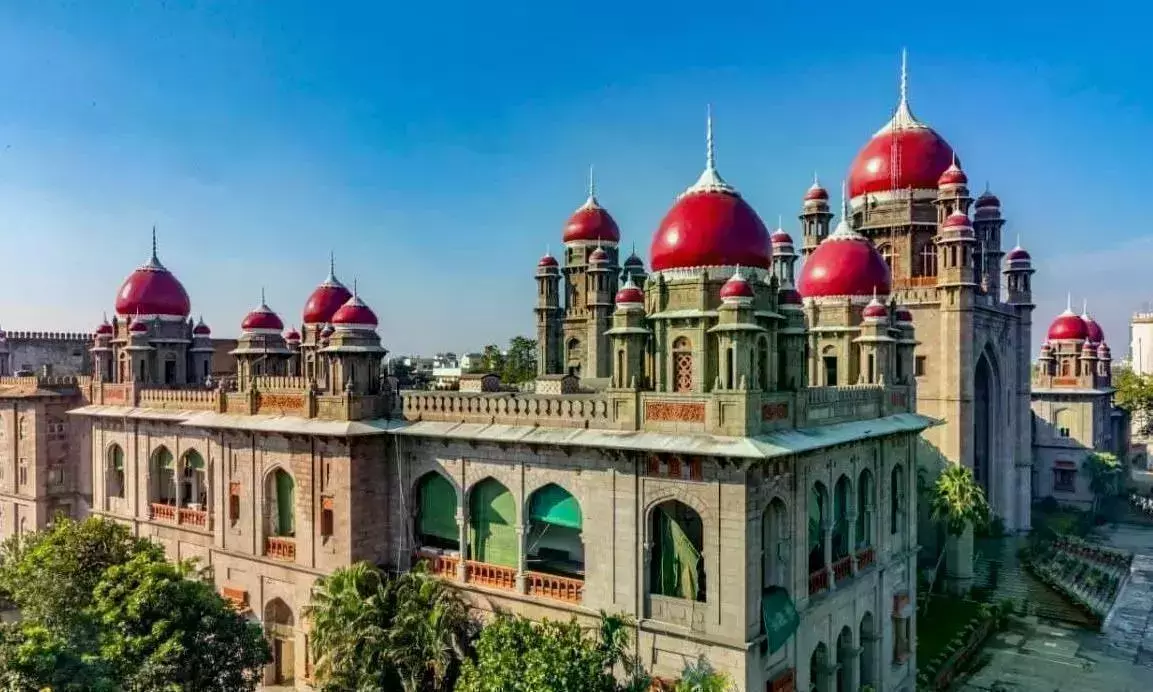
Hyderabad: The Telangana High Court on Friday cautioned that indiscriminate spending on freebies and encouraging a culture in which people expected sops from the government could pose a serious threat to the state's financial stability and the country's future.
Justice Nagesh Bheemapaka made the observations while hearing a contempt petition arising out of the state's delay in complying with court directions to release outstanding stamp duty surcharge dues in a matter related to the Secunderabad Cantonment Board (SCB).
J. Ramakrishna, SCB former member, had complained that the government had not complied with the court’s directions in 2024 to remit Rs 33.42 crore towards stamp duty surcharge dues payable to the SCB.
Contempt proceedings were initiated, and a bailable warrant had been issued against finance department principal secretary Sandeep Kumar Sultania, directing the Hyderabad commissioner of police to secure his presence before the court on Friday.
Following the directions, Sultania appeared before the court and stated that Rs 25.7 crore had been released to the SCB and that the balance amount would be paid in instalments within six months.
The court observed that it was never its intention to place senior officers in the dock, but constitutional courts were sometimes compelled to take stringent measures to ensure compliance with judicial orders. Noting that thousands of contempt petitions had been filed against the officer, despite his reputation as an efficient administrator, the court remarked that such situations often arose because of systemic administrative failures rather than individual fault.
Further, the Judge remarked that the mindset of society had undergone a worrying transformation, observing that in earlier times, inspired by Mahatma Gandhi, Jawaharlal Nehru and Tanguturi Prakasam Pantulu, citizens believed they had a duty to contribute to the nation. Today, the tendency appeared to have shifted towards expecting the country and the government to provide benefits.
The court described the trend as alarming and an unhealthy sign for the nation's future, observing that the spirit of contributing to nation-building had gradually been replaced by an increasing expectation of receiving government benefits.
The court observed that the governments were increasingly being compelled to sell public land because ordinary revenue was proving insufficient to meet expenditure.
The bench observed that the state had nearly 1.03 crore families as beneficiaries under various welfare schemes despite having a population of about 1.15 crore families, raising questions over the effectiveness of beneficiary identification. If even financially well-off persons received welfare benefits, the court remarked, the state's future would become increasingly uncertain.
Referring specifically to the Rythu Bandhu scheme, the court described it as an excellent welfare initiative but questioned the rationale behind extending its benefits even to persons possessing assets worth crores of rupees. It observed that individuals using four-wheelers, expensive motorcycles and high-end mobile phones were availing themselves of subsidised rice meant for economically weaker sections.
The court noted that several incidents had come to its notice where students never attended engineering colleges despite receiving fee reimbursement. It stressed that welfare schemes should be targeted exclusively towards genuinely poor and deserving beneficiaries.
Clarifying that the observations were not politically motivated, Justice Bheemapaka said they were made purely out of concern as a citizen of the state. The court observed that danger signals were becoming visible for society and called for greater public awareness regarding responsible utilisation of public resources while reiterating that policy decisions ultimately remained within the domain of the elected government.
Pay Minimum Wages to Police Station Contingent Staff: Telangana High Court to State
The Telangana High Court has directed the state government to pay minimum wages to sweepers, attenders and other contingent workers working in police stations and police establishments.
Justice Nagesh Bheemapaka issued the interim order while hearing a writ petition filed by Uppala Mallikarjun and 48 others, who complained that despite rendering services for several years in different police stations, they were being paid only consolidated remuneration instead of the minimum wages notified under the Minimum Wages Act, 1948.
The court said that the payment of minimum wages would remain subject to the final adjudication of the writ petition.
The petitioners sought implementation of the wage rates fixed by the respective district collectors under the Gazette Notification dated October 3, 2016, along with subsequent revisions. They argued that the Telangana High Court had earlier granted similar relief in a batch of writ petitions, which was subsequently affirmed by the Supreme Court. They also relied on the Supreme Court's landmark ruling in ‘State of Punjab v. Jagjit Singh’ which noted the principle of equal pay for equal work.
Opposing the plea, the state government submitted that the petitioners were part-time or outsourced contingent workers engaged through a cooperative society and that they were being paid in accordance with existing government orders. Government counsel further contended that extending minimum wages involved policy and financial considerations fell within the executive domain.
