HC Questions State’s Criteria in Rejecting MDS Seat to Student Studied Outside State but Received State’s Scholarship

The court directed the state and the university to file their counter-affidavits within two weeks and adjourned the matter.
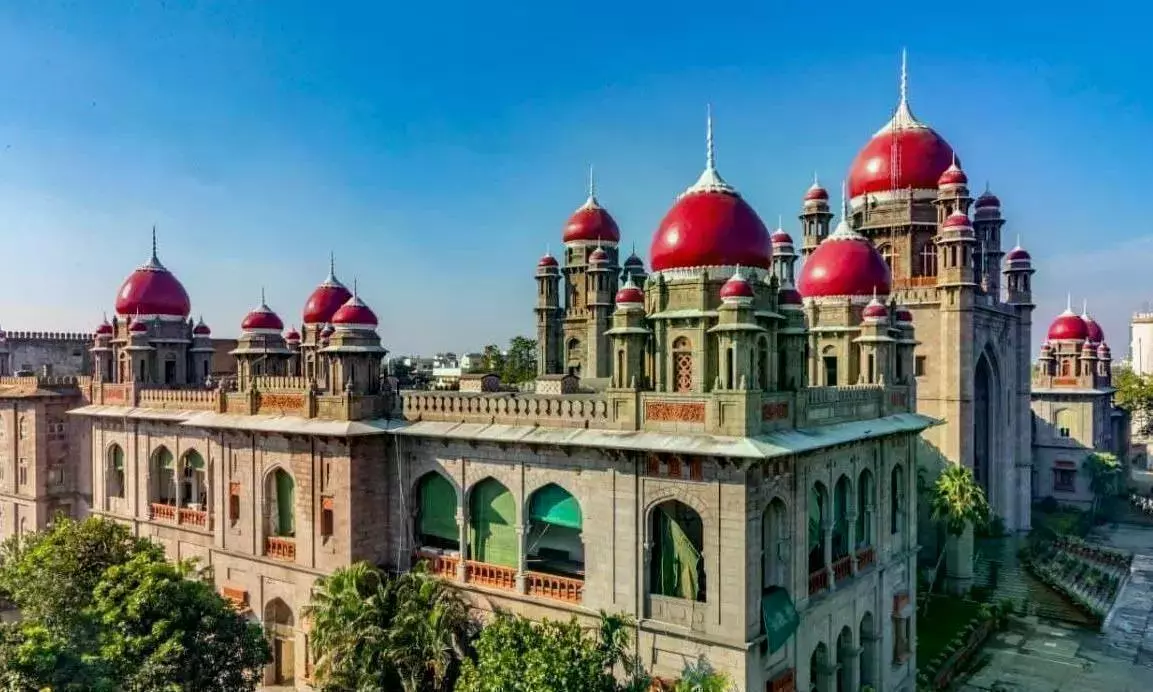
Hyderabad:The Telangana High Court directed the state government and Kaloji Narayana Rao University of Health Sciences (KNRUHS) to explain the grounds on which they denied MDS admission in the local candidate quota to a BDS graduate. The petitioner, Voni Sahith, had completed BDS in Andhra Pradesh, but had received a post-matric scholarship from the Telangana government for pursuing the course at the Konaseema (KIMS) Dental College, Amalapuram, from 2019-20 to 2022-23.
When Sahith filed an online application seeking admission to the MDS in Telangana under the competent authority quota for 2026-27, the KNRUHS placed his name as ineligibility list on the ground that he had completed the BDS outside of Telangana. Challenging the same, he approached the High Court. The court directed the state and the university to file their counter-affidavits within two weeks and adjourned the matter.
A division bench comprising Chief Justice Aparesh Kumar and Justice Vakiti Ramakrishna Reddy, while dealing the petition, inquired about the criteria prescribed for determining local status for MDS admissions and questioned how the state had provided the scholarship to the petitioner if he was not to be considered a local candidate.
Advocate-General A. Sudharshan Reddy, relying on a judgment of a coordinate bench, submitted that only candidates who had completed MBBS, BAMS or BHMS in the “local area” defined under the Presidential Order, 1974 could participate in counselling for postgraduate medical courses in Telangana against seats earmarked for local candidates.
The Advocate-General contended that merely receiving a Telangana government scholarship for pursuing BDS in an institution in Andhra Pradesh would not confer local candidate status on the petitioner. Treating him as a local candidate would defeat the purpose of the local-area criteria prescribed under the Presidential Order and the government orders issued pursuant to it, the AG argued.
Counsel for Sahith submitted that GO 62 issued by the health, medical and family welfare department, specifically concerned admissions to medical and dental colleges in Telangana, including MDS, and that the criteria prescribed under the order were not considered in the judgment relied upon by the Advocate-General.
Revenue authorities have no jurisdiction to adjudicate the dispute over the title of the land
Hyderabad:The Telangana High Court has made it clear that a dispute involving the title to a land parcel cannot be adjudicated by revenue authorities, and such questions have to be determined only by a competent civil court.
Justice G.M. Mohiuddin dismissed a writ petition filed by Harikeerthi Anjaneyulu and others challenging an order passed by the Special Tribunal of Yadadri Bhuvanagiri, which had directed the parties to approach the competent civil court in a dispute concerning land claimed by the petitioners and the Sri Ramalingeswara Swamy Temple. The dispute was between the private parties and the endowment department over about 44 acres of land in various survey numbers of Chinaravalpalle of Bibinagar mandal in Yadadri district.
The private parties claimed that their ancestors were the pattadars and relied upon revenue records, including the Khasra Pahani for 1954-55 and subsequent pahani records, besides orders of the Land Reforms Tribunal. They contended that they had remained in possession and enjoyment of the land and sought correction of the revenue records. The endowments department submitted the revenue records from the year 1958-59 onwards exhibiting the name of Sri Ramalingeswara Swamy Temple in pattadar column and the name of the petitioners in the enjoyment columns.
The private parties relied on the orders of the Land Reforms Tribunal 1974, about the determination of the ceiling area held by the declarants, in which the disputed land was being declared by the ancestors of the private parties as their own properties. The records and registers of the endowment department never mentioned the land as endowments properties, and the land had not been listed in the prohibition list. Only in 2019 did the endowment department claim the land.
The court noted that entries in revenue records by themselves do not conclusively determine title. It also observed that the Land Reforms Tribunal orders relied upon by the petitioners concerned the determination of the ceiling area held by the declarants and did not adjudicate the title dispute.
The court noted that the tahsildar had rejected the petitioners' request for rectification of revenue records on the ground that the dispute involved determination of title, which was beyond the jurisdiction of the revenue authorities. The special tribunal subsequently directed the parties to approach the competent civil court.
Justice Mohiuddin said the dispute raised questions of title which cannot be adjudicated by the revenue authorities and were required to be determined by the competent civil court.
