HC Asks for ECI Decision on SIR Forms in Telugu Outside Hyderabad

Justice Pulla Karthik was hearing a petition filed by M.A. Mujeeb from Karimnagar district, who sought a writ of mandamus directing the ECI and the state election authorities to provide the forms in Telugu and English across Telangana.
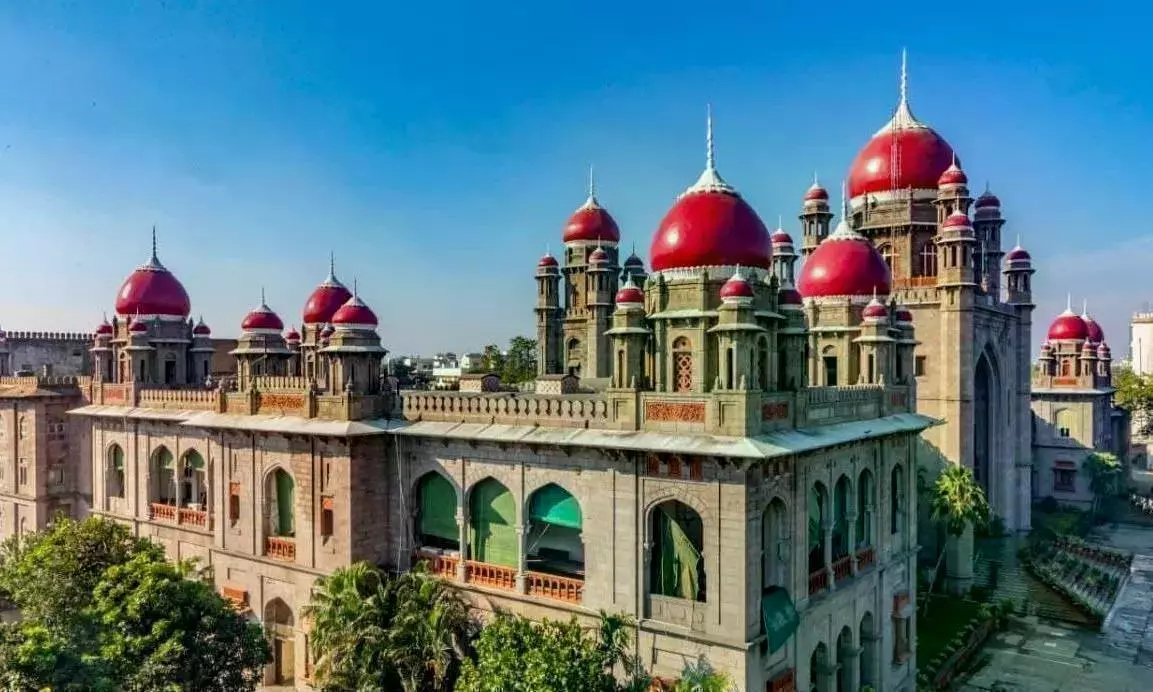
Hyderabad: The Telangana High Court on Thursday directed counsel for the Election Commission of India (ECI) to obtain instructions in a petition complaining against the decision to distribute enumeration forms in Telugu for special intensive revision (SIR)-2026 of electoral roll outside the GHMC area.
Justice Pulla Karthik was hearing a petition filed by M.A. Mujeeb from Karimnagar district, who sought a writ of mandamus directing the ECI and the state election authorities to provide the forms in Telugu and English across Telangana.
According to the petition, the form was a crucial electoral document that enabled voters to verify, correct, and update personal information in the electoral roll. The petitioner contended that making the forms available only in Telugu would adversely affect a significant section of electors, including migrant workers, professionals, students, businesspersons, and retired individuals residing in Telangana who may not be proficient in the language.
The plea stated that the decision was taken without adequate consultation with political parties, social organisations, and other stakeholders. It argued that language barriers could lead to errors, omissions, delays, and even exclusion of eligible voters from the revision process, thereby undermining the objective of maintaining an accurate and inclusive electoral roll.
The petitioner relied on Rule 4 of the Registration of Electors Rules, 1960, which empowered the Election Commission to determine the language or languages in which the electoral roll are prepared. Reference was made to the ECI’s ‘Manual on Electoral Rolls (March 2023)’, which provided that electoral rolls in metropolitan areas should be published in English and, in certain circumstances, in additional languages where substantial linguistic minorities exist.
Counsel for ECI submitted that booth level officers conducting house-to-house visits carry an English-printed enumeration form as well. If a voter requested an English form, the same would be provided. It was submitted that along with the Telugu forms, English was adopted within GHMC limits considering its urban population.
In the remaining districts, sample forms in English and Urdu would also be carried by the BLO to address practical difficulties and any grievances of voters. The ECI submitted that similar exercises conducted across the country in earlier phases had generally involved printing enumeration forms in the local language.
HC stays clauses of G0 9 on fee reimbursement
Hyderabad: Justice Juvvadi Sridevi of the Telangana High Court on Thursday suspended the operating clauses of the government order on payment of fees by students in private professional colleges. Under the new scheme, the government was to directly transfer the fee amount to students who would then pay their respective colleges.
The new guidelines had mandated that colleges shall not insist on payment of tuition and other fees at the time of admission and that students shall remit such fees to institutions from the scholarship amounts credited to their Aadhaar-seeded bank accounts.
Earlier, the judge was hearing a batch of writ petitions on the failure of the state government to complete fee reimbursement payments, running into hundreds of crores, to managements of the institutions, The judge suspended GO Ms No. 9 issued by the Scheduled Caste Development (Edn.A1) department on June 6, which contained consolidated implementation guidelines for the direct benefit transfer (DBT) mode of scholarship delivery to students from the Scheduled Caste, Scheduled Tribe, Backward Class, Economically Backward Class, minority and differently-abled students communities from the 2026-27 academic year onwards.
Earlier, an interim order permitted petitioner-institutions to collect tuition fees directly from eligible students without reference to government orders, subject to the outcome of the writ petitions.
Senior counsel L. Ravichander, appearing for one of the petitioner colleges, contended that GO Ms No. 9 ought to be suspended pending further hearing as it was merely a continuation of earlier government order, which itself would not withstand judicial scrutiny. He argued that the state could not achieve through GO 9 what it could not under GO 7.
Senior counsel Sreeram, appearing for the other petitioner colleges, contended that the government was attempting to do indirectly what it could not do directly by repackaging the same provisions under a new nomenclature and consolidating the guidelines while the earlier order remained suspended. He pointed out that the consolidated guidelines substantially mirrored the problematic clauses of the withdrawn GO 7, particularly those regarding fee collection and payment timelines.
The state contended that suspension of GO Ms No. 9 would adversely affect implementation of the Centre’s direct benefit transfer mechanism. The judge noted that GO Ms No. 9 was substantially similar to GO. 7, the operation of which was already stayed by the court. Hence, the court made it clear that four clauses of GO 9 —5.2(e), 10.2, 10.4, 12.1(a) — were not to be given effect to.
