Groundwater In Telangana Found Unfit To Drink

Studies found TG groundwater unfit to drink
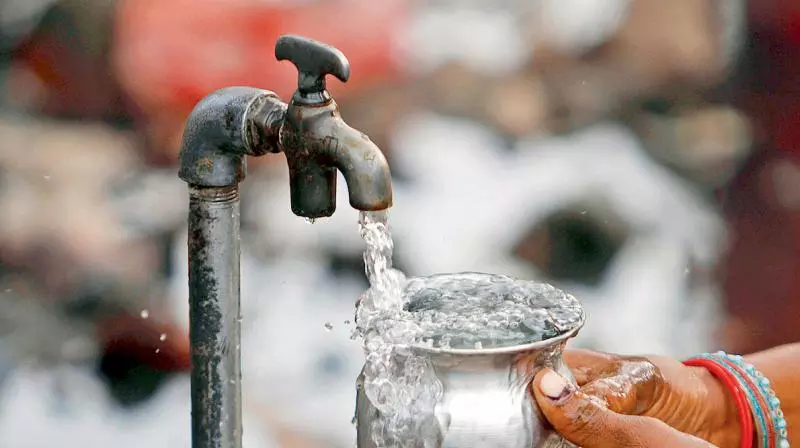
Hyderabad:With HYDRAA filing police cases against water tanker operators for extracting water from polluted borewells near Sunnam Cheruvu and selling them to people, two peer-reviewed studies published in earlier this year have flagged serious contamination in groundwater drawn from borewells in parts of Telangana, including Hyderabad’s outskirts.
Both studies found that over 45 per cent of water samples exceeded safe limits for nitrates, fluoride and salinity, making them unfit for drinking.
‘Groundwater Quality in Parts of Hyderabad and Medchal-Malkajgiri Districts, Telangana, India: Hydrochemical and Geospatial Assessment’, was published in Water Quality and Ecological Health in earlier this month. Researchers V. Yadagiri, A. Srinivas and K. Krishnaiah analysed 48 borewell samples collected pre- and post-monsoon in urbanising pockets like Alwal, Kapra and Kompally.
Fluoride concentrations were above 1 mg/l in nearly 50 per cent of the samples, and nitrate levels peaked at 209 mg/l. High sodium and salinity levels were also observed, affecting water usability for both domestic and agricultural purposes.
In Medchal-Malkajgiri alone, thousands of households rely on borewells, often assuming groundwater to be cleaner than surface water. But the findings show long-term exposure could have serious health consequences, especially in children and pregnant women.
The causes of contamination, according to both studies, include a mix of agricultural runoff, leaky sewage systems, untreated effluents, and geogenic factors. Yet there is no system in place for routine public testing or ward-level disclosure of groundwater quality data.
Hyderabad’s growing reliance on groundwater has already led to a spike in private tanker use, with over 2 lakh trips per month during summer, according to recent civic estimates. With many borewells tapping deeper, potentially more contaminated aquifers, the studies highlight the need for urgent intervention.
‘Groundwater quality assessment in Nalgonda District, Telangana: A comprehensive approach using self-organizing map’, was published in Environmental Sustainability and Climate Change in March. Authored by R. Nagaraju, M. Balaramudu and P. Raghuveer, the study analysed 89 groundwater samples from across the Nalgonda district.
Fluoride levels exceeded the BIS limit of 1.5 mg/l in many samples, and nitrate levels crossed 100 mg/l: more than double the 45 mg/l safe limit. Nearly half of the samples were classified as “poor” or “unfit” using the Entropy Weighted Water Quality Index (EWQI). The authors warned of high risks of fluorosis, kidney damage and blue baby syndrome in vulnerable populations.
Pointers, if need be:
Nalgonda study (March 2025)
• 89 groundwater samples tested
• ~46% of samples rated poor or unfit for drinking
• Nitrate levels exceeded 100 mg*/l (safe limit: 45 mg/l)
• Fluoride levels > 1.5 mg/l in many samples
• TDS above 1000 mg/l in several locations
• Source: Nagaraju et al., Environmental Sustainability & Climate Change
Hyderabad-Medchal study (June 2025)
• 48 borewell samples tested (pre- and post-monsoon)
• 45-50% had fluoride > 1 mg/l
• Nitrate levels peaked at 209 mg/l
• High salinity and sodium levels across samples
• Areas covered: Alwal, Kapra, Kompally, Ghatkesar
• Source: Yadagiri et al., Water Quality & Ecological Health
Shared concerns
• Linked health risks: fluorosis, kidney issues, blue baby syndrome
• Borewells are the primary drinking water source in study areas
• Hyderabad’s private tanker demand: ~2 lakh trips/month in summer 2025
• No system for regular ward-level water quality testing or public alert
