Godavari ‘Flood Waters’ An illusion, Says Expert
Adds TG and AP lack rights to use 1,138 tmc ft terminal water
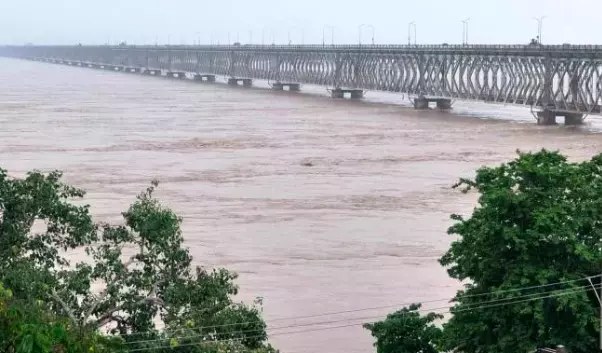
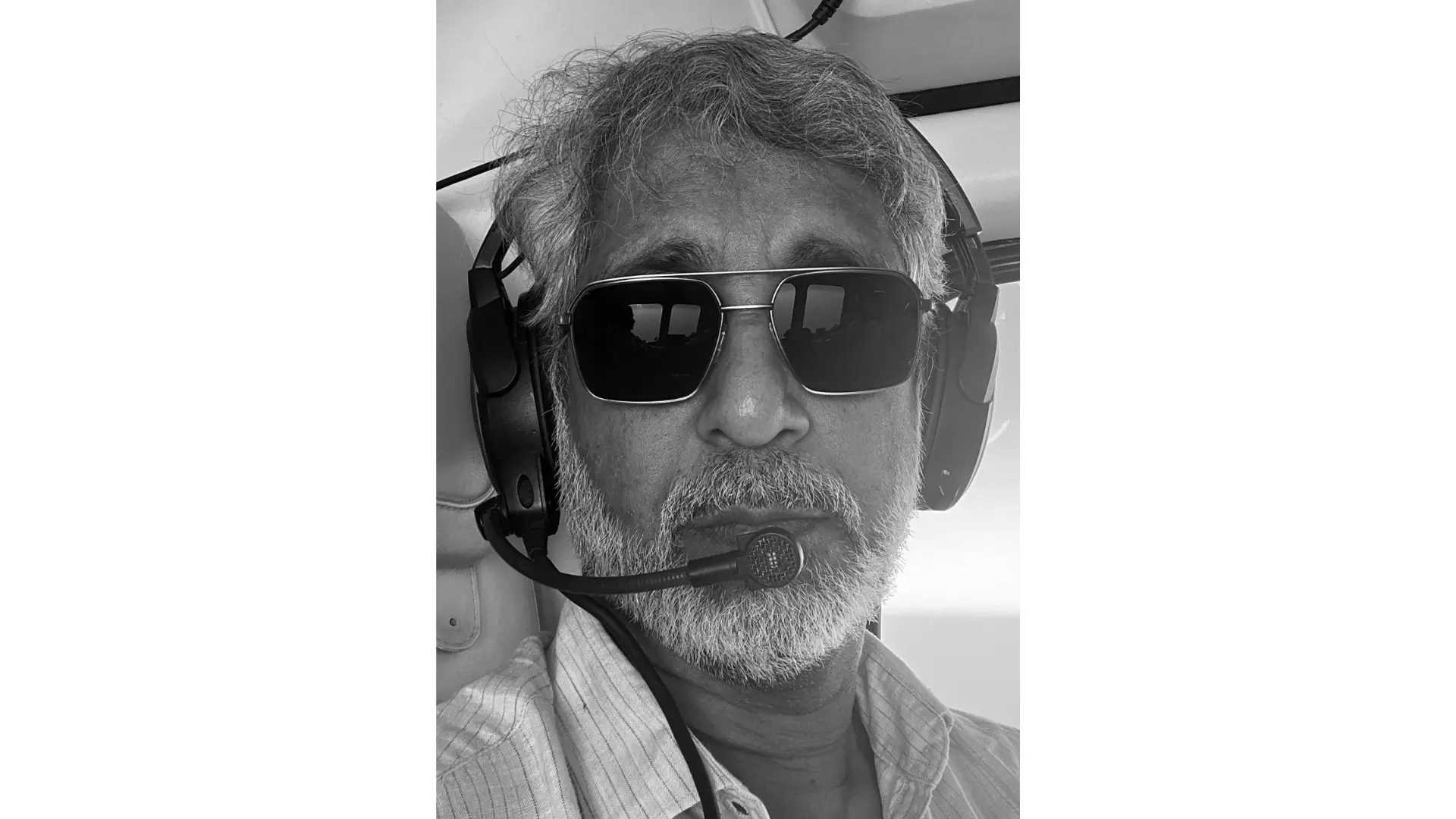
Hyderabad:The proposal for Andhra Pradesh’s Godavari-Banakacharla link scheme is based on “imaginary” claims of non-existent concept of ‘flood waters’ in the Godavari river, and “illusionary” assertions about copious amounts of the river’s water going waste into the sea, according to Sriram Vedire, former adviser to the ministry of jal shakti.
He said that even the claims of around 3,000 tmc ft of the so-called ‘flood waters’ going into the Bay of Bengal from Godavari each year had no leg to stand on as this figure included unused water allocated to the river basin states.
“The reality is that the Central Water Commission (CWC) has calculated that the ‘average flows’ that end up in the sea are about 1,138 tmc ft a year,” Vedire said.
“When the CWC said the annual run off into the sea was around 3,100 tmc ft, this figure includes water allocated to Maharashtra, Telangana, AP, Chhattisgarh and Odisha, but not yet put to use by these states.”
Addressing a press conference where he made a detailed presentation on Godvari river issues, Vedire said neither Telangana nor AP had rights to use the 1,138 tmc ft of water going into the sea as the ‘terminal states’ for the river.
Vedire explained: “If the other Godavari basin states, Maharashtra through which the main river passes, and Chhattisgarh, Madhya Pradesh, Odisha, and Karnataka, which have tributaries draining into the Godavari, also stake claim on these ‘average flows’, then Telangana and AP will not even have the assured water allocated to them at 75 per cent dependability.”
He said, as per the Godavari Water Disputes Trbunal’s 1980 award, undivided AP had an assured share of about 1499.9 tmc ft. As per the law of the land, AP had used its share of 531.9 tmc ft of water from the Godavari while Telangana was yet to use its share of 968 tmc ft.
The GWDT, Vedire explained, converted the then existing water sharing agreements between the basin states instead of going for fresh allocations and called this allocation ‘all waters’ to the upstream states. The ‘remaining waters’ were given to the then AP, and now to Telangana and residuary AP and nowhere was there any mention of ‘flood waters’.
On the Godavari-Banakacharla project proposal, Vedire said it planned to use 200 tmc ft of Godavari water and another 100 tmc ft of ‘flood water’. “There is no sanctity, or confirmation of these flood waters, and its existence is imaginary. Since there is no confirmation of this theory by the CWC that water is going waste into the sea, no project can be planned by any co-basin state on these imaginary flood waters,” he said.
On the impact of the Banakacharla project, he said if AP went ahead with it, it would affect the upstream states’ projects including those of Telangana, despite such states having assured allocations. “Any plans to use part of these ‘average waters’, will open a slew of issues among all the co-basin states, with the one having the capacity to use the water claiming it do so, and other states clamouring injustice,” he said.
Infograph
Unquiet flows the Godavari
Annual run-off into Bay of Bengal based on 57-year data at Polavaram is 3,100 tmc ft.
Actual run-off calculated by CWC is 1,138 tmc ft.
No concept of ‘flood waters’ exists, says river water expert Sriram Vedire.
As per GWDT, total assured water at 75 per cent dependability for 7 basin states is 3,396.9 tmc ft a year.
75% dependability means water for any project is available at the expected rate for three out of four years, and this ‘assured water’ is also expected to be used.
Seven states include Maharashtra, through which the main river passes, and Chhattisgarh, Madhya Pradesh, Odisha, and Karnataka, which have tributaries, and the ‘terminal states’of Telangana and AP.
Erstwhile AP (now Telangana, residuary AP) share of assured water is 1,499.9 tmc ft a year.
AP share is 531.9 tmc ft (already used).
Telangana share is 968 tmc ft (not fully used).
