Global Mercury Conference Opens At IIT Hyderabad

The 17th International Conference on Mercury as a Global Pollutant (ICMGP 2026) opened on Sunday: Reports
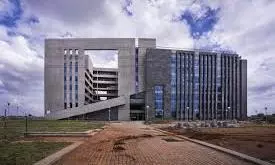
HYDERABAD: Scientists, policymakers and environmental specialists have gathered at the Indian Institute of Technology (IIT) Hyderabad for a major international conference examining progress in controlling mercury pollution and the scientific priorities that should shape the next phase of global action.
The 17th International Conference on Mercury as a Global Pollutant (ICMGP 2026) opened on Sunday, and will conclude on October 9. This is the first time a conference linked to the Minamata Convention has been hosted in India.
The Minamata Convention is a global treaty designed to protect human health and the environment from human-caused emissions and releases of mercury and mercury compounds. It was adopted in Kumamoto, Japan, in 2013 and entered into force on August 16, 2017. The convention now has 154 parties, and India ratified the treaty in June 2018.
The theme of the current conference in Hyderabad is “Reaching Ten Years of Enforcement of the Minamata Convention: Achievements, Challenges and Road Map for the Future”.
The conference sessions span mercury in the atmosphere, oceans, freshwater ecosystems and terrestrial environments, along with bioaccumulation, environmental and human health, modelling and the science-policy interface. Specialised discussions include mercury monitoring, artisanal and small-scale gold mining, cosmetics, biodiversity, the oil and gas industry, wetlands and mercury and lead in traditional Indian medicine.
Artisanal and small-scale gold mining remains a particularly important target for international action. UNEP says the sector is the largest source of human-caused mercury pollution, accounting for almost 40 per cent of anthropogenic mercury entering the atmosphere.
The World Health Organisation (WHO) identifies mercury as one of the chemicals of major public-health concern and says exposure can damage the nervous, digestive and immune systems as well as the lungs, kidneys, skin and eyes. Fetuses and young children are particularly vulnerable to its effects.
The conference will be chaired by Prof. Asif Qureshi, professor at IIT Hyderabad.
Speaking to Deccan Chronicle, Dr Qureshi said holding the conference in India offered an opportunity to increase participation from Asia and the Global South. “Bringing the conference to India for the first time gives us an important opportunity to broaden that community, strengthen participation from Asia and the Global South, and build new collaborations across countries and disciplines,” he said.
The United Nations Environment Programme (UNEP) will co-chair discussions on reducing mercury use in gold mining and cosmetics. Monika Stankiewicz, executive secretary of the Minamata Convention on Mercury, will lead the convention-focused plenary programme. Dr Elena Jardan of the World Health Organisation and Dr Lynwill Martin of the South African Weather Service are among the other plenary leads.
A delegation from Kumamoto prefecture in Japan, home to Minamata, is attending the conference, which will also hear first-hand testimony from a Minamata disease survivor. Dr Jagannath Biswakarma, conference chair and adjunct faculty at IIT Hyderabad, said scientists now had to ask “what should happen because of what we have learned” and examine how evidence could translate into policy and action. Prof. Mae S. Gustin will receive the Kathryn R. Mahaffey Lifetime Achievement Award, while Dr Qingru Wu will receive the ICMGP Emerging Researcher Award.
