Geminid Meteor Shower: Light Pollution Likely To Put Off Skygazers in Hyderabad
Viewing the space spectacle could well be a challenging task thanks to increasing light pollution over the city. While most cities are heavily light-polluted, the trend has risen dramatically over Hyderabad’s skies with the condition worsening significantly between 2006 and 2025
HYDERABAD: Come December, the night sky puts up a spectacular show of the Geminid meteor showers, specially on December 13 and 14 this year. But not for those in the city who are hoping to catch a glimpse of what the American Meteor Society describes as the “strongest meteor shower of the year” with “often bright and intensely coloured” meteors streaking across the sky.
Viewing the space spectacle could well be a challenging task thanks to increasing light pollution over the city. While most cities are heavily light-polluted, the trend has risen dramatically over Hyderabad’s skies with the condition worsening significantly between 2006 and 2025.
According to the Bortle Scale, that provides a measure of the night sky’s darkness, the city had a score of around 8.5 in 2006, which rose sharply to 9 by 2015 and has been creeping up ever so slowly. On the Bortle Scale, 1 is the darkest and 10 the most polluted with light. The city is almost at the top end of the scale.
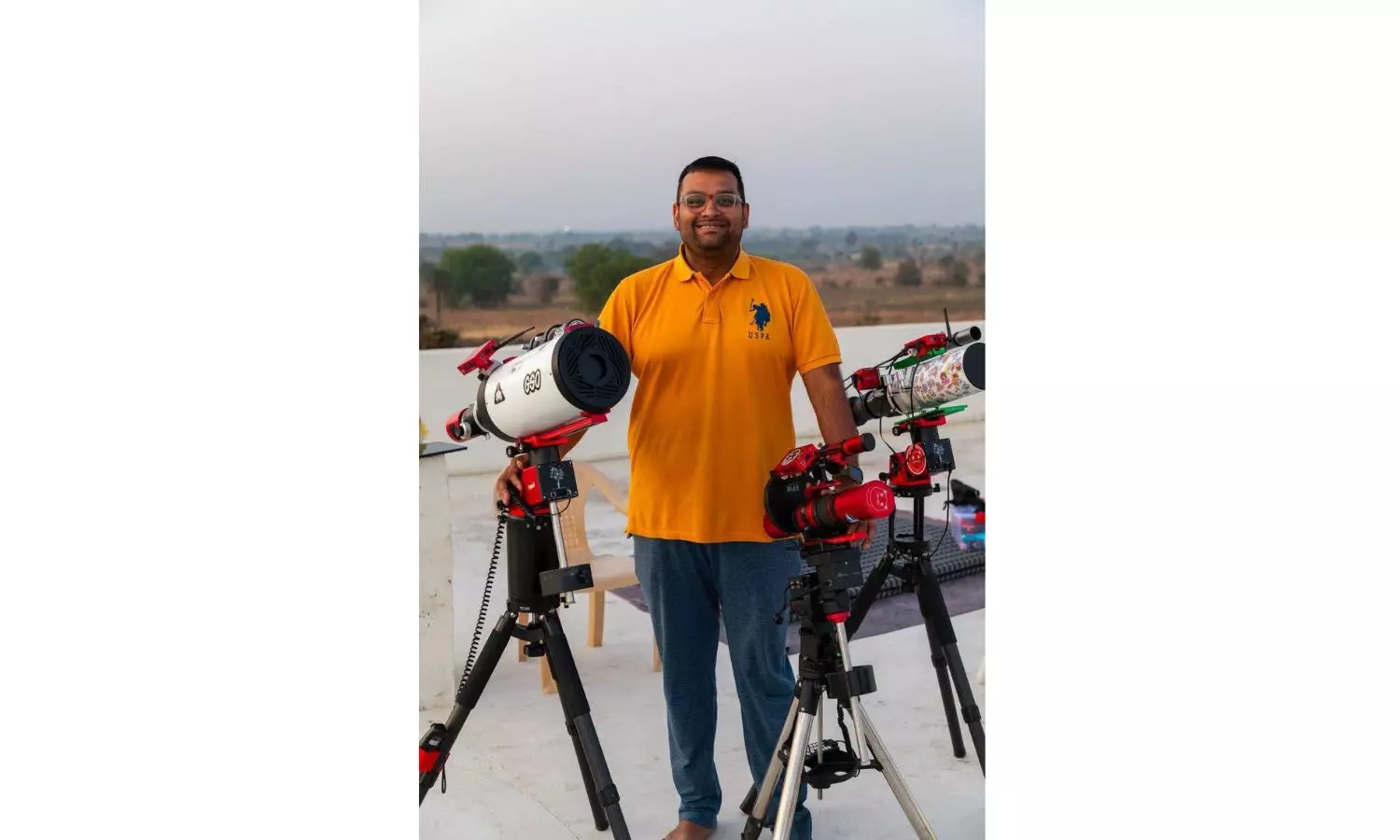
“There used to be time when Anantagiri Hills in Vikarabad used to be a good spot for visual astronomy and astrophotography, but even that place is now gone as far as decent astronomy is concerned,” Pulikanti Tarun, an amateur astrophotographer said. “Hyderabad is in the Bortle 9-plus zone which is a complete whiteout. You can no longer see even the bright stars unless they are at the zenith. Light has overtaken everything,” he said.
“Unless you go at least 50 km away from the city, you cannot even see a meteor shower anymore,” he added.
“Even that 50 km may not be enough,” according to Upendra Pinnelli, another city-based amateur astrophotographer. “For a really decent view, one will need to go at least 100 km away from the city, and towards an undeveloped area without towns and villages nearby,” he said.
“Just six years ago I could take pictures of the Milky Way from the city. Now it is impossible. The last time I took some pictures of the Milky Way, I had to go all the way to a spot 180 km away, near the backwaters of the Nagarjunasagar,” he said.
“We no longer look up at the sky because there is nothing much to see, especially at nights. By not being able to see much at nights, we are losing our heritage, the stories about constellations. Our entire calendar is based on celestial movements. We are missing the perspective, how we are part of a bigger universe, and creation itself,” Praveen Suryavanshi, an educationist in the field of space sciences, said.
“The night sky is the only heritage everyone on the Earth can see, and we are losing it at a rapid rate,” he said.
This problem of light pollution is only set to worsen with rapid development all around the Outer Ring Road and with the Regional Ring Road and associated development coming up, it will get tough for anyone to see anything in the night sky from anywhere even from what are now the outskirts of Hyderabad, Upendra said.
