Ganesh Idol Making In Telangana Dates Back 2,000 Years

Each dynasty used different types of stones, ranging from simple to highly decorative styles: Reports
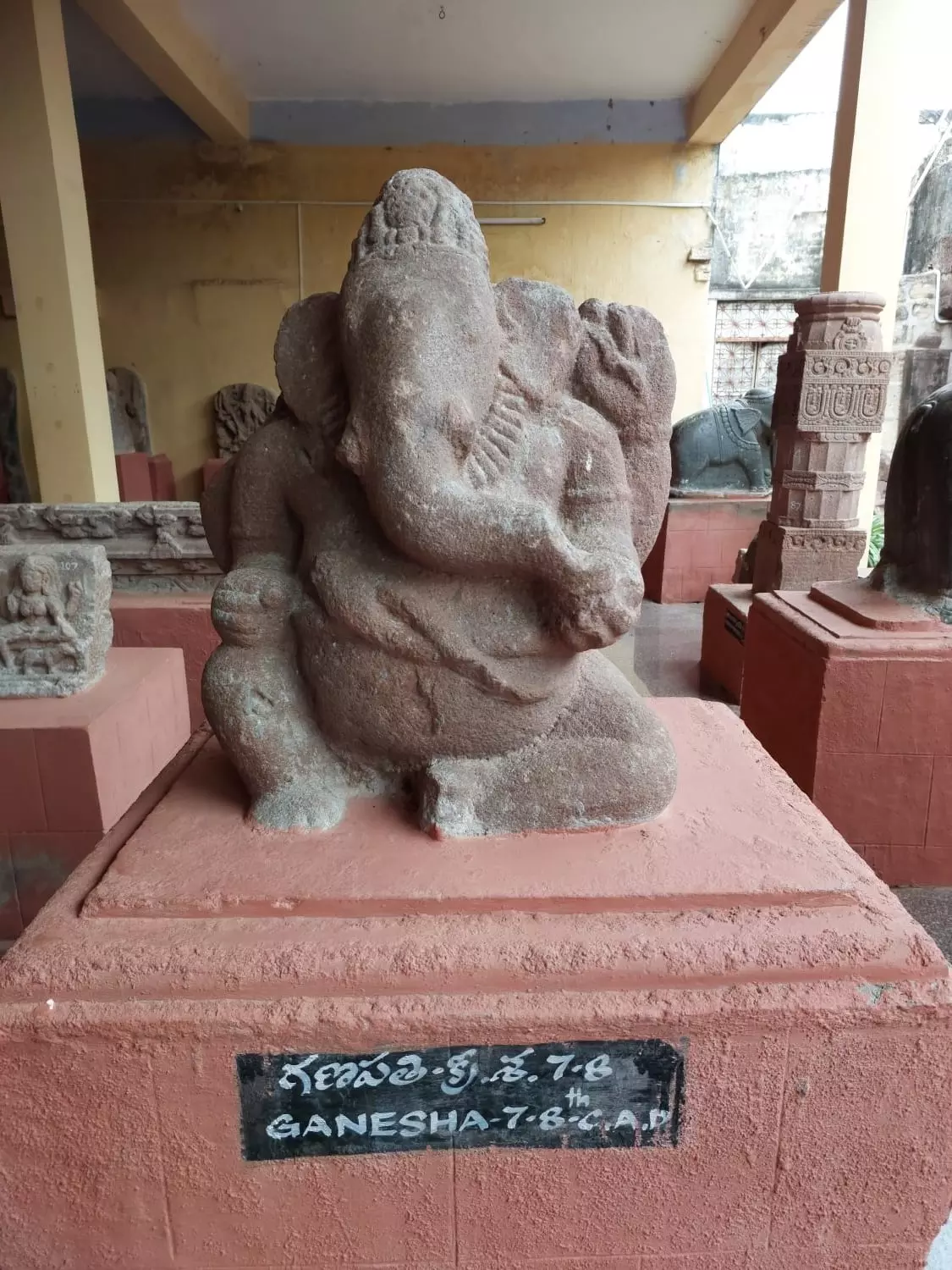
HYDERABAD: Around 60 sculptures of Lord Ganesh, housed and preserved by the heritage department across the state, continue to echo the spiritual and cultural legacy in Telangana dating from the Badami Chalukyas of the 7th century to the later Kakatiya period.
Each dynasty used different types of stones, ranging from simple to highly decorative styles.
While Alampur sculptures were made up of the red sandstone, the Rashtrakuta idols, housed at an in site museum in Kolanupaka, had been carved from granite stone.
The Ganesh idols from Kalyani Chalukyas dynasty have been preserved at Kolanupaka and Pillalamarri, and the idols from the Kakatiya era that were carved from black basalt stone have been kept in display in Public Garden. Sculptures from later periods carved in soapstone were kept in various district museums.
Among all, a four-foot Ganesh idol, with his vehicle rat (Mushika), preserved at Panagal museum is said to be the biggest of its kind in the country, said museums deputy director Dr P. Nagaraju.
According to historians, the first stone Ganesh idol in Telangana took shape during the reign of Vishnukundis (4-6th century CE). Called ‘Dantamukha Swami’, the idol found in Amarapuram (now Amarabad), Mahbubnagar district, is locally known as ‘Venkayya’. The sculpture was carved on black basalt with an elephant head without a crown, said Dr Dyavanpalli Satyanarayana, an historian.
Numerous Ganesh idols were also discovered from the Badami Chalukya era dating back 6 to 7th centuries in the state. One among them has been the Ganesh idol in Alampur temple, chiselled in grey and red sand stones in sitting posture.
In the 9th century during the Rashtrakuta era, separate temples for Ganapati came into existence, one such temple can be seen on a boulder in Dharmapuri in Karimnagar district. And the idol size also increased and one such big volume idol can be seen at Patancheru.
“Interestingly, during the Kalyani Chalukyas (973 CE-1162 CE), a 22-feet-high Ganesh idol was carved out from a monolithic rock in Avancha near Jadcherla. This sculpture is considered to be the world’s tallest monolithic ganesh sculptor,” said Dr Satyanarayana
According to Dr Satyanarayana, there was literary evidence of the Satavahana emperor Hala mentioning Lord Ganesh in his 72nd poem in his ‘Gatha Saptasati’. This reflects the existence of worshipping practice in the first century CE before the Vishnukundis.
The practice of establishing independent temples was continued by Kakatiyas, depicting Lord Ganesh sculptures on temple walls, in Telangana. It was also continued by the Recharla Padmanayakas, who protected their capital cities by carving Ganesh sculptures on natural boulders in all eight cardinal points or gates, which can be seen in their capitals Rachakonda and Devarakonda.
Later, the prominence of sculpture had come down. During the Qutb Shahis period, a Ganesh pillar was carved by Kaasha Ayinavolu Potana near the temple of Shiva Keshava in Telangana.
In 1893, freedom fighter Bal Gangadhar Tilak initiated the Ganesh processions to arouse national integrity against the British government in India. The first Ganesh pandal was set up in Shalibanda.
