Foresters Try Out Cure for Neem-Killer Disease

The FCRI has invited collaboration from forest, agriculture, NGOs, and citizens to propagate hardy strains and fortify green cover.
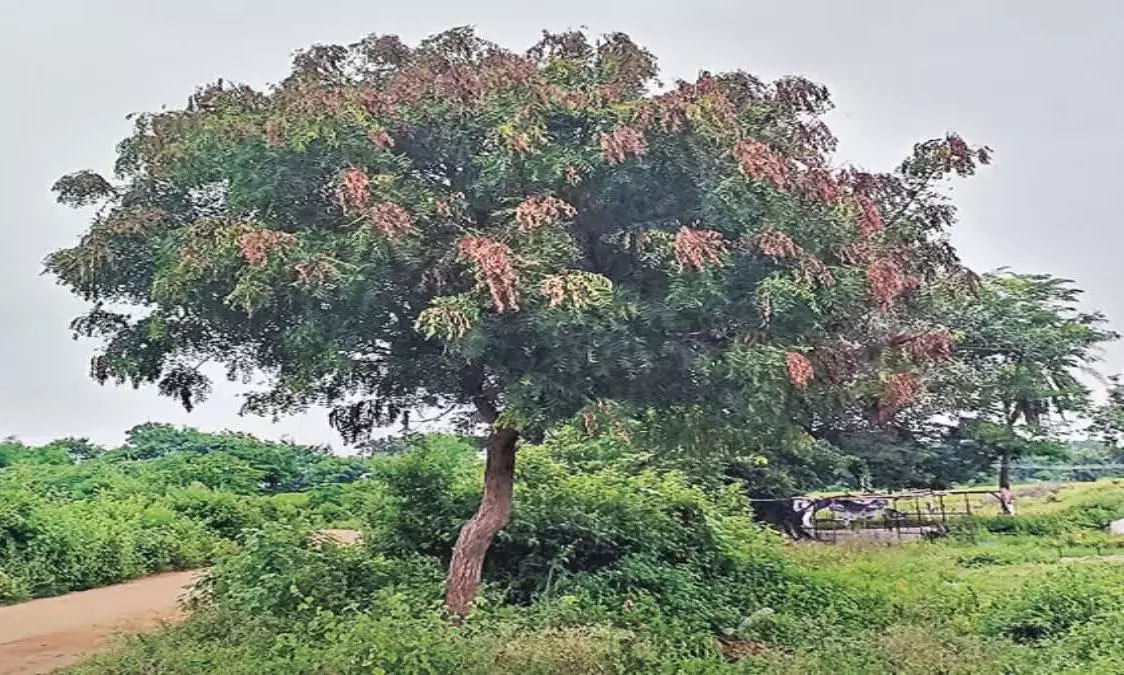
Hyderabad: The withering of thousands of neem trees — Telangana's iconic symbols of health and heritage — over some years had prompted the Mulugu-based Forest College & Research Institute (FCRI), to launch a comprehensive scientific probe into the devastating "dieback disease."
The diseases causes the upper branches to dry up, the foliage to thin out and the flowers to vanish. ‘Phomopsis azadirachtae’, a fungus thriving in recent heavy monsoons, due to high humidity and temperature swings, is found to be the main culprit and was confirmed through lab tests on infected twigs since 2021.
FCRI dean V. Krishna, who once led GHMC's green city efforts, said neem trees were priceless for the environment and culture. Expert Dr Jagadish is guiding a long-term study that tracks dying trees using maps, studies the fungus causing it, checks how pollution and hard soil worsen things, and tests fixes.
Dr Jagadish fixed the treatment in a simple three-spray treatment (Carbendazim first, Thiophanate-methyl after a week, Profenofos after 20 days) that brought neems back to life in 2023 trials at the forest institute, in addition to some natural remedies.
Focusing first on Hyderabad and expanded GHMC areas, with remote site comparisons, the initiative eyes statewide trials, citizen guidelines for pruning and mulching, and national protocols. "Early intervention ensures recovery," Krishna stresses, urging municipal support, departmental logistics, public reports of sick trees, and funding.
Neem's resilience shines through: treated trees flush new growth while untreated ones fade. This crisis, echoing northern India outbreaks, underscores urban tree vulnerabilities amid climate change.
The FCRI has invited collaboration from forest, agriculture, NGOs, and citizens to propagate hardy strains and fortify green cover. "We're turning concern into action," dean Krishna affirmed, positioning the effort as a blueprint for India's neem conservation.
